An autonomous delivery van cuts operational costs by 40–58% compared to a human-driven van, but the real advantage goes beyond direct labor savings — it's about 24/7 availability, consistent performance, and predictable unit economics. If you've been wondering whether autonomous delivery makes financial sense for your operation, this side-by-side comparison breaks down every cost line and every efficiency metric. The autonomous delivery van vs human driven van cost comparison is more nuanced than just "no driver = cheaper" — you need to account for vehicle cost, charging infrastructure, software fees, and remote monitoring too. In this guide, we use real deployment data from NewBase and other L4 operators to give you a complete picture.
Here's what you'll learn: side-by-side cost breakdown, efficiency metrics comparison, payback period calculations, and which scenarios make the switch worth it (and which don't).
1. What's the Complete Cost Breakdown: Autonomous Van vs. Human-Driven Van?
The sticker price of an autonomous van is higher, but the operating cost per kilometer is dramatically lower. To do a proper autonomous delivery van vs human driven van cost comparison, you need to look at total cost of ownership (TCO) over 3–5 years — not just the purchase price.
Let's compare a typical urban last-mile delivery route, 80km per day, 260 operating days per year, using a 5.3m³ / 800kg cargo van (comparable to the NewBase Z5 class).
| Cost Category | Human-Driven Diesel Van | L4 Autonomous Electric Van | Annual Difference |
| Vehicle purchase | 35,000–50,000 (depreciated over 5 years) | 70,000–120,000 (depreciated over 5 years) | +7,000–14,000/yr |
| Driver salary + benefits | 45,000–65,000/yr | $0 (no on-board driver) | -45,000–65,000/yr |
| Fuel / Electricity | 6,000–9,000/yr (diesel) | 1,500–2,500/yr (electricity) | -4,500–6,500/yr |
| Maintenance | 4,000–6,000/yr | 2,000–4,000/yr (fewer moving parts) | -2,000–2,000/yr |
| Software / autonomy fees | $0 | 6,000–12,000/yr | +6,000–12,000/yr |
| Remote monitoring staff | $0 | 3,000–6,000/yr (1 operator : 10–20 vehicles) | +3,000–6,000/yr |
| Insurance | 2,500–4,000/yr | 4,000–7,000/yr (still evolving) | +1,500–3,000/yr |
| Charging infrastructure | $0 | 500–2,000/yr (amortized) | +500–2,000/yr |
| Total annual cost | 66,500–96,000/yr | 28,500–62,500/yr | -33,500–38,000/yr |
Key Observations from the Numbers
- Driver salary is the single biggest line item — typically 60–70% of total operating cost for a traditional van. This is what makes the economics of driverless delivery vehicle cost savings over traditional van so compelling.
- The autonomous vehicle premium pays for itself through labor elimination. Even with software fees, remote monitoring, and higher insurance, the net annual savings are substantial.
- Electric vs. diesel is a secondary but meaningful factor — autonomous delivery vans are almost always electric, and electricity costs 70–80% less per kilometer than diesel.
Zhengzhou Newbase Auto Electronics Co., Ltd. data from real deployments shows that the break-even point typically falls between 4–5 hours of daily operation per vehicle. Below that, the savings don't justify the upfront investment.
✅ Bottom line: Autonomous vans cost more to buy but 40–58% less to operate annually. The driver salary elimination dwarfs all additional costs combined.
2. How Does Efficiency Compare Between Self-Driving and Driver-Operated Delivery Vans?
Cost is only half the story. Autonomous delivery vans also deliver meaningful efficiency gains in consistency, uptime, and route optimization quality. When evaluating self-driving vs driver operated delivery van efficiency, it's important to distinguish between "speed" and "throughput" — human drivers may drive faster, but autonomous systems deliver more packages per day in consistent, predictable ways.
Let's compare the key efficiency metrics.
Why this matters: For logistics operations planning, predictability is almost as valuable as speed. If you can guarantee delivery windows within 5 minutes (instead of 30), you can charge premium rates and improve customer satisfaction.
Operating Hours and Multi-Shift Capability
- Human-driven vans: Limited to 8–10 hours per day per driver. Overtime costs 1.5x–2x. Second shift = second driver = doubling labor cost.
- Autonomous vans: Can operate 16–24 hours per day (charging time aside). Adding a second shift costs nothing in additional labor — just electricity and minor wear.
This is where the driverless delivery vehicle cost savings over traditional van really compound. For operations that can fill multiple shifts (e.g., daytime parcel delivery + nighttime restocking), an autonomous van effectively does the work of 2–3 driver-operated vans on the labor cost front.
Safety and Incident Rates
| Metric | Human-Driven Van | Autonomous L4 Van |
| Accidents per million km | 4–6 (industry average for light commercial) | 0.5–1.5 (based on current L4 deployment data) |
| At-fault accidents | ~70% human-caused | Lower rate (systematic, no distraction) |
| Speeding violations | Common | None (speed-limited by design) |
✅ Bottom line: Autonomous vans win on consistency, uptime, and route optimization — not just speed. Multi-shift capability is where efficiency gains compound the most.
FAQ
Q: How long does it take for an autonomous delivery van to pay for itself?
A: For high-utilization urban routes (80+ km/day, 5+ days/week), the typical payback period is 2–3 years. This is based on the autonomous delivery van vs human driven van cost comparison we outlined earlier, using real data from NEWBASE deployments with major logistics partners. The exact payback depends on your local driver salary levels, route utilization, vehicle configuration, and whether you qualify for any government subsidies for green/autonomous vehicles.
Q: Are there situations where a human-driven van is still better than an autonomous one?
A: Yes. Three scenarios where human-driven is currently better: (1) Very low utilization — if you run less than 4 hours/day, the savings don't justify the higher vehicle cost. (2) Complex multi-task routes — if the driver also handles loading, customer service, cash collection, or other duties beyond just driving. (3) Areas without L4 approval — if your routes are in regions where autonomous operation isn't permitted, you can't deploy driverless vehicles yet.
Q: Do the efficiency gains of self-driving vans hold up in bad weather or heavy traffic?
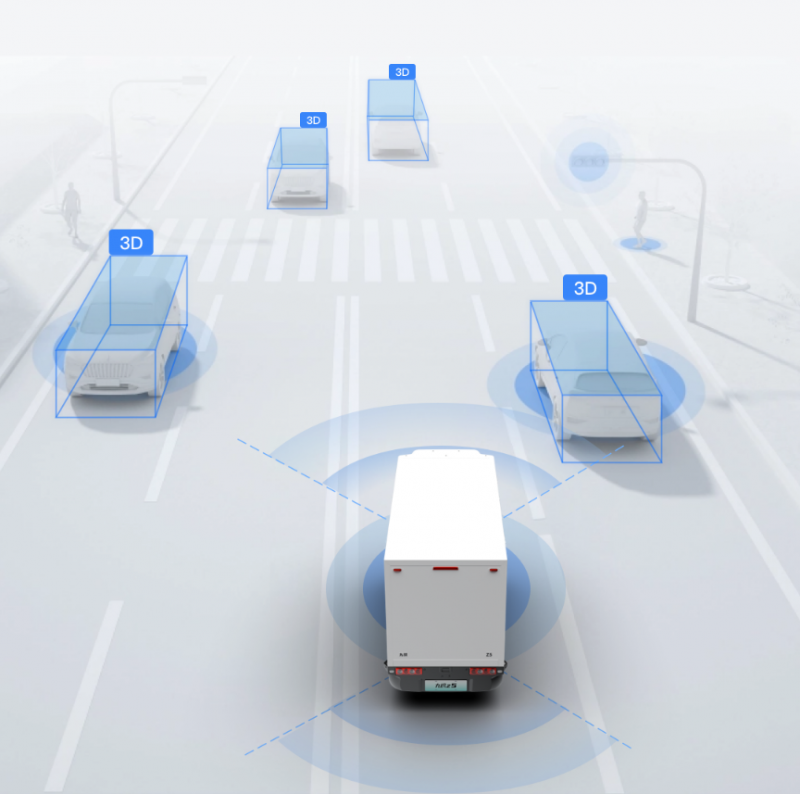
A: It depends on the vehicle's sensor suite and ODD (Operational Design Domain). High-quality L4 systems with multi-sensor fusion (LiDAR + camera + radar) like NewBase vehicles handle moderate rain, fog, and heavy urban traffic reliably. However, extreme weather (heavy snow, torrential rain) can temporarily reduce performance or require human remote assistance. The key question to ask any supplier when comparing self-driving vs driver operated delivery van efficiency is: "What's your vehicle's uptime rate in real commercial deployment, not just ideal conditions?" For well-designed systems, the answer is typically 95%+ uptime in their approved ODD.