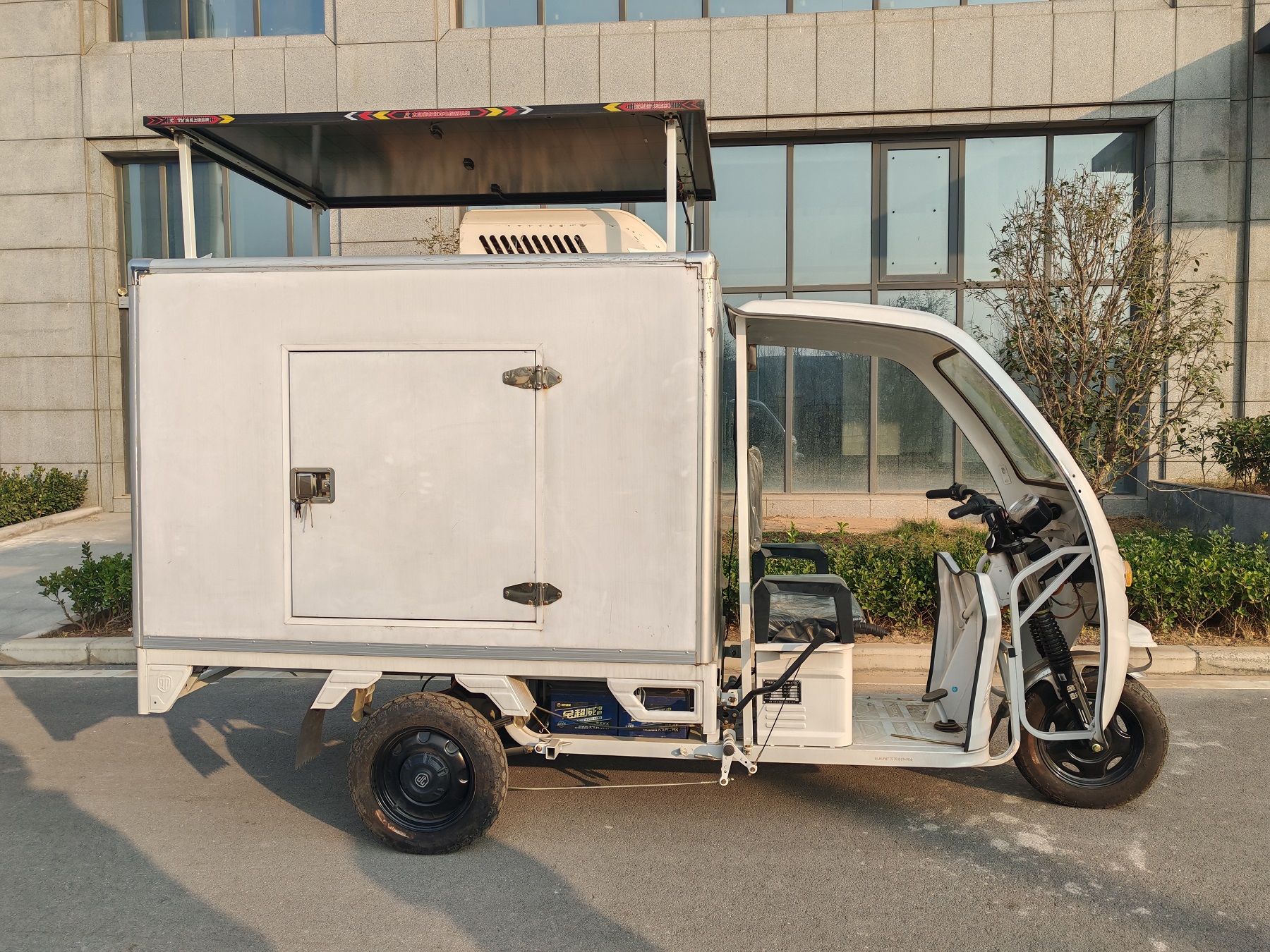
CE Certified Electric Cold Chain Delivery Solutions for European Urban Logistics
European cities are reshaping the rules for commercial delivery vehicles at a pace that is forcing fleet operators to rethink their entire approach to cold chain logistics. Low Emission Zones (LEZs) now cover over 300 urban areas across the European Union, with many cities moving toward Zero Emission Zones (ZEZs) that will ban internal combustion engine vehicles entirely from city centers within the next five to ten years.
For cold chain operators, these regulatory changes create both urgency and opportunity. The urgency is clear: diesel-powered refrigerated vans and trucks that have been the backbone of urban cold chain delivery for decades are being progressively restricted from the very areas where demand for fresh food, grocery, and pharmaceutical delivery is growing fastest. The opportunity lies in the fact that a CE certified electric refrigerated vehicle for European urban delivery can not only meet current regulations but future-proof fleet operations against increasingly stringent environmental requirements.
This guide examines the regulatory landscape, technical requirements, and practical considerations for deploying electric cold chain delivery vehicles in European urban environments, with specific guidance on selecting solutions that meet all applicable EU standards.
The European Regulatory Landscape for Cold Chain Delivery
Understanding the regulatory framework is essential for fleet operators because compliance is not optional - violations result in fines, route restrictions, and ultimately loss of operating licenses.
Low Emission Zones and Zero Emission Zones
The EU regulation compliant cold chain logistics van for food transport must comply with:
- Euro 6 emissions standards for any internal combustion engine vehicles (increasingly difficult to achieve with refrigeration unit emissions)
- Municipal LEZ access requirements, which vary by city but generally restrict older and more polluting vehicles
- Upcoming ZEZ mandates in cities including Amsterdam, Paris, London (ULEZ expansion), and Barcelona that will require zero tailpipe emissions
For electric refrigerated vehicles, these restrictions are not a concern because they produce zero direct emissions. However, the refrigeration unit must also be electrically powered and emissions-free. A diesel-powered refrigeration unit on an electric chassis would still face restrictions in most LEZs because the refrigeration unit is classified as a separate engine.
ATP (Agreement on the Transport of Perishables)
The ATP certification is the EU-wide standard for refrigerated transport vehicles. It classifies vehicles into insulation categories (INA for normal, INB for reinforced, INC for highly insulated) and equipment categories (FNA for mechanically refrigerated, FNB for mechanically refrigerated with heating capability).
For electric refrigerated vehicles to carry ATP certification, the entire refrigeration system must be tested and certified as an integrated unit. This includes:
- Insulation performance testing at defined ambient temperatures
- Refrigeration capacity testing at maximum rated ambient temperature
- Defrost cycle validation
- Temperature uniformity testing in loaded and unloaded conditions
HACCP (Hazard Analysis and Critical Control Points)
Any vehicle involved in food transport within the EU must comply with HACCP principles, which require:
- Documented temperature monitoring throughout the transport chain
- Regular cleaning and sanitation of cargo compartments
- Temperature validation under operating conditions
- Corrective action procedures for temperature excursions
Electric refrigerated vehicles have an advantage here because their integrated temperature monitoring systems typically include the data logging capabilities that HACCP documentation requires.
European Type Approval
For vehicles operating on EU roads, full European type approval (under EU Regulation 2018/858) is required. This covers vehicle safety, emissions, and noise standards. For specialized vehicles like refrigerated trucks, the type approval process also includes the refrigeration unit as part of the vehicle system.
CE Marking Requirements
The CE marking on a cold chain delivery vehicle covers multiple EU directives, including:
- Low Voltage Directive (2014/35/EU) for electrical safety
- EMC Directive (2014/30/EU) for electromagnetic compatibility
- Machinery Directive (2006/42/EC) if applicable to the refrigeration unit
- RoHS Directive (2011/65/EU) for restricted substances in electrical components
When evaluating an
Electric Refrigerated Mini Truck for European grocery last mile delivery, verify that both the vehicle chassis and the refrigeration system carry valid CE marking with the appropriate directive compliance documentation.
Technical Requirements for European Urban Cold Chain Delivery
Urban delivery in European cities imposes specific technical requirements that differ from long-haul or regional cold chain operations:
Compact Dimensions
European city streets are typically narrower than those in North America or the Middle East. Many delivery zones have width restrictions, height limits for underground parking access, and tight turning radii that eliminate full-size refrigerated trucks from consideration.
Ideal dimensions for European urban cold chain delivery:
- Overall width: under 2.0 meters for access to all delivery zones
- Overall height: under 2.2 meters for underground and multi-story parking access
- Turning radius: under 6.0 meters for navigating narrow streets and roundabouts
- Overall length: under 5.0 meters for parking in standard urban spaces
These dimensions typically correspond to small van or compact truck platforms, which align well with electric vehicle architectures where battery placement can be optimized for compact packaging.
Zero Emission Refrigeration
As noted earlier, the refrigeration unit must be fully electric to comply with LEZ and ZEZ requirements. Key specifications:
- Electrically driven variable frequency compressor (no separate diesel engine)
- Power drawn from the vehicle's main battery pack or a separate refrigeration battery
- Cooling capacity sufficient for European summer conditions (30 to 40 degrees Celsius in southern Europe)
- Low noise operation (important for early morning and evening deliveries in residential areas)
Variable frequency compressor technology is particularly valuable in European applications because:
- Precise temperature control reduces product spoilage and energy waste
- Lower noise output compared to fixed-speed compressors (important for noise-regulated urban areas)
- Higher energy efficiency extends operating range per charge
- Soft-start capability reduces peak current draw from the battery
Temperature Range Capabilities
European cold chain delivery typically requires two temperature ranges:
- Chilled (0 to 8 degrees Celsius): dairy, fresh meat, prepared foods, beverages, pharmaceuticals
- Frozen (minus 18 degrees or below): frozen foods, ice cream, certain pharmaceuticals
Multi-temperature zone configurations are valuable for operators delivering both chilled and frozen products on the same route, eliminating the need for separate vehicles.
Battery Range and Charging Strategy
European urban delivery routes typically cover 80 to 150 km per day with frequent stops. Electric cold chain vehicles must account for:
- Driving energy consumption: 25 to 40 kWh per 100 km
- Refrigeration energy consumption: 1.5 to 3.0 kW continuous
- Auxiliary loads (lights, heating/cooling for driver cabin, IoT systems): 0.5 to 1.0 kW
Total daily energy requirement: approximately 40 to 70 kWh
For a vehicle with a 60 kWh battery pack:
- Driving range: approximately 120 to 180 km (without refrigeration load)
- Effective cold chain range: approximately 80 to 120 km with continuous refrigeration
- This is sufficient for most urban delivery routes, which typically cover 60 to 100 km per day
Charging strategy for European urban operations:
- Depot charging during overnight hours (8 to 10 hours available)
- Level 2 charging (7.4 to 22 kW) is adequate for overnight replenishment
- Opportunity charging at delivery points with available charging infrastructure extends range for longer days
- Some European cities offer commercial EV charging subsidies that reduce installation and operating costs
The CE certified electric refrigerated vehicle for European urban delivery is not merely a regulatory compliance tool - it is a strategic asset that positions cold chain operators for long-term success in a market that is fundamentally shifting toward zero-emission logistics.
Contact NEWBASE to discuss your European cold chain delivery requirements and receive a customized proposal with specifications tailored to your operating conditions and target markets.