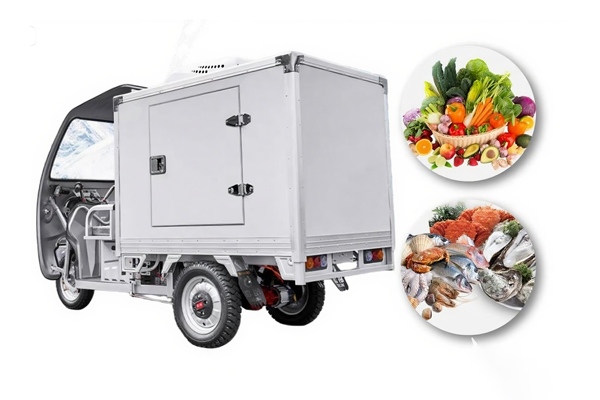
Vaccines are among the most temperature-sensitive products in global logistics. From the moment they leave a manufacturing facility until they reach a vaccination point, they must be maintained within a narrow temperature band - typically between 2 and 8 degrees Celsius for most vaccines, with some requiring storage as low as minus 20 degrees or even minus 70 degrees for mRNA-based products. Any excursion outside this range, even briefly, can render an entire batch ineffective.
For pharmaceutical cold chain operators in the Middle East - particularly in Saudi Arabia, the UAE, and Qatar - maintaining this temperature integrity during last-mile transport is extraordinarily challenging. Ambient temperatures routinely exceed 45 degrees Celsius, infrastructure in rural and semi-urban areas may be limited, and the consequences of a cold chain failure extend far beyond financial loss to include public health risks.
This is where the GSP compliant vaccine cold chain transport vehicle has evolved significantly in recent years, and the pharmaceutical
Refrigerated Mini Truck for Saudi Arabia vaccine distribution represents the latest generation of purpose-built solutions designed to address these exact challenges.
Understanding GSP Compliance for Vaccine Transport
GSP stands for Good Supply Practice, a set of quality standards governing the pharmaceutical supply chain. In the context of vaccine cold chain transport, GSP compliance means the transport vehicle must meet several rigorous requirements:
Temperature Accuracy and Uniformity: The vehicle must maintain product temperature within plus or minus 0.5 degrees Celsius of the target set point throughout the cargo compartment. This is far stricter than the plus or minus 2 degrees tolerance common in food cold chain applications.
Temperature Monitoring and Recording: Continuous digital temperature monitoring with data logging at intervals no greater than five minutes. The system must record time-stamped temperature data that can be downloaded or transmitted remotely for audit purposes.
Alarm Systems: Automatic alarms that activate when temperature approaches the acceptable limits, providing both visual and audible alerts to the driver and simultaneously transmitting alerts to a remote monitoring center.
Validation Documentation: The vehicle's refrigeration system must be validated through thermal mapping studies that demonstrate temperature performance under loaded and unloaded conditions, with doors open and closed, and at various ambient temperatures.
Calibration: All temperature sensors and recording instruments must have valid calibration certificates traceable to national or international standards.
Power Backup: The refrigeration system must maintain temperature control during engine-off periods, such as traffic stops or brief delivery pauses, for a minimum defined duration.
Meeting these requirements is not optional for pharmaceutical logistics - it is a regulatory necessity. Health authorities across the GCC require documented GSP compliance for any company transporting vaccines and temperature-sensitive pharmaceuticals.
Why Electric Mini Refrigerated Trucks Over Diesel Alternatives
Traditional vaccine transport has relied on diesel-powered refrigerated vans and trucks. While these vehicles are capable of meeting GSP requirements, they present several disadvantages for vaccine distribution in the Middle East:
Emissions and Idling Concerns: Diesel refrigeration units produce emissions while idling at delivery points. In many Middle Eastern cities, idling restrictions are becoming stricter, particularly near hospitals, clinics, and residential areas where vaccine deliveries typically occur.
Vibration and Temperature Fluctuation: Diesel engines generate significant vibration that can affect temperature sensor accuracy and potentially disturb sensitive vaccine packaging. Electric drive systems produce far less vibration, contributing to more stable temperature control.
Fuel Availability in Remote Areas: Vaccine distribution networks in Saudi Arabia extend well beyond major cities to rural health centers, desert communities, and remote clinics. In these areas, diesel fuel availability may be unreliable, while electric vehicles can be charged overnight at health facilities.
Noise Levels: Quiet electric operation is particularly important for deliveries to clinics, hospitals, and residential vaccination centers during early morning or late evening hours.
Total Cost of Ownership: Electric mini trucks offer 40 to 60 percent lower per-kilometer operating costs compared to diesel equivalents when factoring in fuel, maintenance, and refrigeration system servicing over a five-year period.
The pharmaceutical refrigerated mini truck for Saudi Arabia vaccine distribution has additional advantages specific to the Saudi healthcare system. Saudi Arabia's Vision 2030 healthcare modernization initiative emphasizes sustainable logistics solutions, creating regulatory and procurement incentives for electric vehicle adoption in pharmaceutical supply chains.
Technical Requirements for Vaccine-Grade Electric Mini Trucks
Designing or selecting an electric mini truck for GSP-compliant vaccine transport requires attention to several critical technical specifications:
Precision Temperature Control System
The foundation of any vaccine transport vehicle is its temperature control system. For GSP compliance, the system must achieve and maintain temperature within a plus or minus 0.5 degree Celsius precision band around the set point.
This level of precision requires:
- A high-accuracy temperature sensor network with multiple sensing points distributed throughout the cargo compartment (minimum one sensor per 0.5 cubic meters of cargo volume)
- A proportional control algorithm that adjusts compressor output continuously rather than using simple on/off cycling
- A refrigeration compressor with sufficient capacity to overcome the thermal load from ambient heat transfer through insulation
The ±0.5°C precision temperature controlled cold chain truck specifications represent the current industry benchmark for vaccine-grade vehicles. NEWBASE's NBESRA300 model, for example, uses a variable frequency compressor system coupled with a distributed sensor array to achieve this precision, with temperature data logged at 60-second intervals and transmitted via cellular network to a cloud-based monitoring platform.
Insulation and Thermal Performance
Vaccine transport vehicles require premium insulation to minimize heat ingress and reduce the cooling load on the refrigeration system. For Middle East conditions, this means:
- Minimum 80mm high-density polyurethane foam insulation (compared to 60mm for standard food-grade applications)
- Vacuum insulation panels (VIPs) in critical areas for enhanced thermal performance
- Thermal break construction that eliminates metal-to-metal thermal bridges in the box structure
- Multi-layer door seals with a minimum of three sealing points per door
With premium insulation, the thermal loss coefficient (K-value) should be below 0.28 W per square meter per Kelvin. Lower K-values mean less heat enters the cargo compartment, reducing compressor runtime and battery consumption.
Battery and Power System
The battery system in a vaccine transport vehicle must handle two separate power demands: vehicle propulsion and continuous refrigeration. In 45-degree ambient conditions, the refrigeration unit alone may consume 1.5 to 3.0 kW continuously, significantly reducing the range available for driving.
For reliable vaccine distribution, the power system should include:
- LiFePO4 battery pack with minimum 80 kWh total capacity for typical mini truck configurations
- Separate power management circuits for propulsion and refrigeration, ensuring that refrigeration continues even if the drive battery is depleted
- Emergency battery backup that can maintain temperature control for a minimum of 4 hours without any charging input
- Battery thermal management that prevents the battery pack from overheating in extreme ambient conditions
Some advanced designs incorporate a secondary small battery or supercapacitor dedicated solely to the refrigeration system, providing an independent power source that ensures temperature integrity regardless of drive battery status.
Temperature Monitoring and IoT Integration
Modern vaccine transport vehicles go beyond basic temperature logging to provide comprehensive supply chain visibility:
- Real-time temperature display visible to the driver
- GPS-based location tracking synchronized with temperature data
- Cloud-based data platform accessible to logistics managers and quality assurance teams
- Automated compliance reporting that generates GSP audit documentation
- Predictive alerts that notify operators when temperature trends suggest an impending excursion, allowing corrective action before limits are reached
This level of connectivity transforms the transport vehicle from a passive container into an active monitoring node in the pharmaceutical supply chain.
Saudi Arabia Vaccine Distribution: Specific Challenges and Solutions
Saudi Arabia's vaccine distribution network presents unique challenges that influence vehicle selection:
Geographic Scale
Saudi Arabia covers approximately 2.15 million square kilometers. Vaccine distribution routes can span hundreds of kilometers, from central manufacturing and storage facilities in Riyadh to health centers in remote areas of the Eastern Province, the Northern Borders, and the Asir region.
For long-distance segments, electric mini trucks may need to be combined with traditional refrigerated transport for the trunk route, with electric mini trucks handling the last-mile segment from regional distribution hubs to individual health facilities.
Temperature Extremes
Summer temperatures in Riyadh can exceed 50 degrees Celsius, while winter temperatures in the northern regions can drop below zero. Vaccine transport vehicles must perform reliably across this full temperature range, with the refrigeration system capable of both cooling in extreme heat and maintaining minimum temperature requirements in cold conditions.
Infrastructure Considerations
While major Saudi cities have well-developed road networks and electricity infrastructure, rural health facilities may have limited power supply for vehicle charging. Vehicles with solar panel integration or extended battery backup capacity are valuable for these routes.
Regulatory Framework
The Saudi Food and Drug Authority (SFDA) oversees pharmaceutical cold chain compliance. Operators must maintain detailed documentation of vehicle validation, temperature monitoring records, and driver training certifications. Selecting a vehicle with built-in automated compliance documentation significantly reduces the administrative burden.
Operational Best Practices for Vaccine Cold Chain Transport
Beyond vehicle selection, operational procedures play a critical role in maintaining GSP compliance:
Key specifications include:
- Temperature control precision: plus or minus 0.5 degrees Celsius
- Temperature range: minus 20 degrees to plus 15 degrees Celsius (configurable)
- Cargo volume: 3.0 to 5.0 cubic meters (multiple configurations available)
- Payload capacity: up to 800 kg
- Insulation: 80mm high-density polyurethane foam with vacuum insulation panels
- Compressor: variable frequency inverter-driven compressor
- Battery: LiFePO4 with independent refrigeration power circuit and 4-hour backup
- Temperature monitoring: multi-point sensor array with 60-second logging interval, cloud connectivity, and automated GSP compliance reporting
- Certifications: CE, designed to meet GSP standards for pharmaceutical transport
- Ambient operating range: minus 10 degrees to plus 55 degrees Celsius
The NBESRA300's modular design allows NEWBASE to customize configurations for specific pharmaceutical applications, including:
- Two-temperature zone configurations for mixed vaccine and pharmaceutical shipments
- Ultra-low temperature configurations (minus 20 to minus 30 degrees) for specialized biologics
- Integrated vaccine storage racks and securing systems for safe transport of individual vaccine containers
As a recognized Tier 0.5 manufacturer with IATF 16949 quality certification, NEWBASE provides the manufacturing consistency and traceability that pharmaceutical supply chain managers require. The company's three manufacturing bases and monthly capacity of 10,000 units ensure reliable supply for large fleet orders.