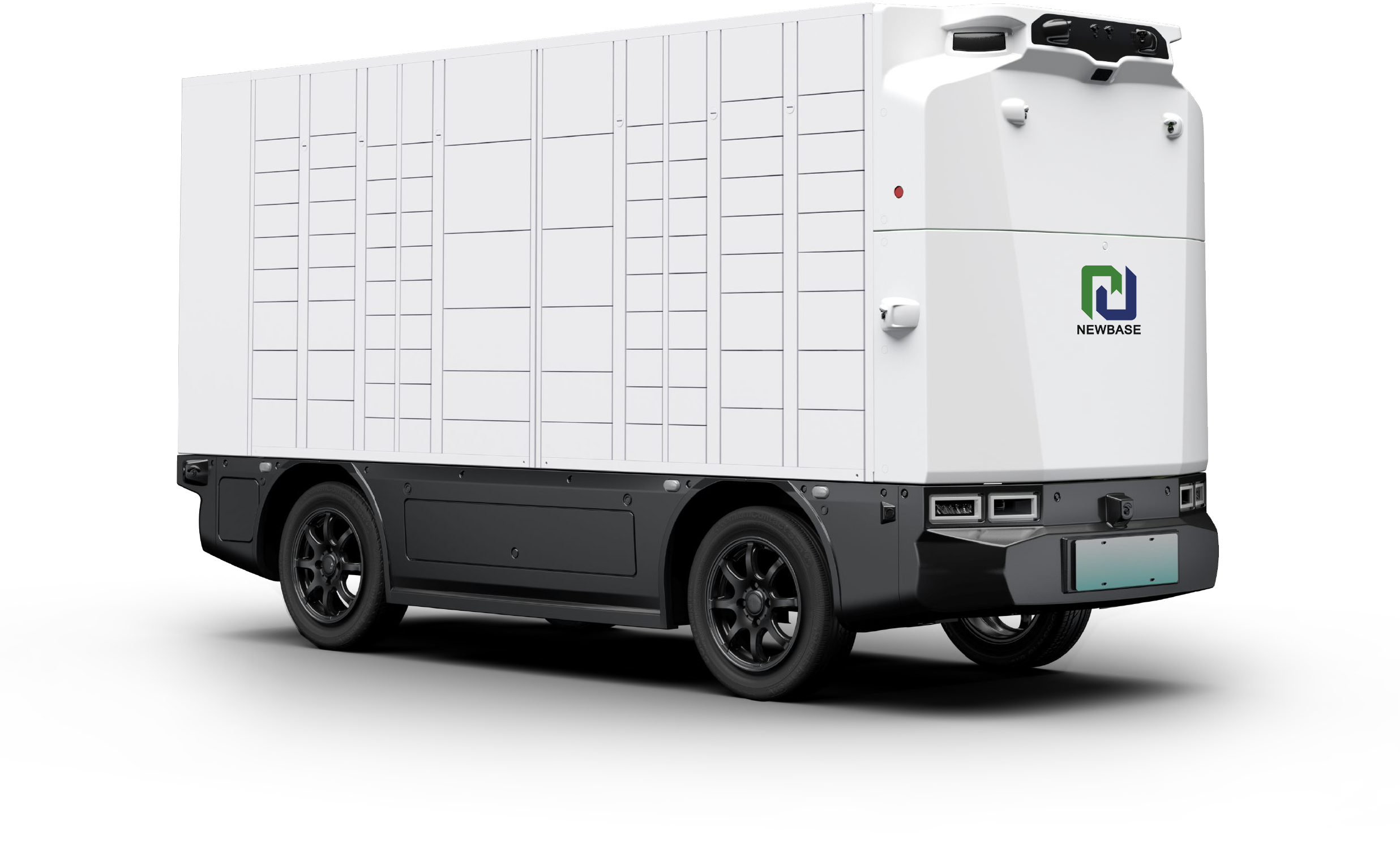
Understanding L4 autonomous driving does not require an engineering degree, but it does require grasping a few core concepts that separate Level 4 from lower automation levels. According to the internationally recognized SAE J3016 standard, L4 — also called "High Automation" — means the vehicle can perform all driving tasks within a defined Operational Design Domain (ODD) without any human intervention. Unlike L3, where a human must be ready to take over, L4 vehicles have no steering wheel requirement and can handle all emergency situations independently. This is the critical distinction: an L4 delivery van does not need a backup driver, ever, within its operational area.
The technology stack that enables this capability rests on three pillars: perception, decision-making, and execution. The perception layer combines multiple sensor types — LiDAR for precise 3D mapping, cameras for object recognition and traffic sign reading, radar for distance and velocity measurement, and ultrasonic sensors for close-range detection. These sensors create a continuous 360-degree digital model of the vehicle's surroundings, updated dozens of times per second. Sensor redundancy is the safety cornerstone: if any single sensor fails, overlapping coverage from other sensor types ensures the vehicle maintains full environmental awareness. This multi-sensor fusion architecture is what separates genuine L4 systems from less capable platforms.
The decision-making layer is where artificial intelligence transforms raw sensor data into driving actions. Modern L4 systems use deep neural networks trained on billions of kilometers of real-world and simulated driving data. The AI simultaneously performs object classification (identifying pedestrians, cyclists, vehicles, and obstacles), trajectory prediction (estimating where moving objects will be in 3-5 seconds), and path planning (calculating the safest and most efficient route through the environment). For logistics applications, this means the L4 fully autonomous logistics van all-weather operation specifications must include not just standard driving scenarios but also complex urban logistics situations: loading dock navigation, narrow alley access, double-lane parking for deliveries, and interaction with warehouse loading equipment.
Execution is the final layer — the vehicle's actuators that physically control steering, acceleration, and braking. L4 vehicles use drive-by-wire systems where electronic signals replace mechanical linkages, enabling millisecond-precise control that exceeds human capability. The braking system features full redundancy with independent primary and secondary braking circuits. Steering systems similarly incorporate dual motors and fail-operational designs. This hardware redundancy, combined with redundant computing platforms (typically two independent AI processors running in parallel), ensures that no single point of failure can compromise vehicle safety — a principle known as functional safety, governed by the ISO 26262 standard.
For logistics professionals, the practical takeaway is this: L4 autonomous driving technology for urban logistics delivery vehicle applications is not science fiction — it is a mature, systematically engineered system built on layered redundancy. The technology has progressed from "can it drive itself?" to "how reliably can it drive itself under all expected conditions?" That reliability question is what separates production-ready L4 platforms from experimental prototypes, and it is the question B2B buyers should ask every autonomous vehicle manufacturer they evaluate.