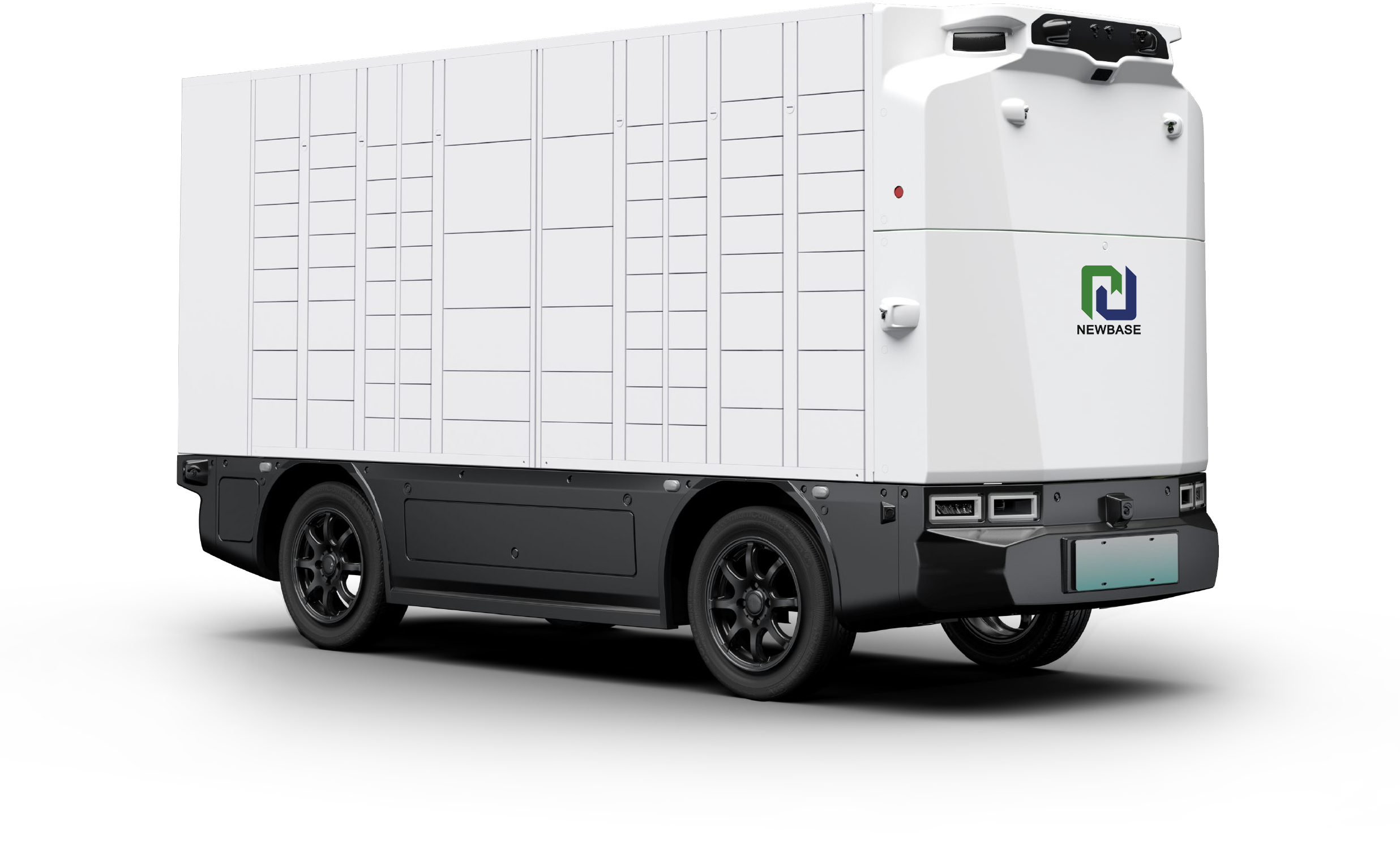
Choosing the right autonomous delivery vehicle for your business boils down to matching vehicle capabilities with your operational realities — not chasing the flashiest specs. The global last-mile autonomous delivery market is growing at 21% CAGR, but picking the wrong model can leave you with an expensive shelf ornament instead of a productivity tool. Whether you run a 3PL firm, a retail chain, or an e-commerce fulfillment operation, knowing how to choose autonomous delivery vehicle for business success is the difference between genuine cost savings and a write-off. This guide walks you through the decision framework that NewBase and other L4 autonomous vehicle manufacturers use with their enterprise clients.
Here's what you'll learn: the six decision criteria that actually matter (not the marketing fluff), how to size your fleet before you buy, and how to vet suppliers before signing a pilot contract.
1. What Are the Six Non-Negotiable Criteria When Evaluating Autonomous Delivery Vehicles?
Start with your operational constraints, not the vehicle spec sheet. Most buyers make the mistake of comparing listed payload and range numbers first — but those numbers rarely reflect real-world conditions. If you're wondering how to choose autonomous delivery vehicle for business use cases specifically, these six factors will determine whether your deployment delivers ROI or collects dust.
Payload and Cargo Volume: Match to Your Average Order Profile
Don't buy the biggest vehicle you can afford — buy the one that fits your typical load. Running a half-empty autonomous van is like hiring a 10-ton truck to deliver a sandwich: you're paying for capacity you never use.
- Last-mile parcel & e-commerce: 500–800kg payload, 3–5.5m³ volume usually covers 200–600 packages per route. The NewBase Z5 series at 5.3m³ / 800kg fits this sweet spot.
- Grocery & fresh food: Look for 800–1500kg payload with refrigeration options. The NEWBASE Z8 series at 8m³ / 1500kg works for multi-stop grocery routes.
- Industrial & warehouse shuttle: 1000–1500kg with forklift/pallet compatibility. NewBase Z8Max with 10m³ cargo space and three-door access is built for this.
Pro tip: Calculate your average route's total volume and weight, then add 20% headroom for peak days. That's your target size.
Range & Charging: Real-World Numbers Beat Advertised Range
Advertised range is measured under ideal conditions (flat roads, 25°C, steady speed). Real-world range in urban delivery is typically 60–75% of the advertised number, and drops further in cold weather or hilly terrain.
✅ What to check:
- Urban/comprehensive range (not "unloaded max range")
- Charging time for standard and fast-charge options
- Battery chemistry (LFP = longer cycle life, better for commercial use)
- Whether swappable batteries are available (critical for 24/7 operations)
For reference, the NewBase Z5 with 28.3kWh LFP battery delivers 180km urban comprehensive range — enough for a full day's route with buffer to spare.
Autonomy Level & Operational Design Domain (ODD)
"L4 autonomous" is a label, not a guarantee. What matters is the Operational Design Domain — where the vehicle is actually approved to drive.
| ODD Level | Where It Can Operate | Typical Use Case |
| Closed campus only | Private roads, industrial parks, university campuses | Factory internal logistics |
| Semi-open roads | Residential communities, low-traffic urban streets | Neighborhood parcel delivery |
| Open urban roads | Public roads with mixed traffic | City-wide last-mile delivery |
L4 capability in closed campuses is not the same as L4 on public roads. If your routes involve public roads, make sure the vehicle has real open-road validation mileage — not just test-track numbers. NEWBASE vehicles have accumulated millions of kilometers of L4 operation on public roads, including mixed-traffic urban scenarios.
Sensor Suite & Redundancy
More sensors don't always equal better performance — but the right sensor mix with redundancy does. Look for:
- Sensor fusion (camera + LiDAR + radar), not just cameras
- Redundant perception systems (no single point of failure)
- All-weather performance (rain, fog, low-light conditions)
- Remote teleoperation capability as a backup
Integration & Fleet Management Software
A vehicle without software integration is just a fancy golf cart. Check:
- Does it have an open API for your WMS/TMS/OMS?
- Is there a cloud-based fleet management dashboard?
- Can you monitor real-time location, temperature, and battery status?
- Does it support over-the-air (OTA) software updates?
Total Cost of Ownership, Not Just Purchase Price
The sticker price is 30–50% of the true 5-year cost. You also need to account for:
- Software subscriptions / licensing fees
- Maintenance & Spare Parts
- Insurance (autonomous vehicle insurance costs more than regular van insurance)
- Charging infrastructure
- Remote monitoring & teleoperation staffing
As a rough benchmark: NewBase data shows autonomous delivery reduces operational costs by 40–58% compared to driver-operated vans, with payback typically between 2–3 years for high-utilization routes.
✅ Bottom line: Prioritize ODD match and real-world range over advertised specs — a vehicle that works where you need it beats one with bigger numbers on paper.
2. How Do You Find a Reliable Autonomous Vehicle Supplier You Can Actually Trust?
The best supplier isn't the one with the flashiest demo — it's the one with real commercial deployment data and a track record of supporting customers post-launch. This is especially important when you're looking at options from international markets, which is why understanding how to find reliable autonomous vehicle supplier China factory partners can save you from costly missteps.
Here's a structured vetting framework.
Look for Real Commercial Deployment, Not Just Prototypes
The single most important question to ask any supplier: "How many units are in actual commercial operation, and with whom?"
Red flags:
- Only "pilot" or "demo" deployments after 3+ years
- No named reference customers
- Vehicles only operate in controlled test zones
Green flags:
- Thousands of units in commercial service
- Named enterprise customers in logistics, retail, or municipal sectors
- Multi-city / multi-country deployments
- Millions of kilometers of real operational data
NewBase, for example, has thousands of units deployed across logistics, retail, and municipal applications in China and Southeast Asia, with partnerships including major logistics providers like SF Express and China Post. Zhengzhou Newbase Auto Electronics Co., Ltd., the company behind the NewBase brand, has been manufacturing automotive electronics since 2007 and is one of the first Chinese companies to achieve standardized L4 autonomous vehicle deployment on public roads.
Verify Manufacturing & Quality Capability
Autonomous vehicles are complex electromechanical products — you need a supplier that can actually build them at scale, not just design them.
What to check:
- Do they own their own production facilities? (vs. outsourcing assembly)
- What certifications do they hold? (ISO 9001, IATF 16949 for automotive-grade quality)
- What's their monthly production capacity?
- Do they have standardized quality control processes?
If you're considering a China factory supplier, look for manufacturers with both R&D and production in-house — like NEWBASE, which has three production bases totaling 40,000 m² and has been manufacturing automotive electronics since 2007. This is the kind of tangible evidence you want when figuring out how to find reliable autonomous vehicle supplier China factory partners that can scale with your business.
Evaluate After-Sales Support & Service Network
Autonomous vehicles need software updates, maintenance, and occasional troubleshooting. A supplier that disappears after delivery is a liability.
Ask these questions:
- What's the response time for technical support? (Look for 24/7 or next-business-day guarantees)
- Do they offer on-site service or only remote support?
- What's the warranty period for hardware vs. software?
- Is there a spare parts supply chain in your region?
- How often do they push OTA software updates?
Check for Customization Capability
Off-the-shelf vehicles rarely fit perfectly. The best suppliers can customize:
- Cargo compartment layouts (shelves, refrigeration, lockers)
- Branding & livery
- Software integration with your existing systems
- Specialized options like cold chain, security patrol, or mobile vending configurations
NewBase offers full OEM/ODM customization, from cargo box design to software API integration — which is why the autonomous delivery vehicle buying guide for small business teams often prioritizes configurable platforms over fixed-spec models.
✅ Bottom line: Vet suppliers by deployment scale, manufacturing capability, and service network — demo videos and spec sheets alone don't prove reliability.
FAQ
Q: Can a small business actually afford autonomous delivery vehicles?
A: Yes, and the entry cost has dropped dramatically in the past two years. This autonomous delivery vehicle buying guide for small business readers often leads with this exact question — and the short answer is that you don't need a six-figure budget to start. Small businesses don't need to buy a 10-vehicle fleet to start. Many suppliers, including NewBase, support MOQ as low as 1 unit for pilot testing. For small operations, even a single Z5-class vehicle running one route can save 30–40% on that route's labor costs. You can also look at RaaS (Robot-as-a-Service) models with per-delivery pricing to reduce upfront risk.
Q: How long does it take to deploy autonomous delivery vehicles?
A: It depends on the operational design domain. Closed-campus deployments (factories, parks) can be up and running in 2–4 weeks, including mapping and route setup. Public road deployments take longer — typically 2–3 months including regulatory approvals, high-definition mapping, and pilot testing. NEWBASE can deploy campus vehicles in as little as two weeks for standard routes.
Q: Do I need special permits or licenses to operate autonomous delivery vehicles?
A: Regulations vary widely by country and city. In the U.S., NHTSA has granted exemptions for low-speed autonomous delivery vehicles. In the EU, CE certification and L6e/L7e vehicle classification apply. In China, multiple cities have opened designated zones for autonomous delivery testing and commercial operation. A reputable supplier like NewBase will help you navigate the regulatory requirements for your specific region and provide the necessary documentation.
Not sure which model or how many vehicles you need? The NewBase engineering team will analyze your routes, order volume, and operational constraints and recommend the optimal vehicle configuration and fleet size — with no obligation.
Send us your delivery route data (average stops, package volume, route distance) and we'll send back a free assessment including:
- Recommended vehicle model(s)
- Optimal fleet size for your volume
- Projected cost savings vs. your current operation
- Pilot deployment timeline
Published: August 2026 | By NewBase Engineering Team