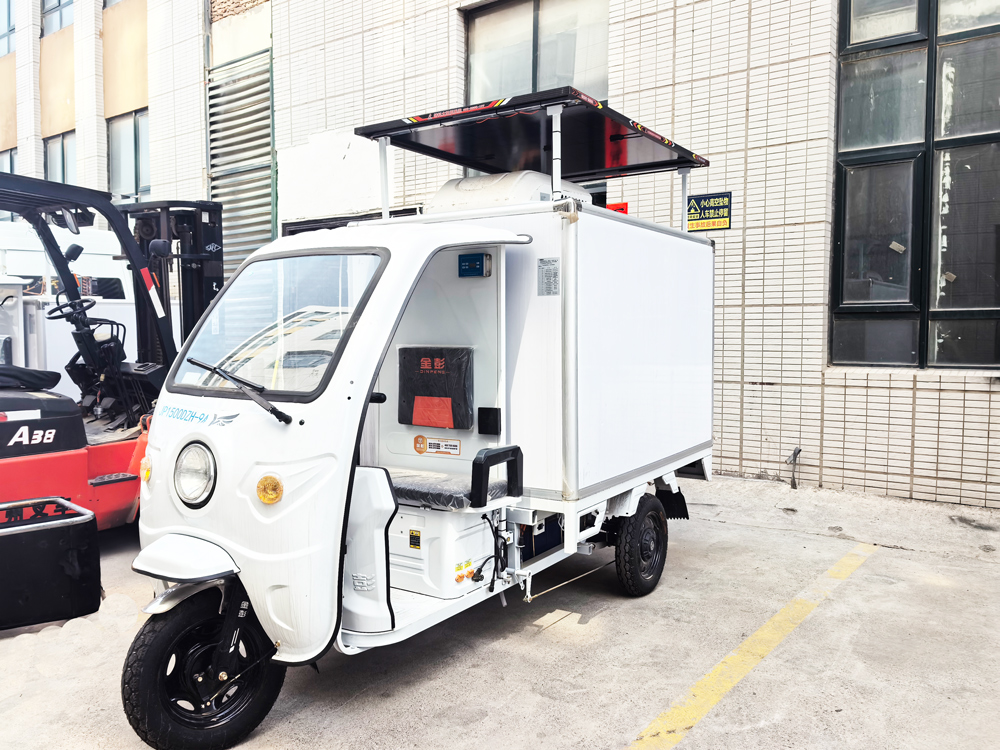
In the competitive world of Indian last-mile logistics, every rupee counts. For years, the refrigerated van was the default choice for cold chain transport. But as urban congestion worsens and fuel prices climb, B2B fleet owners are discovering that "bigger" isn't always "better."
If you are looking to optimize your last-mile cold chain logistics, the shift from traditional vans to an
Electric Refrigerated Tricycle India could be the key to slashing your operating costs by up to 40%. Here’s how the numbers break down.
1. Capital Investment & Depreciation (CAPEX)
The upfront cost of a fully equipped refrigerated van in India can be three to five times higher than a high-end EV cooling trike for business.
Van: High purchase price + high insurance premiums + rapid depreciation.
Tricycle: Low entry cost, making it easier to scale your fleet from one unit to ten.
For a startup or a growing SME, the lower CAPEX of a tricycle allows you to achieve a faster "Return on Investment" (ROI), often within the first 8-12 months of operation.
2. Fuel vs. Electricity: The Opex Revolution
This is where the 40% cost reduction truly manifests. A diesel van idling in Mumbai or Delhi traffic continues to burn expensive fuel just to keep the refrigeration unit running.
In contrast, an electric
Refrigerated Tricycle India uses battery power for both propulsion and cooling. The cost per kilometer for an electric trike is a fraction (often 1/5th) of a diesel van. In the Indian context, switching to India green mobility solutions is no longer just an environmental choice—it’s a survival strategy against rising fuel inflation.
3. Maintenance and Downtime
A van is a complex machine with an internal combustion engine, a heavy-duty transmission, and a separate cooling motor. The maintenance costs are high, and when it breaks down, your entire delivery route stops.
A 3-wheel delivery vehicle for food has significantly fewer moving parts. No oil changes, no exhaust systems, and simplified cooling units mean:
Lower repair bills: Up to 50% reduction in annual maintenance costs.
Higher Uptime: Simpler machines are quicker to fix, keeping your products moving and your customers happy.
4. Navigational Efficiency & "Drops Per Hour"
In the narrow lanes of India’s Tier 1 and Tier 2 cities, a van's size is its biggest liability. Finding parking and maneuvering through traffic takes time—and time is money.
The agility of a refrigerated tricycle allows it to:
Take Shortcuts: Access narrow alleys that vans cannot enter.
Park Easily: Reduce the "last-hundred-meters" walking time for drivers.
This leads to more "drops per hour," effectively increasing the productivity of your workforce without adding extra shifts.
5. Reduced Spoilage Loss
A common mistake in last-mile cold chain logistics is using a large van for small, frequent drops. Every time the large rear doors of a van open, a massive amount of cold air escapes, forcing the engine to work harder to pull down the temperature again.
A refrigerated tricycle features a smaller, highly insulated compartment. This allows for better temperature retention during frequent stops, drastically reducing the "spoilage rate" of sensitive items like ice cream, milk, or fresh juice.
Conclusion: Size the Vehicle to the Mission
While vans still have their place in inter-city long-hauls, the urban last-mile belongs to the tricycle. By choosing an EV cooling trike for business, you are not just buying a vehicle; you are implementing a high-efficiency cost-saving tool.
Ready to see how much you can save? Contact us today for a customized ROI analysis for your fleet.