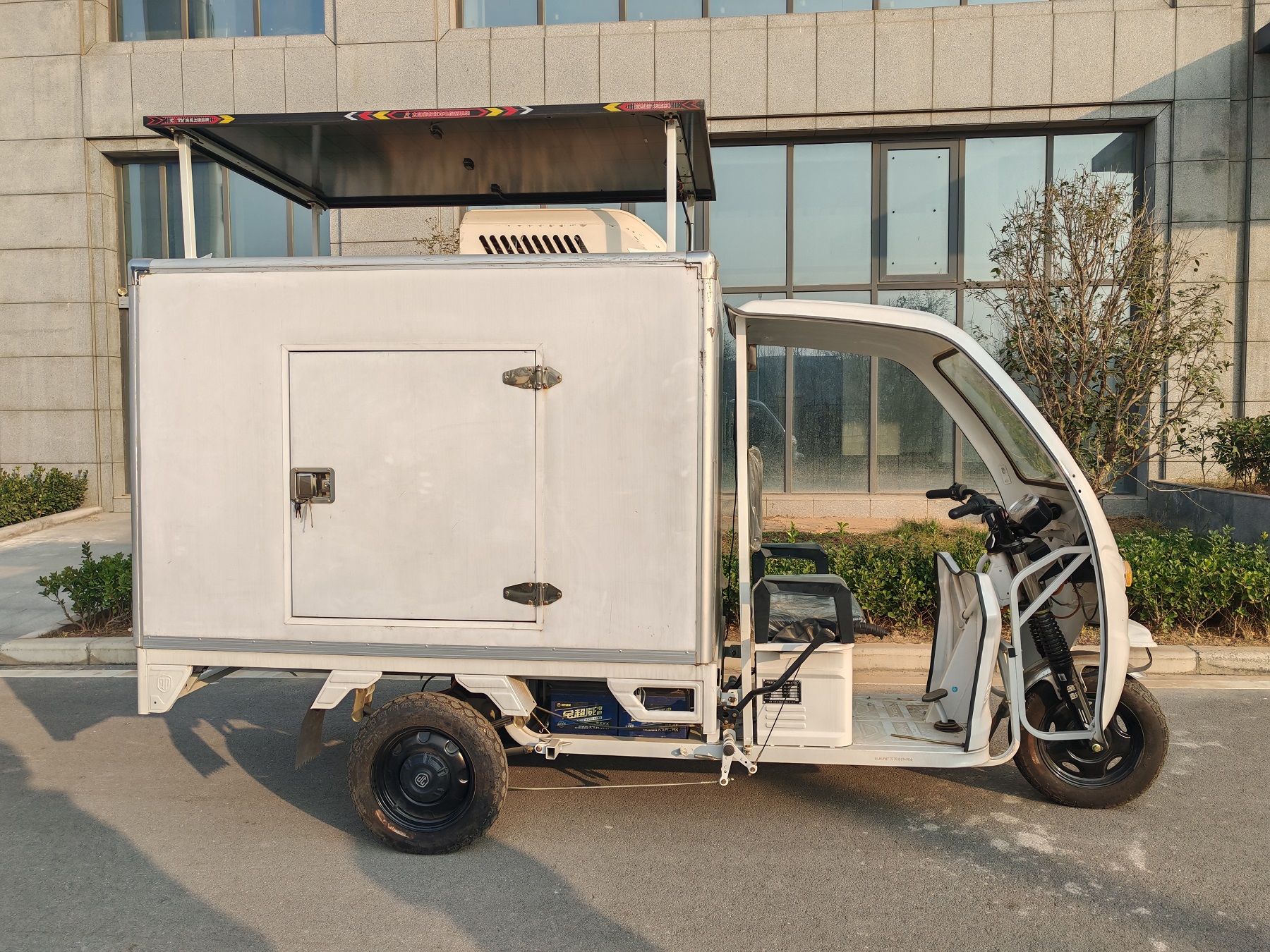
The landscape of Indian urban logistics is undergoing a seismic shift. As the "Quick Commerce" race heats up in metros like Delhi, Bengaluru, and Mumbai, the traditional methods of delivering temperature-sensitive goods are failing to keep pace. The solution emerging as the clear winner is the
Electric Refrigerated Tricycle India, a vehicle specifically engineered for the country's unique challenges.
Here is why this 3-wheeled powerhouse is set to dominate the future of the Indian cold chain.
1. Cracking the Code of Last-Mile Cold Chain Logistics
In a country where summer temperatures frequently cross 40°C, the "last mile" is the most dangerous stretch for perishables. Traditional motorbikes with thermal bags often suffer from "temperature abuse," leading to high spoilage rates.
Professional last-mile cold chain logistics require active, consistent cooling. By integrating a dedicated DC compressor and high-density insulation into a compact frame, these trikes ensure that whether it’s frozen meat or dairy, the product remains at the set temperature from the warehouse to the doorstep, even in notorious Indian traffic jams.
2. The Perfect 3-Wheel Delivery Vehicle for Food
India’s urban centers are characterized by high density and narrow, aging infrastructure. Large refrigerated vans often find themselves stuck in gridlock, where a 2-kilometer journey can take 30 minutes.
The 3-wheel delivery vehicle for food offers the perfect form factor to bypass this congestion. Its compact width allows it to navigate through narrow "gallis" (lanes) and park in spaces where a van would be blocked. For catering businesses and grocery chains, this means more "drops" per hour and a significant reduction in the time products spend in transit.
3. A High-ROI EV Cooling Trike for Business
For Indian B2B fleet owners, the Total Cost of Ownership (TCO) is the ultimate metric. Investing in an EV cooling trike for business hits the economic sweet spot.
With petrol prices fluctuating, the switch to electric propulsion cuts operational expenses by up to 60-80% per kilometer. Furthermore, these trikes require far less maintenance than internal combustion engines, ensuring that your fleet stays on the road rather than in the repair shop.
4. Alignment with India Green Mobility Solutions
The Indian government’s push for EV adoption—driven by the FAME II scheme and state-specific incentives—has made sustainable transport a corporate necessity. Major cities are contemplating "Zero Emission Zones" where only non-polluting vehicles will be permitted.
By adopting India green mobility solutions, businesses are future-proofing their operations. Operating a silent, exhaust-free fleet not only helps companies meet their ESG (Environmental, Social, and Governance) goals but also enhances brand reputation in the eyes of the modern, environmentally-conscious Indian consumer.
Conclusion: Scaling for the Next Decade
The era of bulky, expensive, and polluting delivery vans is fading in India’s urban landscape. The transition to specialized electric trikes represents the intersection of technology, economy, and environment. For businesses looking to scale their cold chain in the world’s fastest-growing market, these agile 3-wheelers are no longer just an option—they are the key to survival and success.