The Challenge of Power Inverters in Tropical Southeast Asia
Southeast Asia's commercial vehicle market is one of the fastest growing in the world. With rapid urbanization across Thailand, Indonesia, the Philippines, Vietnam, and Malaysia, fleet operators are expanding their logistics networks, last-mile delivery services, and mobile workforce operations at unprecedented rates. At the heart of these operations lies a simple but critical need: reliable on-board power conversion from DC to AC.
However, the tropical climate across most of Southeast Asia presents unique challenges that make standard vehicle power inverters — designed primarily for temperate markets — unreliable or short-lived. Ambient temperatures regularly exceeding 35 degrees Celsius, combined with humidity levels above 80% year-round in many regions, create operating conditions that push consumer-grade inverters beyond their design limits.
A wireless charging car
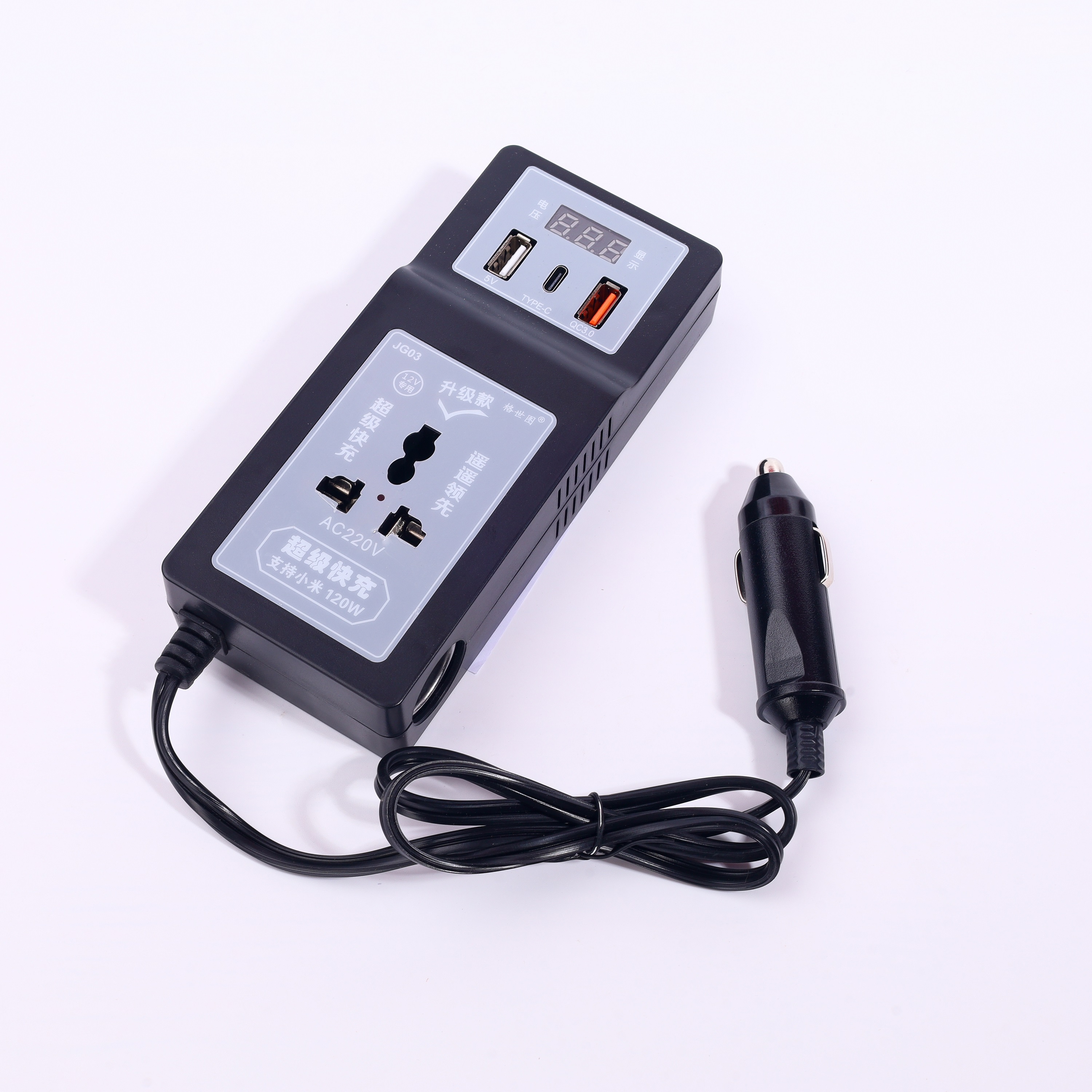
Power Inverter with QC3.0 for tropical fleet vehicles must address not just basic power conversion, but thermal resilience, moisture resistance, and long-term reliability under extreme environmental stress. This guide explores why tropical-specific inverter selection matters for Southeast Asian fleet operators and how to identify products built to survive and thrive in these demanding conditions.
Understanding the Environmental Stress Factors
Before selecting any inverter for tropical fleet deployment, operators must understand the specific environmental factors that degrade performance and reliability:
Ambient Temperature Extremes:
In cities like Bangkok, Jakarta, Manila, and Ho Chi Minh City, daytime temperatures frequently reach 35 to 40 degrees Celsius. Inside a parked vehicle cabin with the windows up, temperatures can exceed 60 degrees Celsius. Even while driving with air conditioning, the dashboard area and center console — where inverters are typically installed — can reach 45 to 50 degrees Celsius. Standard inverters rated for 0 to 40 degrees Celsius ambient operation will experience thermal derating (reduced power output) or automatic shutdown under these conditions.
Humidity and Condensation:
Relative humidity in tropical Southeast Asia typically ranges from 70% to 95%. This creates two problems for electronic devices: increased risk of corrosion on exposed metal contacts and circuit boards, and condensation formation when a vehicle's air conditioning cools the cabin rapidly after the vehicle has been sitting in tropical heat. Moisture ingress into the inverter housing can cause short circuits, corrosion of PCB traces, and insulation degradation.
Thermal Cycling Stress:
The daily temperature swing from cool (air-conditioned cabin) to extremely hot (parked in sun) creates repeated thermal cycling. This cycling stresses solder joints, adhesive bonds, and plastic housings, leading to cracking and connection failures over time — a failure mode that is accelerated in tropical environments compared to temperate climates.
Dust and Particulate Contamination:
Many Southeast Asian urban areas have significant airborne dust levels, particularly during dry seasons. Road construction, agricultural activity, and tropical storms generate fine particulates that can infiltrate inverter cooling vents and accumulate on internal components, insulating heat-generating elements and reducing cooling effectiveness.
Smart Protection: What a 24V Truck Power Inverter Must Have for Hot Climate Operation
A 24V truck power inverter with smart protection for hot climate operation needs to incorporate several design features that go beyond standard inverter specifications:
Intelligent Thermal Management:
Advanced inverters use microprocessor-controlled cooling strategies that monitor internal temperature at multiple points and adjust cooling fan speed dynamically. Under heavy load in high ambient temperatures, the fan runs at maximum speed. During light loads or moderate temperatures, the fan speed reduces to minimize noise and dust ingestion. Some premium models include thermal derating algorithms that gradually reduce output power rather than triggering abrupt shutdown — maintaining partial operation even under extreme conditions.
Conformal Coating Protection:
The internal printed circuit board should be treated with conformal coating — a thin protective layer that seals components against moisture, dust, and corrosive gases. Acrylic, silicone, or polyurethane conformal coatings each offer different balances of protection, flexibility, and reworkability. For tropical fleet applications, acrylic or silicone coatings provide the best moisture resistance.
Corrosion-Resistant Connectors:
All external connectors — DC input terminals, AC output sockets, USB ports — should use gold-plated or nickel-plated contacts to resist the accelerated corrosion that occurs in high-humidity environments. Stainless steel or corrosion-resistant alloy hardware for mounting screws and terminal connections is also recommended.
IP-Rated Housing:
While full waterproofing is rarely necessary for in-cabin installation, an IP54-rated housing provides meaningful protection against dust ingress and water splash — particularly important for inverters that may be installed in vehicle cargo areas or open-cab utility vehicles.
Wireless Charging Integration: Convenience Meets Durability
The growing adoption of wireless charging in consumer electronics is driving demand for vehicle inverters that integrate Qi-compatible charging pads. A wireless charging car power inverter with QC3.0 for tropical fleet vehicles combines the convenience of cable-free smartphone charging with the robust power conversion capabilities needed for commercial applications.
However, wireless charging integration in tropical environments introduces additional design considerations:
Heat Management:
Wireless charging generates additional heat through inductive coupling losses. In a tropical cabin already at elevated temperatures, the inverter must manage this additional thermal load without compromising overall reliability. Quality designs isolate the wireless charging circuit from the main power conversion section and use dedicated thermal pathways to dissipate charging heat.
Foreign Object Detection (FOD):
In dusty tropical environments, particulate accumulation on the wireless charging surface can interfere with charging efficiency or, in rare cases, generate excessive heat. FOD circuits that detect and prevent charging when metallic or highly absorbing objects are placed on the pad are an important safety feature.
Alignment Flexibility:
Tropical fleet vehicles often experience vibration and road shocks that can misalign a phone on the charging pad. Look for designs with alignment guides, non-slip surfaces, or multi-coil arrays that maintain charging effectiveness even with imperfect phone placement.
For Southeast Asian fleet operators, the practical benefit of wireless charging is primarily convenience — drivers can drop their phone on the charging pad at the start of a shift and pick it up at the end without managing cables. This small convenience, multiplied across hundreds of vehicles and thousands of shifts, translates to measurable time savings and reduced cable clutter in the vehicle cabin.
QC3.0 Fast Charging: Essential for Driver Productivity
In Southeast Asia's competitive logistics market, driver productivity directly impacts fleet profitability. Quick Charge 3.0 technology ensures that driver devices charge rapidly during rest stops, loading times, and between delivery drops, keeping navigation apps, communication tools, and electronic proof-of-delivery systems operational throughout the workday.
Key QC3.0 features relevant to tropical fleet operations:
Voltage Negotiation:
QC3.0 operates across a voltage range of 3.6V to 12V in 200mV increments, allowing the charger and device to negotiate the optimal voltage for current battery level and charging stage. This reduces charging time by up to 38% compared to QC2.0, and up to 75% compared to conventional 5V/1A charging.
Heat Reduction During Charging:
Because QC3.0 can deliver higher power at optimal voltage levels, it generates less heat during charging compared to delivering the same power at lower voltages with higher current. This heat reduction is particularly beneficial in tropical environments where every degree of heat reduction contributes to overall device and inverter reliability.
Backward Compatibility:
QC3.0 chargers are fully backward compatible with QC2.0, QC1.0, and conventional USB charging. This is important for fleets with mixed device generations — older devices charge at their native speed while newer devices benefit from fast charging.
Wholesale Procurement: Sourcing for Southeast Asian Markets
For fleet operators, vehicle upfitters, and automotive parts distributors operating across Southeast Asia, sourcing quality vehicle inverters at competitive wholesale pricing requires navigating a market with significant quality variation. When evaluating bulk car inverter wholesale for Southeast Asia commercial vehicle supply, consider these procurement strategies:
Manufacturer Direct vs. Distributor:
Direct engagement with manufacturers offers the best pricing for orders above 500 units, and provides access to OEM customization options (branding, port configuration, voltage specification). However, minimum order quantities, payment terms (typically T/T with 30% deposit), and shipping logistics from manufacturing facilities require careful planning. For smaller orders or urgent requirements, regional distributors in Singapore, Malaysia, or Thailand can provide faster delivery with slightly higher per-unit costs.
Tropical-Specific Product Lines:
Not all inverter manufacturers offer tropical-grade products. When evaluating suppliers, specifically request temperature range specifications, conformal coating details, and humidity testing results. Manufacturers with experience supplying to Southeast Asian markets will typically have product variants optimized for regional conditions.
Quality Assurance Protocols:
Request incoming quality inspection (IQC) reports and failure analysis data from potential suppliers. For bulk orders exceeding 1,000 units, consider commissioning a third-party inspection at the manufacturing facility before shipment. Key inspection points include solder joint quality, conformal coating coverage, connector plating integrity, and thermal performance under load testing.
Regional Certification Considerations:
While CE certification is widely accepted in Southeast Asia, some markets have additional requirements. Thailand's TISI standards, Indonesia's SNI marking, and the Philippines' FDA regulations for medical-grade devices may apply depending on the inverter's intended applications and claims. Ensure your supplier can provide documentation for all certifications required in your target markets.
Safety Risk:
Inverters without adequate protection features can create fire hazards in extreme heat conditions. The liability exposure from inverter-related vehicle fires far exceeds any procurement savings.
Conclusion: Investing in Tropical-Ready Power Solutions
For Southeast Asian fleet operators, selecting a wireless charging car power inverter with QC3.0 for tropical fleet vehicles is not just about power conversion — it is about operational reliability, driver productivity, and total cost of ownership. The region's demanding climate requires inverters that go beyond standard specifications to deliver consistent performance in extreme heat, high humidity, and dusty conditions.
Prioritize extended temperature range, intelligent thermal management, conformal coating protection, and corrosion-resistant connectors. Invest in quality brands with regional experience and documented testing performance in tropical environments.
NEWBASE offers a range of vehicle power inverters specifically designed for demanding operating conditions, including models with wireless charging, QC3.0 fast charging, and thermal management systems rated for extreme ambient temperatures. Our products carry CE, TUV, and RoHS certifications and are available for OEM customization with minimum order quantities suitable for fleet operators and regional distributors across Southeast Asia.
Contact the NEWBASE team to discuss your tropical fleet power requirements and request samples for evaluation in your operating environment.