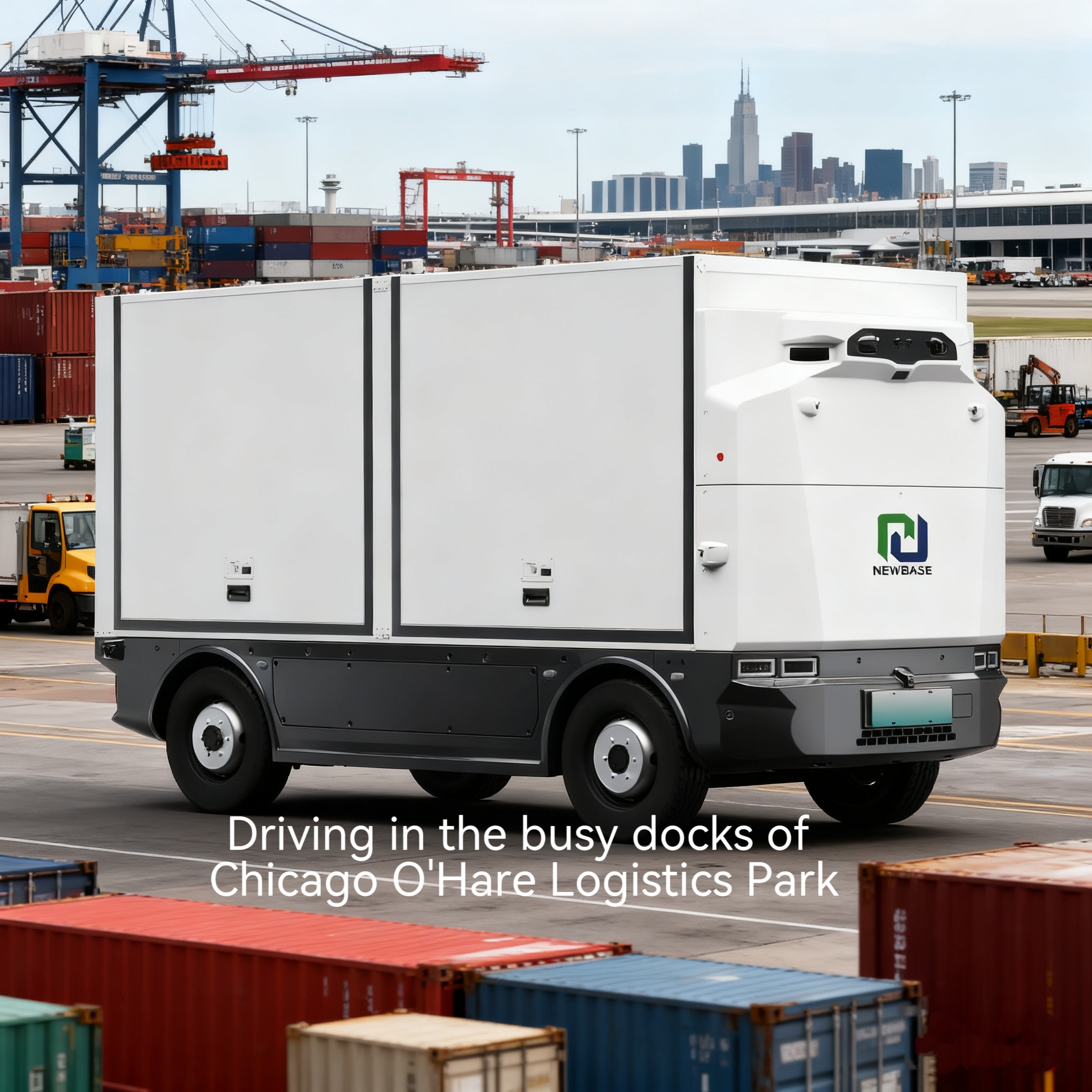
The biggest mistakes buyers make when purchasing autonomous delivery vehicles have nothing to do with technology — they're about skipping due diligence, buying the hype, and failing to match the vehicle to their actual routes. After working with dozens of logistics operators across China and Southeast Asia, we've seen the same costly errors repeat again and again. Avoiding these common pitfalls when purchasing self-driving delivery van fleets can save you hundreds of thousands of dollars and months of wasted time.
Here are the 7 most costly mistakes — and exactly how to avoid them.
1. Buying the Biggest, Flashiest Vehicle Instead of Matching It to Your Route
Most first-time buyers overbuy — they go for the largest payload and longest range, only to run half-empty routes every day. This is the #1 mistake in our list of what not to do when buying
Autonomous Logistics Vehicle fleets: purchasing based on spec sheet envy instead of actual operational data.
The Problem
- You pay 30–50% more for extra capacity you never use
- Larger vehicles are harder to maneuver in dense urban areas
- Bigger batteries mean longer charging times and higher infrastructure costs
How to Avoid It
Start by analyzing 30–90 days of actual route data:
- Average number of packages per route
- Average package weight and volume
- Route distance and typical stop count
- Peak day volume (add 20% headroom, not 100%)
NewBase provides a free route analysis for all potential customers — we'll tell you exactly which model fits your routes, even if it's the smaller, less expensive one. For most urban last-mile operations, the Z5 series (5.3m³ / 800kg) is the sweet spot, not the larger Z8.
✅ Bottom line: Buy based on your actual route data, not the biggest numbers on the spec sheet. Most fleets need less capacity than they think.
2. Trusting "L4 Autonomous" Marketing Without Verifying Real Deployments
Every supplier says their vehicles are L4 autonomous. Few have thousands of units actually operating driverless on public roads. This is the second biggest of the common pitfalls when purchasing self-driving delivery van fleets: confusing marketing claims with real commercial deployment.
The Red Flags
- Only "pilot" or "demo" deployments after 3+ years in business
- No named reference customers you can contact
- Vehicles always have a safety driver behind the wheel
- Vague answers about total autonomous mileage
- They can't name the specific cities or zones where driverless operation is approved
How to Verify
Ask for these three things:
- Named enterprise customers with driverless (no on-board operator) deployments
- Total driverless operation mileage (not "total testing miles" with safety drivers)
- Specific operational design domains where driverless mode is active
Zhengzhou Newbase Auto Electronics Co., Ltd., for example, has thousands of vehicles in commercial L4 operation with partners like SF Express and China Post — not just test vehicles. Always ask for references you can actually speak to.
✅ Bottom line: If a supplier can't show you named customers running driverless commercial routes, their "L4" claim is probably just marketing.
3. Forgetting That Software and Service Cost Money (and Matter More Than Hardware)
The vehicle is the hardware platform — but the software is what actually makes it autonomous. Many buyers focus 90% of their attention on the vehicle price and 10% on everything else. In reality, software quality, OTA updates, and after-sales support will determine whether your fleet actually works reliably long-term.
What Buyers Often Miss
- Software subscription fees: $5,000–$12,000 per vehicle per year — and they're mandatory
- Fleet management platform: Is it included, or an extra cost?
- OTA update frequency: Software that never gets worse but never gets better is a liability
- Technical support response time: If a vehicle breaks down, how fast can they fix it?
- Spare Parts availability: Can you get parts locally, or do they ship from overseas?
How to Avoid This Mistake
Always get a 5-year total cost of ownership quote, not just the vehicle price. Make sure the quote includes:
- Software licensing and updates
- Maintenance and spare parts
- Remote monitoring platform access
- Technical support level and response times
NEWBASE includes the fleet management platform and standard software updates with every vehicle purchase — no surprise fees after you buy.
✅ Bottom line: Hardware is 40% of the cost and 20% of what determines success. Software and service are 60% of the cost and 80% of the success.
4. Skipping the Pilot and Buying 50 Units on Day One
No matter how good the demo looks, you don't really know if autonomous delivery works for your operation until you run it on your actual routes. This is one of the most expensive mistakes to avoid when buying autonomous delivery fleet from China supplier partners — committing to a large order before proving ROI on your specific routes.
Why Pilots Are Non-Negotiable
- Every route is different — what works in one city may not work in yours
- You need to validate the ODD (Operational Design Domain) matches your service area
- Integration with your existing WMS/TMS/OMS may have surprises
- Your team needs time to adapt to managing autonomous vehicles
What a Good Pilot Looks Like
- Duration: 4–12 weeks
- Fleet size: 2–10 vehicles
- Routes: Your actual delivery routes, not a test track
- Metrics agreed upfront: deliveries per day, cost per delivery, uptime rate
- Clear next step: what success looks like and how you scale
NewBase encourages all new customers to start with a pilot program. We'd rather lose a 50-unit sale than have a customer buy 50 units and be disappointed because they weren't ready.
✅ Bottom line: Always start with a pilot. The cost of a wrong 50-vehicle decision is 10x more expensive than a 5-vehicle pilot.
5. Only Comparing Price and Ignoring Manufacturing Quality
When you're comparing quotes from different suppliers, it's tempting to pick the cheapest option. But autonomous delivery vehicles are complex machines that operate 12+ hours a day in all weather. Build quality matters — and cutting corners on manufacturing quality costs far more than the upfront savings.
What to Check
- Do they own their own factory? Outsourced assembly means less quality control
- What certifications do they hold? IATF 16949 (automotive-grade), ISO 9001, CE marking
- What's the warranty? 1 year is red flag for a commercial vehicle — look for 2–3 years
- Can you visit the factory? Reputable manufacturers welcome customer visits
- What's the defect rate? Ask for first-year warranty claim data
Zhengzhou Newbase Auto Electronics Co., Ltd. operates three production bases totaling 40,000 m² with automotive-grade quality processes — and we've been manufacturing automotive electronics since 2007, long before we started building autonomous vehicles.
✅ Bottom line: A $10,000 cheaper vehicle that breaks down 2x more often and has 30% more downtime isn't a deal — it's a bad investment.
6. Underestimating Infrastructure and Setup Requirements
Buying the vehicles is step one. Getting them actually running takes more work than most buyers expect. Autonomous delivery vehicles need charging infrastructure, high-definition mapping for your routes, fleet management software setup, and team training.
What's Often Overlooked
- Charging stations: Not just any EV charger — make sure it's compatible with the vehicle's battery system
- HD mapping: Each route needs to be mapped before the vehicle can drive it autonomously
- Software integration: Connecting to your existing WMS/TMS/OMS takes time
- Team training: Your operations team needs to learn how to manage an autonomous fleet
- Regulatory approvals: Depending on your location, you may need permits for autonomous operation
How to Plan for It
Ask your supplier for a detailed deployment timeline that includes:
- Infrastructure requirements and cost estimate
- Mapping lead time for your routes
- Integration requirements
- Training plan for your team
- Regulatory support (what they handle vs. what you handle)
NewBase provides end-to-end deployment support — from site survey and charging setup to route mapping and team training.
✅ Bottom line: Plan for 2–8 weeks of setup time and 5–15% of vehicle cost for infrastructure, depending on fleet size.
7. Not Asking About Customization and Future-Proofing
Your needs will evolve. The question is whether your autonomous vehicle fleet can evolve with them. This is the last of our what not to do when buying autonomous logistics vehicle fleets: buying a rigid, closed platform that can't adapt.
What to Ask About
- Cargo customization: Can the cargo box be modified for refrigeration, lockers, shelves, or other needs?
- Software upgradability: Will future autonomy improvements work on your current hardware?
- API access: Can you integrate with your own systems, or are you locked into their platform?
- Sensor upgrade path: If better sensors come out, can they be retrofitted?
- New use cases: Can the same vehicle platform be used for patrol, vending, or other applications later?
Modular platforms like the NewBase Z5 series support multiple cargo configurations (flying wing, box van, security patrol, vending) on the same chassis — so you can repurpose vehicles as your needs change.
✅ Bottom line: Buy a platform, not just a vehicle. Modular design and open APIs future-proof your investment.
FAQ
Q: What's the single biggest mistake first-time buyers make?
A: Skipping the pilot and buying too many vehicles too fast. We see it all the time: a buyer gets excited after a demo, orders 30 vehicles, then realizes their routes aren't mapped, their team isn't trained, and the ODD doesn't cover their service area. A 4–8 week pilot with 2–5 vehicles costs a fraction of a full fleet purchase and prevents 90% of the expensive surprises. Among all the common pitfalls when purchasing self-driving delivery van fleets, this one is the most preventable.
Q: How do I verify a Chinese supplier is legitimate before sending money?
A: Do your homework. Check their business registration, look for verifiable customer references, ask to visit their factory, request sample units or a pilot program, and never pay 100% upfront. Legitimate suppliers like NewBase accept structured payment terms (deposit + production + delivery + warranty retention) and welcome factory visits. This is one of the top mistakes to avoid when buying autonomous delivery fleet from China supplier partners — skipping due diligence on who you're actually buying from. If a supplier demands full payment upfront or refuses to let you visit their facility, walk away.
Q: How long does it typically take from order to first delivery on the road?
A: For a standard pilot with pre-approved routes and existing mapping: 2–4 weeks. For a full deployment in a new city that requires HD mapping and regulatory approvals: 2–3 months. Customized vehicles or large fleet orders (50+ units) can take 3–6 months from order to full deployment. The timeline depends heavily on how prepared you are with route data, infrastructure, and internal team alignment.
Thinking about buying an autonomous delivery fleet but not sure where to start? The NewBase team will assess your readiness across 7 dimensions — routes, infrastructure, team, software integration, regulatory, budget, and ROI potential — and tell you exactly what you need (and what you don't).
Send us your operation details and we'll provide:
- Readiness score across 7 dimensions
- Recommended pilot size and vehicle configuration
- Deployment timeline estimate
- Budget range for pilot and full rollout
- List of potential pitfalls specific to your operation
Published: August 2026 | By NewBase Engineering Team