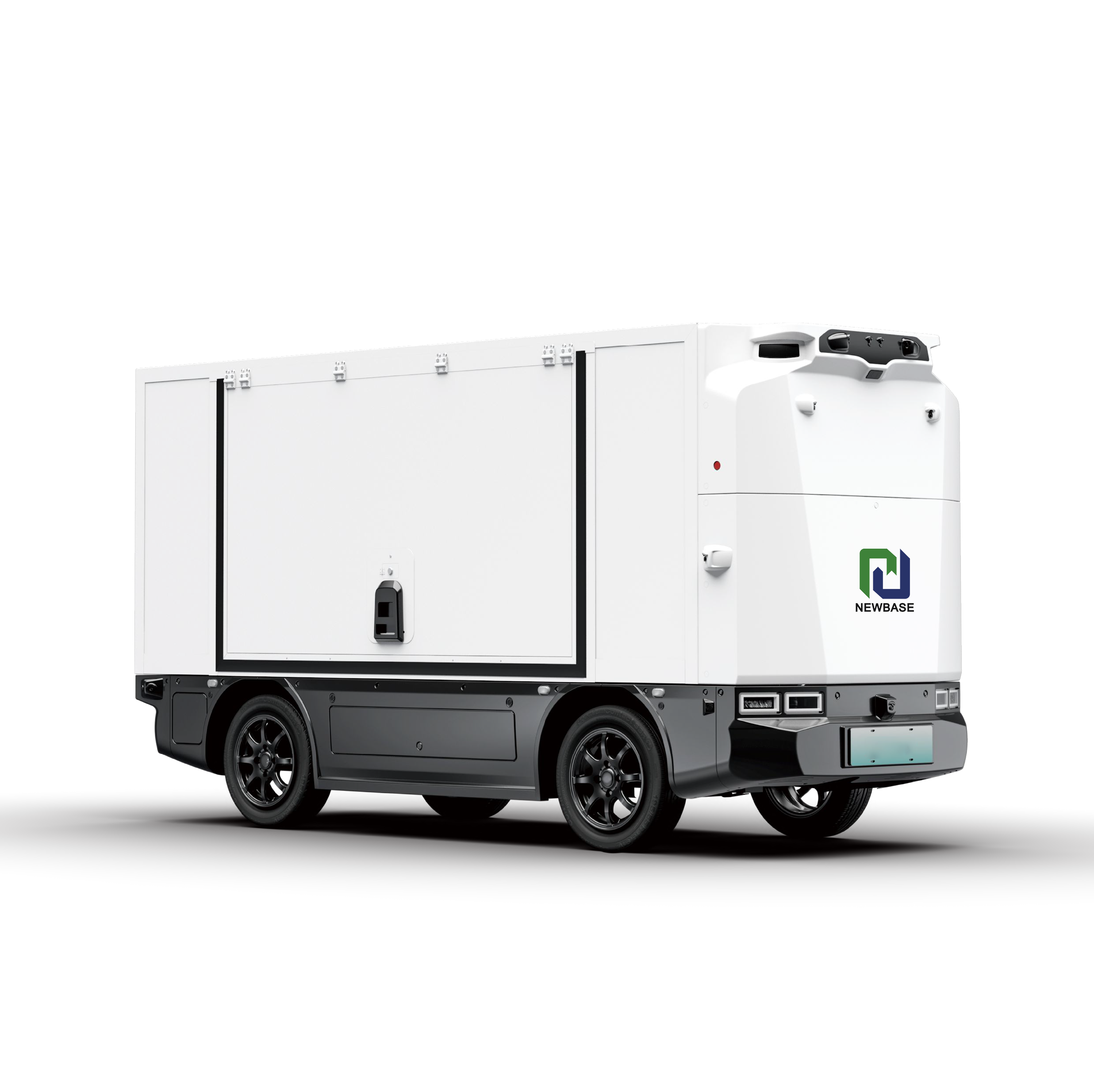
Choosing between buying and leasing an autonomous delivery fleet depends on your capital position, deployment timeline, and how long you plan to operate the vehicles — and there's a third option (RaaS) that's growing fast. The buy vs lease autonomous delivery vehicle fleet decision isn't as simple as "owning is better" or "leasing is cheaper upfront." Autonomous vehicles are different from regular vans because the technology is still evolving fast, and software obsolescence is a real risk. In this guide, we break down all three models — outright purchase, lease/finance, and RaaS — so you can pick the right one for your operation.
Here's what you'll learn: side-by-side comparison of ownership vs RaaS, pros and cons of each model, how OEM vs ODM manufacturing affects your options, and a decision framework for choosing.
You have three real options: buy outright, lease/finance, or use RaaS (Robot-as-a-Service). Each makes sense for different financial profiles and operational goals. When evaluating robot as a service vs ownership for delivery fleet economics, the right choice comes down to cash flow, risk tolerance, and scale.
Let's compare all three models side by side in this robot as a service vs ownership for delivery fleet breakdown:
Outright Purchase: Best for Long-Term, High-Utilization Fleets
Buying makes sense when:
- You have the capital available
- You plan to operate the vehicles for 5+ years
- Your route volume is stable and predictable
- You want the lowest per-unit cost over the long run
The biggest risk of buying is technology obsolescence. Autonomous vehicle hardware is improving fast — a vehicle you buy today might feel outdated in 3–4 years, even if it still works mechanically. With traditional vans this doesn't matter much, but with autonomous vehicles, the software and sensor capabilities are the product.
Lease / Finance: Middle Ground with Predictable Payments
Leasing is less common in the autonomous vehicle space than RaaS or direct purchase, but it's an option for fleets that want predictable monthly costs without a huge upfront outlay. Some suppliers, including NewBase, offer lease-to-own or structured financing programs for qualified enterprise customers.
RaaS: Fastest to Deploy, Most Flexible
RaaS (Robot-as-a-Service) is the fastest-growing model in autonomous delivery, and for good reason:
- Zero upfront capital expenditure
- Maintenance, software updates, and support are all included
- You can scale the fleet up or down based on seasonal demand
- Technology risk is on the supplier — if they release a better vehicle, you can upgrade
The downside is higher per-delivery cost over the long term. If you run a large, stable fleet for 5+ years, owning will be cheaper.
✅ Bottom line: Buy for the lowest long-term cost on stable, high-volume routes. Use RaaS for pilots, seasonal volume, or when you want flexibility. Leasing sits in the middle.
2. How Do OEM vs ODM Manufacturing Models Affect Your Fleet Options?
Whether you work with an OEM or an ODM supplier determines how much customization you get, who owns the IP, and what pricing looks like. Understanding OEM vs ODM autonomous delivery van manufacturing is important if you're considering white-label vehicles, custom configurations, or building your own branded fleet.
Let's clarify the difference and what it means for you.
OEM (Original Equipment Manufacturer)
An OEM designs, builds, and sells vehicles under its own brand name. Zhengzhou Newbase Auto Electronics Co., Ltd. is an example of an OEM — the NewBase brand designs, manufactures, and sells its own autonomous delivery vehicles (Z5, Z8, Z8Max, etc.) with its own full-stack L4 software.
Pros of buying from an OEM:
- Deepest product expertise — the company that designed the vehicle knows it best
- Direct software updates and OTA improvements
- Single point of contact for everything
- Proven, tested product with real deployment data
- Usually better long-term support
Cons:
- Less flexibility for extreme customization
- Branded product (not white-label)
- Pricing reflects the brand's R&D investment
- ODM (Original Design Manufacturer)
- An ODM designs and builds vehicles that other companies sell under their own brand name (white-label). Some logistics companies and technology firms work with ODMs to create custom autonomous vehicles for their specific needs.
Pros of working with an ODM:
- Customization — you can specify exact dimensions, cargo layouts, branding
- White-label option — sell or deploy vehicles under your own brand
- Potentially lower pricing for large volume orders
Cons:
- You may share IP ownership or have limited control over future updates
- Software integration quality varies — the ODM may not own the autonomy stack
- Longer lead times for custom designs
- Support can be fragmented (designer vs. manufacturer vs. software provider)
For most buyers starting out, an OEM with a strong track record like NEWBASE is the safest choice — you get a proven product, direct support, and clear accountability.
✅ Bottom line: OEMs sell proven, branded vehicles with full support. ODMs build custom or white-label vehicles for volume buyers. Most fleets start with OEM, then explore ODM for large custom orders.
FAQ
Q: How do I know if RaaS or buying is cheaper for my operation?
A: Use this simple rule of thumb: if you're running fewer than 10 vehicles or your volume changes seasonally, RaaS is usually better — the flexibility is worth the premium. If you're running 20+ vehicles on stable routes for 3+ years, buying almost always comes out cheaper. The exact break-even point depends on your local labor costs, route utilization, and the buy vs lease autonomous delivery vehicle fleet pricing your supplier offers. Most suppliers will provide both pricing models so you can compare side by side for your specific routes.
Q: What happens to my autonomous vehicles if the supplier goes out of business?
A: This is one of the biggest risks in the autonomous vehicle space, and it's exactly why choosing an established, financially stable supplier matters. If you own the vehicles outright and the supplier disappears, you still have the hardware — but you lose software updates, support, and the autonomy platform may stop working properly. With RaaS, the service simply stops. This is why working with a well-funded, established OEM like NewBase (which has been in automotive electronics since 2007 and has thousands of units deployed) is lower risk than betting on an early-stage startup or a fly-by-night player in the OEM vs ODM autonomous delivery van manufacturing space.
Q: Can I start with RaaS and then switch to buying later?
A: Yes, and this is actually the most common approach we recommend. Start with a small RaaS pilot (5–10 vehicles) to prove the ROI on your routes. Once you've validated the savings and the model works for your operation, you can convert some or all of the fleet to purchase — often with credit for the RaaS fees you've already paid. NewBase offers this pilot-to-purchase pathway for all enterprise customers, making it easy to start small and scale confidently.
Not sure whether to buy, lease, or use RaaS? The NewBase team will build a custom comparison for your specific routes, volume, and budget — with clear numbers for all three models.
Send us your fleet profile and we'll provide:
- Side-by-side pricing: purchase vs. lease vs. RaaS
- 3-year and 5-year total cost comparison
- Break-even analysis for ownership vs. RaaS
- Recommended starting model (pilot size, deployment timeline)
Published: August 2026 | By NewBase Engineering Team