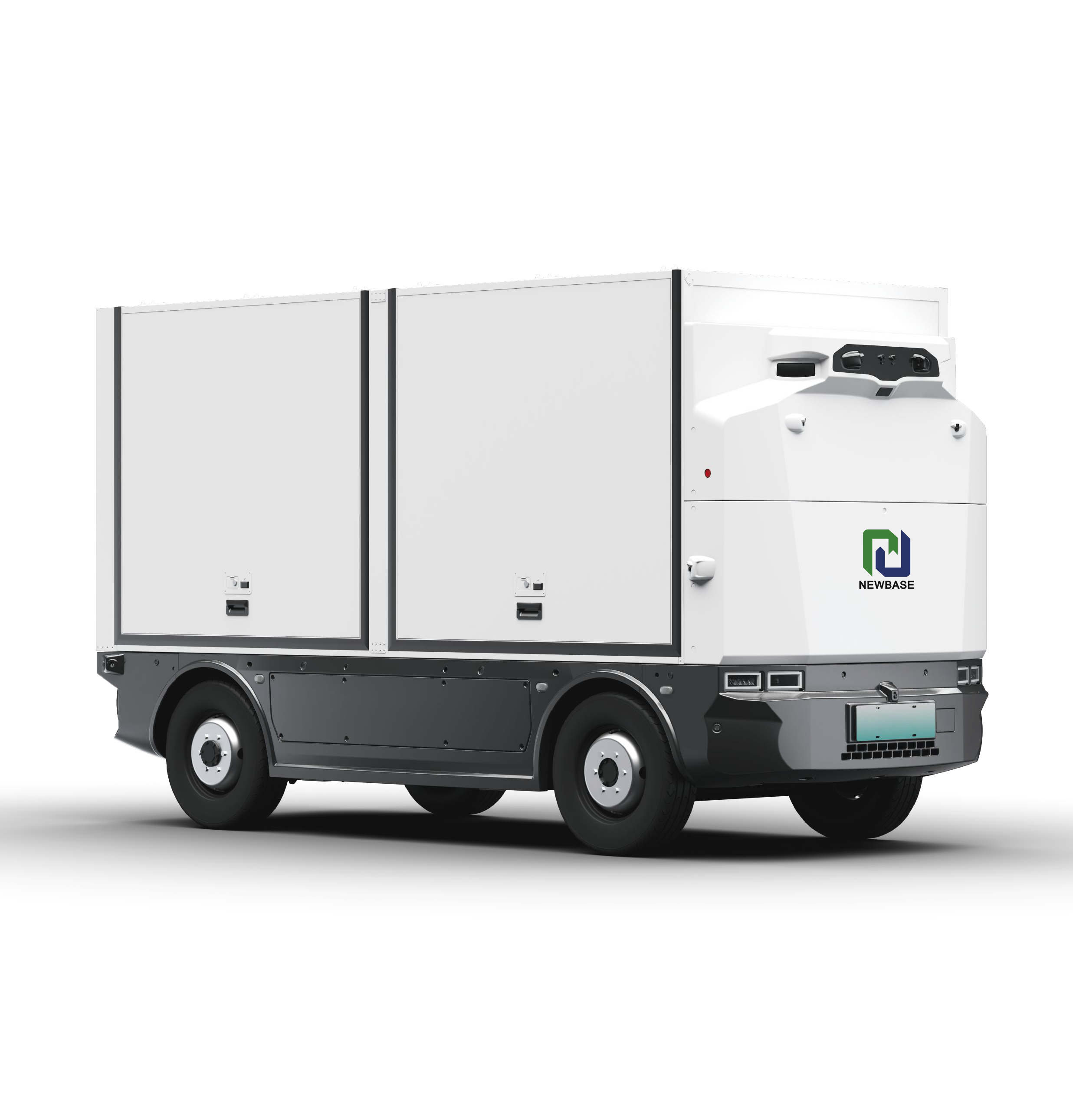
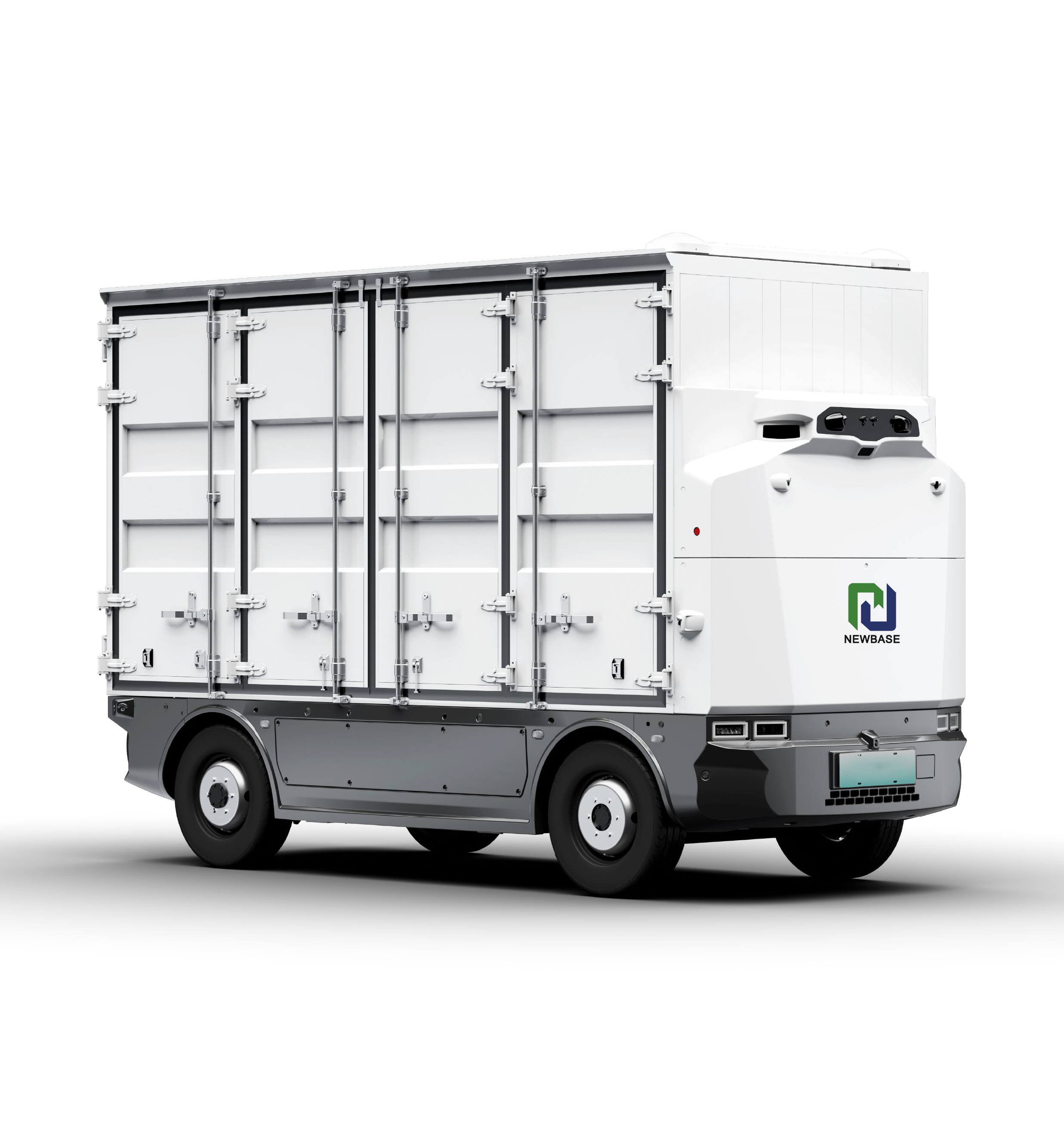
An autonomous delivery vehicle costs between 150,000 in 2026, depending on size, payload, sensor suite, and autonomy level — but the purchase price is only the beginning of the real cost story. If you're researching how much does autonomous delivery vehicle cost 2026 budgets, you need to account for software subscriptions, charging infrastructure, maintenance, and remote operations too. This full breakdown covers every cost line, from the sensor stack to the software license, with real data from commercial deployments.
Here's what you'll learn: price ranges by vehicle class, what drives the cost up (and down), the hidden ongoing costs most buyers miss, and how China factory pricing compares to Western suppliers.
1. What's the Actual Price Range for Autonomous Delivery Vehicles in 2026?
Prices have dropped 30–40% since 2023 as volumes scale and sensor costs fall, but autonomous vehicles still cost 2–3x more than equivalent electric delivery vans. The exact price depends heavily on vehicle class, sensor configuration, and software capability.
Here's a breakdown by vehicle type:
| Vehicle Class | Payload / Volume | Typical Price Range (2026) | Example Model |
| Small L4 delivery van (Z5 class) | 500–800 kg / 3–5.5 m³ | 70,000 – 100,000 | NewBase Z5 Flying Wing |
| Medium L4 delivery van (Z8 class) | 1,000–1,500 kg / 8–10 m³ | 100,000 – 150,000 | NEWBASE Z8 / Z8Max |
| Sidewalk delivery robot | 10–50 kg / 20–100 L | 5,000 – 30,000 | Various robotics startups |
| L2 driver-assist electric van | 800–1,500 kg / 6–10 m³ | 40,000 – 70,000 | Various OEM electric vans |
Why Such a Wide Range?
The $70k–$150k spread comes down to three major cost drivers:
- Sensor suite quality and quantity: A basic LiDAR + camera setup costs significantly less than a full multi-LiDAR, multi-camera, radar-fusion system with redundancy.
- Autonomy software maturity: Proven L4 software with millions of kilometers of commercial deployment data commands a premium over early-stage systems.
- Vehicle base platform: A purpose-built autonomous chassis costs more than retrofitting an existing van.
Zhengzhou Newbase Auto Electronics Co., Ltd., which designs and builds its own vehicles in-house, is able to price its Z5 series at the lower end of the range ($70k–$90k) by controlling the entire supply chain — from chassis manufacturing to software development.
China Factory vs. Western Pricing
If you're looking at autonomous delivery vehicle wholesale price China factory options, here's what to expect:
- China manufacturers: Generally 30–50% lower pricing for comparable specifications, driven by lower manufacturing costs, vertical integration, and government subsidies.
- Western/North American manufacturers: Higher pricing ($120k–$250k+) but often easier local support and regulatory familiarity for Western markets.
The quality gap has narrowed dramatically in the past two years. Chinese L4 autonomous vehicle makers now match or exceed Western suppliers in deployment scale — NewBase alone has thousands of units in commercial operation.
✅ Bottom line: Expect $70k–$150k for a true L4 autonomous delivery van in 2026. China factory pricing is 30–50% lower and closing the quality gap fast.
2. What's Inside the Price Tag? A Self-Driving Delivery Van Unit Cost Breakdown
The vehicle chassis is only 40–50% of the total cost — the autonomy stack (sensors + compute + software) makes up the other half. A proper self-driving delivery van unit cost breakdown reveals that the "vehicle" part is actually the smaller expense compared to the technology that makes it drive itself.
Let's break down a typical mid-range L4 autonomous delivery van ($90,000–$110,000 total):
| Cost Component | Share of Total | Typical Cost | What It Includes |
| Vehicle chassis & body | 35–45% | 35,000–45,000 | Electric chassis, battery, cargo box, drive system, suspension |
| Sensor suite | 15–25% | 15,000–25,000 | LiDAR(s), cameras, radar, IMU, GPS, wiring, housings |
| Compute hardware | 5–10% | 5,000–10,000 | AI compute unit, domain controllers, networking |
| Autonomy software license | 15–25% | 15,000–25,000 | Per-vehicle software fee (L4 autonomy stack) |
| Fleet management & OTA platform | 3–7% | 3,000–7,000 | Cloud platform, fleet dashboard, remote teleoperation |
| Certification & testing | 3–5% | 3,000–5,000 | Safety certification, road testing, compliance |
The Big Cost Trend: Sensors Are Getting Cheaper Fast
The single biggest driver of price declines in autonomous vehicles is the falling cost of LiDAR. What cost $75,000 per unit in 2018 now costs $2,000–$5,000 — a 90%+ drop in under a decade. This is the main reason autonomous delivery vehicles are becoming economically viable.
Where Hidden Costs Lurk
The purchase price is just the entry ticket. The ongoing costs most buyers underestimate:
- Software subscription: $5,000–$12,000 per vehicle per year for autonomy software updates, OTA, and fleet platform access
- Remote monitoring staff: One remote operator per 10–20 vehicles, $40k–$60k/year per operator
- Charging infrastructure: $5,000–$15,000 per charging station
- Maintenance: Sensors and compute hardware add maintenance items beyond a regular EV
- Insurance: Autonomous vehicle insurance is still 50–100% more expensive than regular commercial van insurance
When evaluating how much does autonomous delivery vehicle cost 2026 buyers should always model 3–5 years of total ownership, not just the upfront price.
✅ Bottom line: The chassis is less than half the cost. Sensors + compute + software make up 35–55% of the price tag. Sensor cost declines are the main driver of overall price drops.
FAQ
Q: Can I buy just one autonomous delivery vehicle, or do I have to buy a fleet?
A: It depends on the supplier. Many Chinese manufacturers, including NewBase, support MOQ as low as 1 unit for pilot testing — which is perfect if you want to test on one route before committing to a larger fleet. Western suppliers often have higher minimums or require pilot programs with multiple vehicles. If you're exploring autonomous delivery vehicle wholesale price China factory options, ask explicitly about MOQ and pilot pricing — many suppliers offer discounted rates for initial pilot units to prove the ROI.
Q: How long until the price drops further? Should I wait to buy?
A: Prices will continue to drop — probably 10–20% per year for the next 2–3 years as sensor costs keep falling and production volumes scale. If you're wondering how much does autonomous delivery vehicle cost 2026 versus what it might cost in 2027 or 2028, here's the framework: if you have high-utilization routes where the savings are clear, waiting may cost you more than the price drop saves you. With payback periods of 2–3 years, a vehicle you deploy today starts saving money well before the next price reduction catches up. The right question isn't "will it be cheaper later" — it's "can I generate enough savings now to justify the investment."
Q: Are there financing or leasing options for autonomous delivery vehicles?
A: Yes, and this is one of the fastest-growing parts of the market. Options include: (1) Traditional financing/leasing — similar to commercial vehicle loans; (2) RaaS (Robot-as-a-Service) — pay per delivery or per kilometer, with the supplier owning and maintaining the vehicles; (3) Pilot-to-own programs — run a paid pilot, then apply a portion of the fees toward purchase. NEWBASE offers flexible pilot and financing arrangements for qualified partners, including both outright purchase and RaaS models depending on the customer's needs.
Every operation is different — the right vehicle configuration and pricing model depends on your routes, volume, and deployment location. The NewBase sales team will build a custom quote based on your exact needs, with transparent pricing and no hidden fees.
Tell us about your operation and we'll provide:
- Recommended vehicle model(s) with specification
- Itemized price breakdown (hardware + software + services)
- Total cost of ownership projection for 3 and 5 years
- Available financing / RaaS / pilot program options
- Lead time and delivery timeline
Published: August 2026 | By NewBase Engineering Team