Autonomous cold chain delivery vehicles solve the biggest pain points in temperature-sensitive logistics: driver cost, human error in temperature management, and 24/7 availability — and they're already being deployed commercially for pharma and food operations. If you're in pharmaceutical distribution or food logistics and wondering whether autonomous delivery fits your cold chain, this guide covers everything: the technology, the use cases, the ROI, and what to look for in a supplier.
Here's what you'll learn: how autonomous refrigerated vans work, key temperature control specifications, use cases in pharma and food logistics, ROI analysis, and how to choose the right supplier.
1. How Do Autonomous Cold Chain Delivery Vehicles Work — and What Makes Them Different?
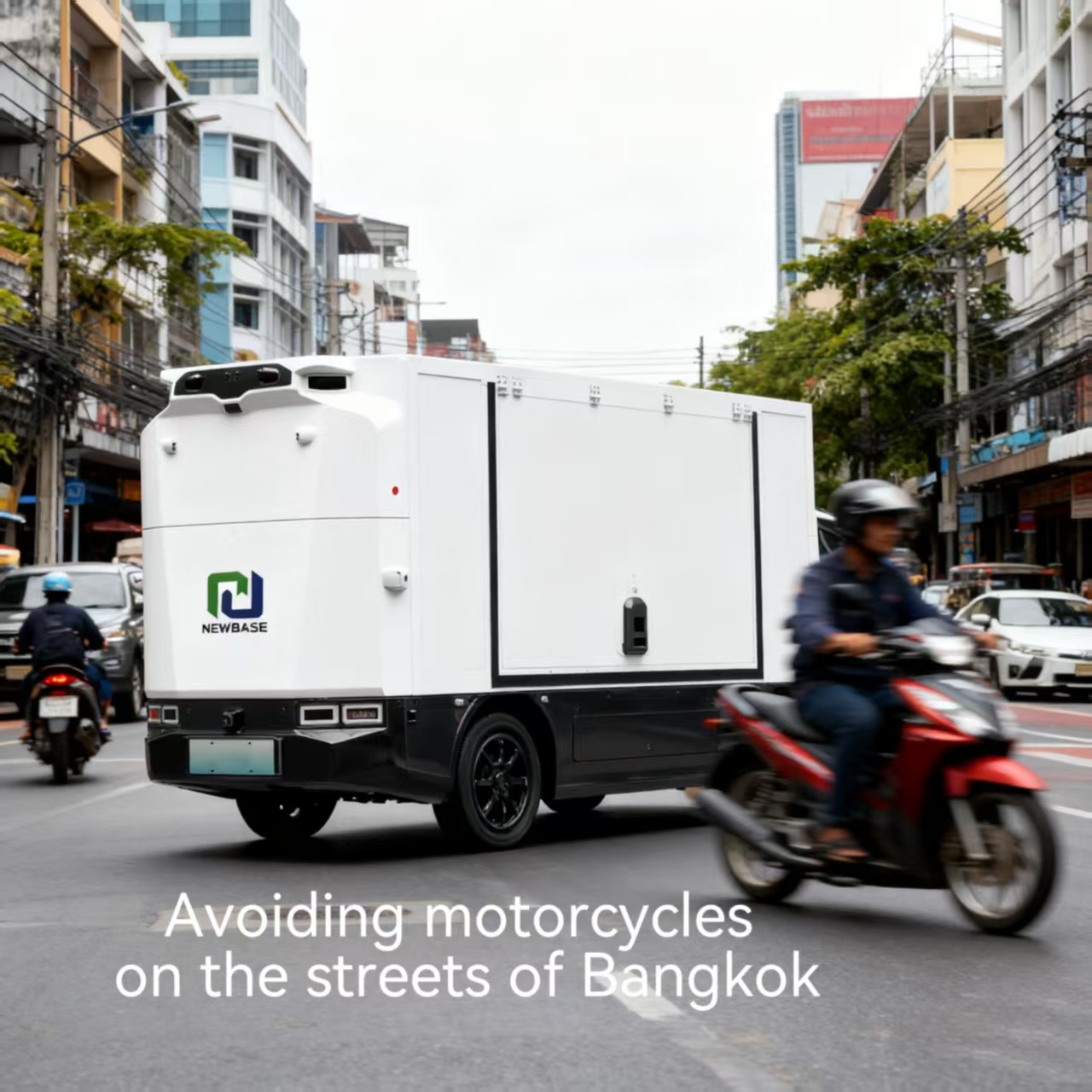
An autonomous cold chain delivery vehicle is an L4 self-driving van with an integrated refrigerated cargo compartment, real-time temperature monitoring, and automatic temperature control — all managed without a human driver. The key difference from regular autonomous delivery vans is the cold chain system: it's not just a fridge bolted onto a van — it's an integrated system where the autonomy platform monitors and manages temperature alongside route optimization.
Core Components of an Autonomous Cold Chain Van
| Component | What It Does | Why It Matters |
| L4 autonomous driving system | Drives the vehicle without a human operator | Eliminates driver cost (the biggest cold chain expense) |
| Refrigerated cargo box | Maintains target temperature (-25℃ to +25℃ range) | Keeps products within required temperature bands |
| Real-time temperature sensors | Monitor cargo temperature continuously | Provides audit trail and alerts for deviations |
| Insulated cargo compartment | Maintains temperature even when doors open | Prevents temperature spikes during multi-stop routes |
| OTA-managed climate control | Software-controlled temperature settings | Remotely adjust temperature per route or product type |
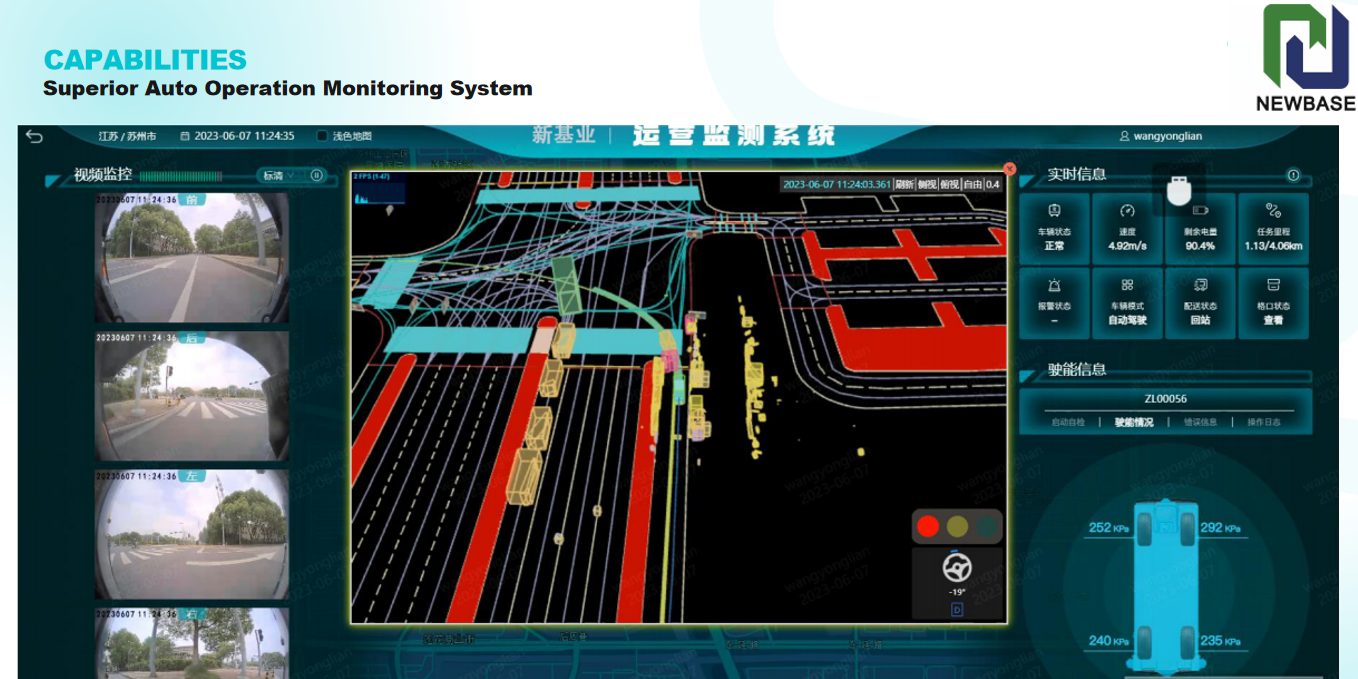
| Telematics / fleet platform | Track location, temperature, battery status | Full visibility for quality assurance and compliance |
Temperature Ranges and What They're Used For
- Frozen (-18°C to -25°C): Ice cream, frozen foods, some vaccines
- Chilled (2°C to 8°C): Fresh food, dairy, pharmaceuticals, vaccines, biologics
- Controlled room temperature (15°C to 25°C): Certain pharmaceuticals, cosmetics, specialty food
- Multi-temperature zones: Compartments with different temperatures in one vehicle
NewBase autonomous cold chain vehicles support all of these ranges — including multi-zone configurations where part of the cargo is frozen and part is chilled. As a custom OEM cold chain autonomous delivery vehicle China factory, we can also build specialized temperature configurations for specific use cases.
Why Autonomous + Cold Chain Is a Natural Fit
Cold chain delivery is uniquely expensive because you're paying for:
- A driver (the biggest cost)
- Refrigeration fuel/energy
- Temperature monitoring and compliance reporting
- Risk of product loss from temperature excursions
Autonomous vehicles eliminate cost #1 entirely and significantly reduce costs #3 and #4. The software platform automatically logs temperatures, generates compliance reports, and alerts you before a temperature excursion becomes a product loss — more reliably than any human driver.
✅ Bottom line: Autonomous cold chain vans combine L4 self-driving with integrated refrigeration and temperature monitoring. The biggest savings come from eliminating the driver — but the temperature compliance improvements are equally valuable.
2. What Are the Real-World Use Cases for Pharma and Food Logistics?
Autonomous cold chain delivery works best for fixed-route, high-frequency operations where temperature integrity is non-negotiable. Both pharmaceutical and food logistics are seeing real commercial deployments — not just pilots.
Pharmaceutical & Healthcare Cold Chain
The pharma cold chain is where autonomous cold chain delivery vehicle for pharmaceutical use cases deliver the most value, because the cost of failure is so high.
Key use cases:
- Pharmacy distribution: Delivering medications from central warehouses to retail pharmacies on fixed routes
- Hospital supply runs: Moving pharmaceuticals, lab samples, and medical supplies between hospital facilities
- Vaccine distribution: Transporting vaccines from distribution centers to clinics — particularly valuable for mass vaccination campaigns
- Biologics and specialty drugs: High-value, temperature-sensitive products that need precise monitoring and chain-of-custody tracking
Why autonomous works for pharma:
- 100% temperature log integrity (software-generated, not manually recorded)
- No risk of driver error causing temperature excursions
- Chain-of-custody is digitally tracked from origin to destination
- 24/7 availability for time-critical deliveries
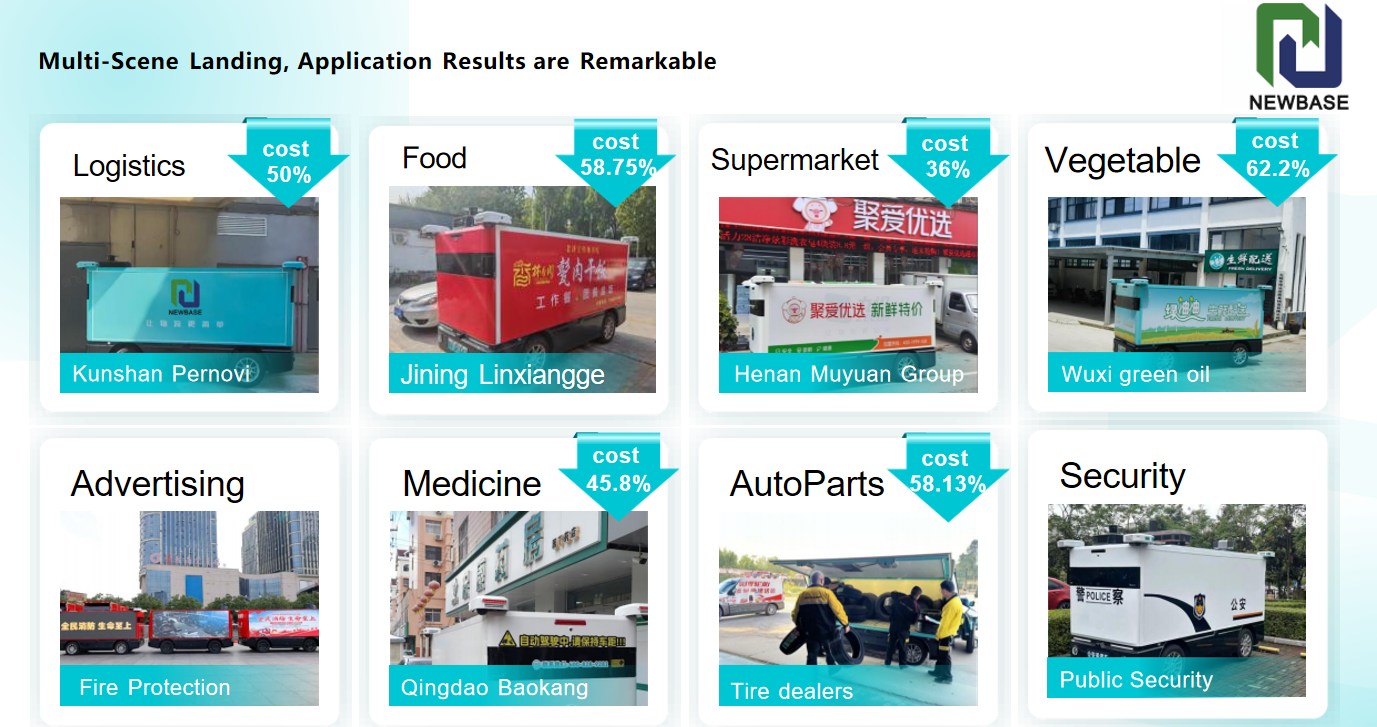
Zhengzhou Newbase Auto Electronics Co., Ltd. has deployed autonomous cold chain vehicles for pharmaceutical distribution operations in multiple Chinese cities, with zero temperature-related product losses recorded over 12+ months of operation.
Food & Grocery Cold Chain
For food logistics, self-driving refrigerated delivery van for food logistics deployments are growing fast — particularly for grocery home delivery and supermarket restocking.
Key use cases:
- Supermarket restocking: Delivering fresh and frozen goods from distribution centers to retail stores overnight
- Grocery e-commerce fulfillment: Last-mile delivery of online grocery orders with chilled/frozen items
- Restaurant supply: Delivering fresh ingredients to restaurant chains on fixed schedules
- Dairy and bakery distribution: Time-sensitive fresh product routes
Why autonomous works for food:
- Overnight and early-morning routes are hard to staff — autonomous vehicles don't care about shift times
- Multi-stop routes with frequent door openings benefit from advanced insulation and automatic temperature recovery
- Food safety compliance (HACCP, etc.) is easier with automated temperature logging
- Lower delivery cost = better margins on low-margin grocery items
NewBase cold chain vehicles are currently used for fresh food delivery with major supermarket chains in China, maintaining consistent 2–8°C temperatures across 30+ stop routes.
✅ Bottom line: Both pharma and food cold chain are already seeing real autonomous deployments. Pharma values compliance and risk reduction most; food values labor cost savings and overnight availability.
FAQ
Q: What temperature ranges can autonomous cold chain vehicles maintain?
A: It depends on the vehicle and configuration, but most quality systems can handle -25°C to +25°C across multiple zones. For pharmaceutical use cases, a 2–8°C chilled range is most common, with ±0.5°C precision. For frozen food, -18°C to -22°C is standard. The best autonomous cold chain delivery vehicle for pharmaceutical use will have: redundant cooling systems, continuous temperature logging with alerts, multiple temperature zones, and compliance with GDP (Good Distribution Practice) standards.
Q: How much can I save by switching to autonomous cold chain delivery?
A: For a typical urban cold chain route (80km/day, 20–40 stops), the savings are usually 40–55% compared to a driver-operated refrigerated van. The biggest saving is labor (50–60% of total cost), but you also save on temperature-related product loss (which drops by 60–80% with automated monitoring). For high-value autonomous cold chain delivery vehicle for pharmaceutical operations, the risk reduction alone can justify the investment, even before counting labor savings. For self-driving refrigerated delivery van for food logistics operations, the math is similar — labor cost elimination plus reduced spoilage equals fast payback. NewBase data from cold chain deployments shows payback periods of 1.8–2.5 years for high-utilization cold chain routes — faster than general cargo routes because cold chain driver costs are higher.
Q: Can I get a custom cold chain configuration, or only standard sizes?
A: It depends on the supplier. Western suppliers usually offer standard configurations only. If you need specialized temperature ranges, custom cargo layouts, multi-zone configurations, or branded exteriors, working with a custom OEM cold chain autonomous delivery vehicle China factory partner gives you the most flexibility at the best price. Chinese OEMs like NEWBASE with in-house manufacturing can customize everything from insulation thickness and cooling system capacity to cargo compartment layout and temperature zone configuration — at lower minimum order quantities than most Western suppliers.