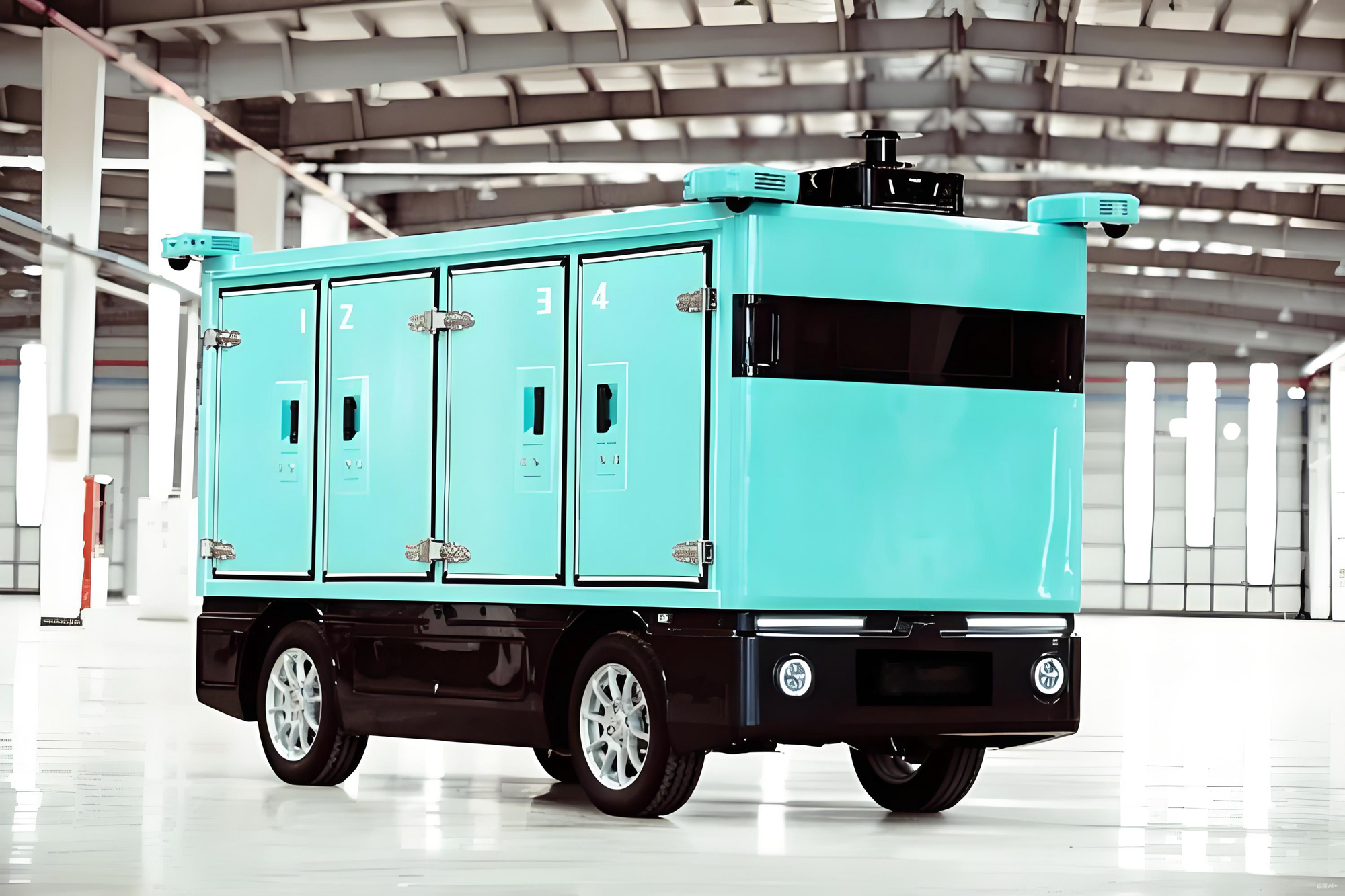
The intersection of two transformative technologies - autonomous driving and precision cold chain logistics - is creating a new category of commercial vehicle that addresses one of the pharmaceutical industry's most persistent challenges: maintaining temperature integrity during last-mile delivery in the world's harshest climates.
The autonomous refrigerated delivery van for pharmaceutical cold chain logistics represents perhaps the most technically demanding application of L4 autonomous vehicle technology. It requires not only safe autonomous navigation but also continuous, precise temperature control without human intervention, in environments where ambient temperatures can exceed 50 degrees Celsius.
For the Middle East pharmaceutical distribution market - a rapidly growing sector driven by healthcare infrastructure investment, population growth, and the region's role as a medical tourism hub - this technology addresses critical needs around medication safety, delivery reliability, and operational efficiency.
The Pharmaceutical Cold Chain Challenge in the Middle East
The Middle East pharmaceutical market is valued at over 35 billion USD and growing at 8 to 10 percent annually. Saudi Arabia, the UAE, and Qatar account for the majority of this market, with significant distribution networks spanning from major urban centers to remote communities.
Temperature sensitivity defines the pharmaceutical cold chain challenge. The majority of temperature-sensitive pharmaceutical products must be maintained within 2 to 8 degrees Celsius, with some biologics requiring minus 20 degrees or lower. In the Middle East, where summer temperatures routinely exceed 45 degrees Celsius and the temperature differential between ambient and cargo conditions can reach 50 degrees or more, maintaining this temperature integrity requires:
- High-capacity refrigeration systems that can overcome extreme heat ingress
- Precision temperature control that prevents excursions even during door openings and stops
- Redundant power systems that maintain cooling during any disruption
- Continuous monitoring that provides real-time visibility into cargo conditions
The Human Factor in Pharmaceutical Cold Chain Failures
Studies consistently show that the majority of cold chain excursions are caused by human error rather than equipment failure:
- Improper door management (leaving doors open too long during loading or unloading)
- Incorrect temperature set points or failure to verify settings
- Delays in responding to temperature alarms
- Improper loading patterns that block air circulation
- Failure to pre-cool the cargo compartment before loading
- Skipping pre-trip inspection procedures
The L4 autonomous temperature controlled delivery vehicle eliminates or dramatically reduces most of these human factors by:
- Maintaining precise temperature settings without human intervention
- Automating door management protocols (time-limited door openings, automatic closure)
- Providing automated alarm response and remote intervention capability
- Controlling the delivery process to minimize temperature exposure
- Operating continuously without fatigue, distraction, or procedural shortcuts
Technical Architecture of an Autonomous Pharmaceutical Refrigerated Van
The autonomous refrigerated delivery van integrates three major subsystems that must work together seamlessly:
Autonomous Driving System
The L4 autonomous platform provides:
- Sensor suite: LiDAR, cameras, and radar for 360-degree perception
- Navigation: HD map-based positioning with GPS correction
- Route optimization: Algorithms that select routes minimizing transit time and temperature exposure
- Obstacle avoidance: Real-time detection and response to road conditions
- Remote monitoring: Fleet management platform with live vehicle tracking and remote intervention capability
For the driverless cold chain vehicle for UAE Saudi Arabia medicine distribution, the autonomous system must be validated for Middle East operating conditions including extreme heat, sand and dust, and high humidity in coastal areas.
Precision Refrigeration System
The refrigeration system for pharmaceutical cold chain applications requires specifications beyond standard cold chain vehicles:
- Temperature precision: plus or minus 0.5 degrees Celsius around set point
- Multiple temperature zones: capability for simultaneous frozen (minus 20 degrees) and chilled (2 to 8 degrees) compartments
- Variable frequency compressor: inverter-driven compressor for precise, energy-efficient temperature control
- Redundant cooling: secondary cooling system that activates automatically if primary system fails
- Battery-backed operation: minimum 4 hours of temperature maintenance during power loss
- Multi-point temperature sensing: sensors distributed throughout cargo space with 60-second logging
- IoT connectivity: real-time temperature data transmission to cloud platform
Integration Between Systems
The key innovation is the integration between autonomous driving and refrigeration systems:
- The autonomous system plans routes that minimize total transit time, reducing the duration that products are exposed to ambient heat
- The refrigeration system adjusts pre-cooling intensity based on the autonomous system's knowledge of ambient conditions along the planned route
- Door opening at delivery points is automated and time-limited to prevent excessive cold air loss
- If the autonomous system detects a delay (traffic, road closure, delivery point not ready), it adjusts refrigeration parameters to maintain temperature during extended stops
- If the refrigeration system detects a potential temperature excursion, it can alert the autonomous system to prioritize reaching a temperature-controlled delivery point or return to base
Market Opportunity by Country
Saudi Arabia
Saudi Arabia's pharmaceutical market is the largest in the Gulf region, driven by:
- Vision 2030 healthcare modernization: massive investment in hospital infrastructure, primary care centers, and pharmaceutical distribution networks
- Growing population with increasing chronic disease prevalence (diabetes, cardiovascular disease)
- Medical tourism growth (healthcare expenditure exceeding 65 billion USD annually)
- Geographically dispersed population requiring long-distance pharmaceutical distribution
The Saudi Food and Drug Authority (SFDA) enforces strict GSP compliance for pharmaceutical distribution, creating demand for technology solutions that ensure temperature integrity. Autonomous refrigerated vans address this demand while reducing the driver-dependent human error factors that cause most cold chain excursions.
United Arab Emirates
The UAE pharmaceutical market benefits from:
- Advanced healthcare infrastructure in Dubai and Abu Dhabi
- Role as a regional pharmaceutical distribution hub (re-export to other Gulf and African markets)
- Strict regulatory enforcement by the Dubai Health Authority and Department of Health Abu Dhabi
- High standard of living driving demand for premium healthcare logistics
The UAE's relatively well-developed infrastructure (road networks, connectivity) makes it technically easier to deploy autonomous vehicles, while the high cost of labor makes the economic case for driverless operation more compelling.
Qatar
Qatar's pharmaceutical market is smaller but growing rapidly:
- National Health Strategy emphasizing healthcare quality and safety
- Preparations for major events (2022 FIFA World Cup legacy investments in healthcare infrastructure)
- Compact geography makes autonomous delivery routes shorter and simpler
- High per-capita healthcare spending supports premium logistics solutions
Kuwait, Bahrain, and Oman
These smaller markets present opportunities for autonomous cold chain solutions as healthcare investment continues and pharmaceutical distribution networks expand beyond urban centers into suburban and rural areas.
Economic Analysis: Autonomous vs Traditional Pharmaceutical Delivery
Traditional Pharmaceutical Cold Chain Delivery (Per Vehicle, Per Year)
- Driver cost: 18,000 to 30,000 USD (Middle East logistics driver wages)
- Vehicle acquisition amortization: 10,000 to 15,000 USD
- Fuel and refrigeration energy: 12,000 to 18,000 USD
- Maintenance: 4,000 to 7,000 USD
- Insurance: 3,000 to 5,000 USD
- Total annual cost: 47,000 to 75,000 USD
Autonomous Pharmaceutical Cold Chain Delivery (Per Vehicle, Per Year)
- Vehicle acquisition amortization (higher initial cost): 20,000 to 30,000 USD
- Electricity and refrigeration energy: 3,000 to 5,000 USD
- Remote monitoring allocation: 3,000 to 6,000 USD
- Sensor and system maintenance: 2,000 to 4,000 USD
- Insurance: 2,000 to 4,000 USD
- Total annual cost: 30,000 to 49,000 USD
Annual savings per vehicle: 17,000 to 26,000 USD (36 to 35 percent reduction)
Additional value from reduced cold chain excursions (estimated):
- Product loss reduction: 5,000 to 15,000 USD per year (pharmaceutical products have extremely high value per unit)
- Regulatory compliance improvement: reduced audit findings and inspection risks
- Customer satisfaction: reliable delivery temperature builds trust with pharmaceutical clients
Total estimated value per vehicle per year: 22,000 to 41,000 USD
NEWBASE's Z8 Max autonomous refrigerated vehicle is designed specifically for pharmaceutical cold chain applications in the Middle East:
- L4 fully autonomous operation validated for Middle East operating conditions
- Temperature control precision: plus or minus 0.5 degrees Celsius
- Dual temperature zone capability: frozen (minus 20 degrees) and chilled (2 to 8 degrees)
- Variable frequency compressor system optimized for 55 degrees Celsius ambient operation
- Redundant cooling with automatic failover
- 4-hour battery-backed temperature maintenance
- IoT-enabled multi-point temperature monitoring with cloud connectivity
- GPS tracking synchronized with temperature data for complete delivery chain visibility
- Automated door management with time-limited opening protocols
- Remote intervention capability for temperature and delivery management
- Designed to meet GSP and GDP pharmaceutical cold chain standards
- IATF 16949 quality certified manufacturing
The Z8 Max is manufactured at NEWBASE's three production bases with a monthly capacity of 10,000 units, providing the supply reliability that pharmaceutical logistics operations require.
Conclusion
The autonomous refrigerated delivery van for pharmaceutical cold chain logistics represents a convergence of autonomous driving technology and precision cold chain engineering that is particularly well-suited to the Middle East's demanding conditions.
For pharmaceutical distributors, healthcare logistics companies, and health authorities in Saudi Arabia, the UAE, and across the GCC, autonomous pharmaceutical delivery offers a compelling combination of improved temperature integrity, reduced human error, lower operating costs, and enhanced supply chain visibility.
The Middle East's combination of extreme ambient temperatures, long distribution distances, growing pharmaceutical market, and healthcare investment creates an ideal environment for autonomous cold chain technology adoption. Operators who invest in this technology now will build the operational expertise and regulatory relationships that position them for long-term competitive advantage.
Contact NEWBASE to discuss your pharmaceutical cold chain requirements in the Middle East and learn how the Z8 Max autonomous refrigerated vehicle can enhance your distribution network.