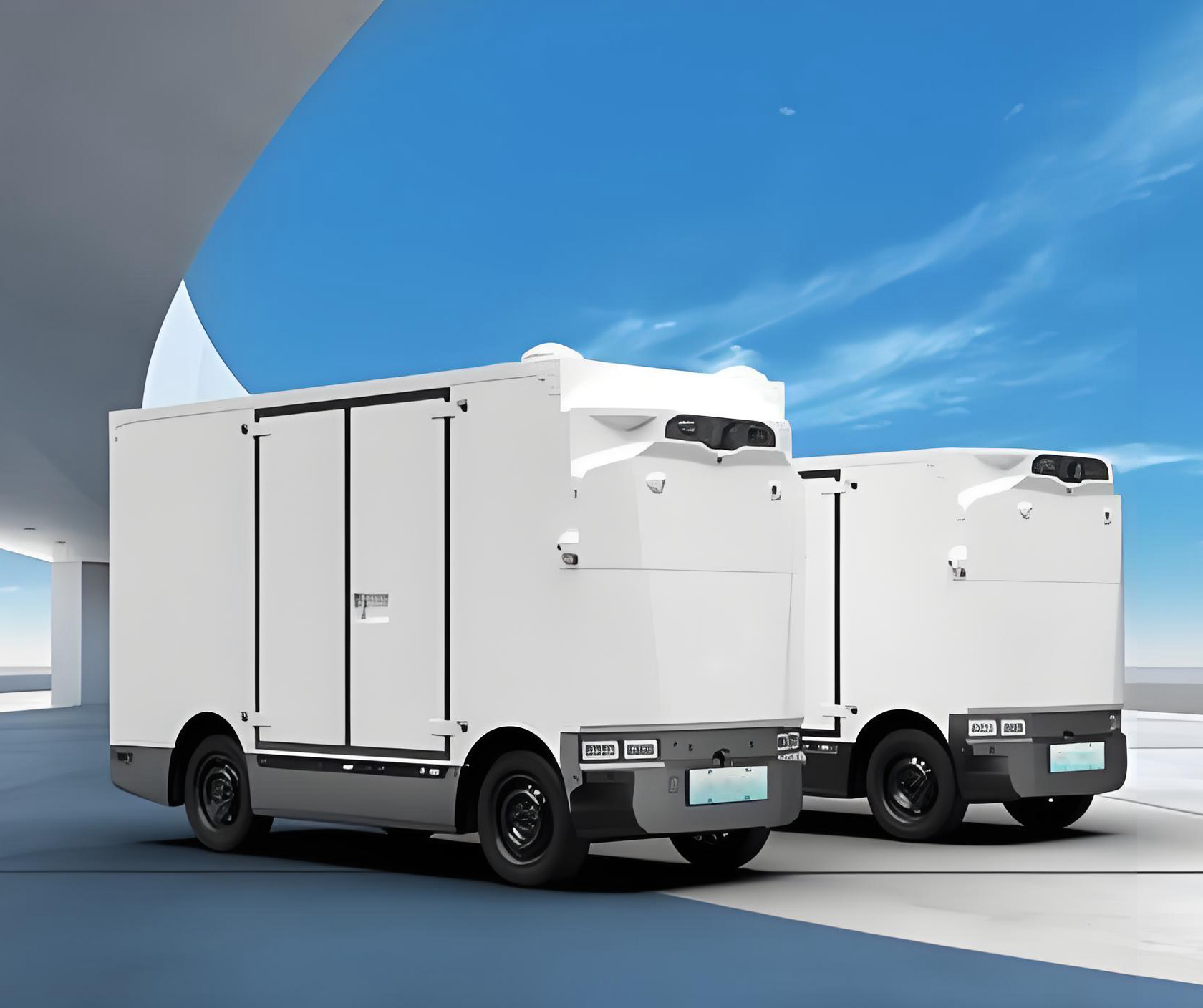
Over the past year, I’ve visited dozens of fulfillment centers and last-mile delivery hubs. I’ve noticed an interesting trend: while the streets are increasingly filled with "cute" little sidewalk delivery robots, very few of them actually solve the "capacity anxiety" that real businesses face.
If you are looking for a solution that can truly replace human-driven vans and increase per-trip efficiency, it’s time to shift your focus to the Heavy-duty AMR (
Autonomous Mobile Robot).
The Economy of Scale: Logistics is All About "Payload per Trip"
In the world of logistics, there is an unbreakable rule: the more goods you can move in a single trip, the lower your average cost per delivery.
Many autonomous vehicles currently on the market have a payload capacity of only 50kg to 100kg. While this is fine for delivering a single pizza or a stack of documents, it falls short for B2B distribution, grocery restocking, or factory material handling. For a professional operation, managing a fleet of tiny robots often increases complexity and charging frequency rather than reducing it.
A Deep Dive: What 800kg and 5.5 m³ Mean in the Real World
For a procurement manager, numbers on a spec sheet are just digits. What matters is what those numbers can actually carry. An 800kg payload autonomous vehicle isn't just a specification; it’s a tool designed for standardized logistics units like pallets and crates.
How Big is 5.5 m³ of Volume?
To give you a better idea, I’ve compiled a loading reference. Imagine how many trips a human or a small robot would take to move the following:
| Cargo Type | Load Capacity Reference (Based on 5.5 m³/800kg) | Primary Application |
| Medium Express Parcels | Approx. 150 – 200 pieces | E-commerce last-mile delivery |
| Euro Pallets (1.2m x 0.8m) | Fits 2 Full Pallets | Warehouse-to-factory transport |
| Retail Grocery Crates | Approx. 40 – 50 crates | Night-time autonomous restocking |
| Bottled Water (24-pack) | Approx. 60 – 70 cases | Vending machine & group-buy supply |
Stability and Safety Under Heavy Loads
One question I frequently get from clients is: "With an 800kg load, is the vehicle safe during sharp turns or emergency braking?"
That is a critical question. As a large capacity delivery robot, the chassis was designed from the ground up to handle high centers of gravity and heavy inertia.
Multi-Sensor Fusion: Using LiDAR and high-precision maps, the vehicle detects obstacles up to 50 meters away, allowing for smooth deceleration to protect fragile cargo.
L4 Decision Logic: Even at full load, the vehicle automatically adjusts its braking force based on road friction and weight distribution.
Why 800kg is the "Gold Standard" Balance
According to our data, 800kg is the optimal "sweet spot." It is large enough to cover over 90% of urban last-mile needs, yet agile enough to navigate industrial parks and city roads without the bulkiness of a full-sized truck.
If you are tired of the low efficiency of small-scale robots, or the skyrocketing labor costs of traditional vans, it is time to upgrade to an 800kg capacity autonomous logistics vehicle. This isn't just an equipment upgrade—it’s a total shift from "moving parcels" to "moving volume."
Would you like to know the actual ROI of this vehicle considering its 180km range?