You see a low price tag and think you have the full picture. You do not. The real cost of a vehicle includes fuel, maintenance, parking, insurance, driver wages, and downtime. Many buyers look at the sticker price alone. Then they are surprised when the monthly bills arrive.
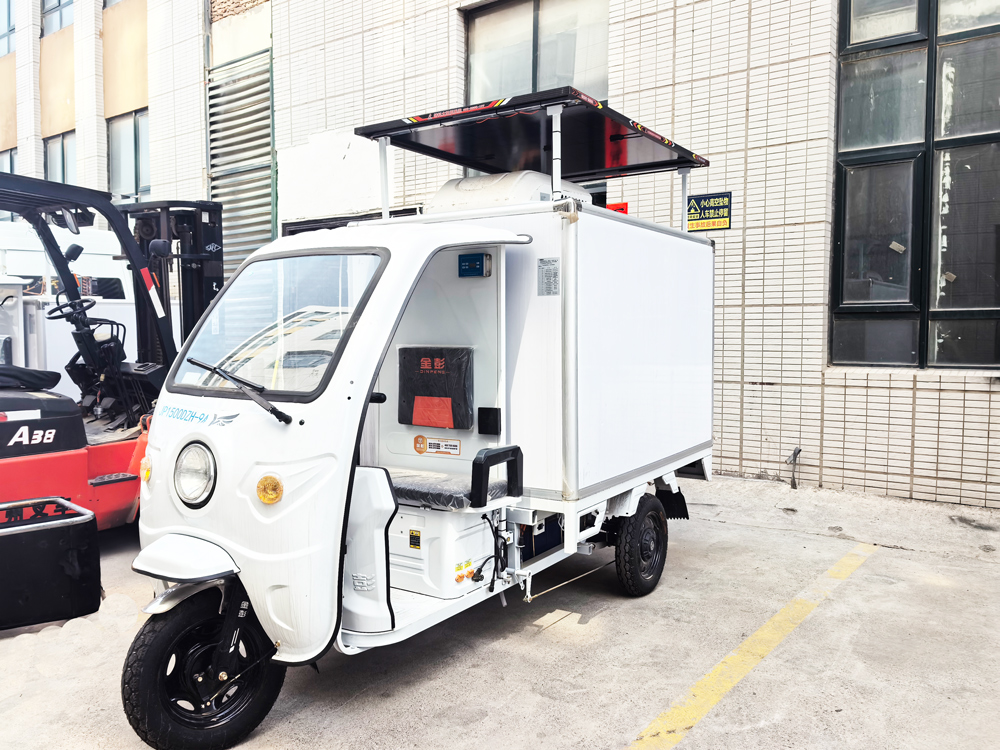
The Refrigerated Tricycle total cost of ownership includes purchase price, battery replacement, electricity, maintenance, and insurance. Over five years, an electric tricycle typically costs far less than a refrigerated van. The savings come from cheap electricity, simple maintenance, free parking, and lower driver wages. For businesses with daily urban routes, the payback period is often under two years.
I bought my first refrigerated van when I expanded my food business. The monthly payment was manageable. Then I added fuel, parking permits, commercial insurance, and a driver with a heavy vehicle license. My monthly transport cost tripled. I sold the van after 18 months and switched to tricycles.
What Should Your Quote Actually Include?
The refrigerated tricycle price you see first is often a trap. Some suppliers quote a bare chassis. The cooling unit, battery, and insulation are extras. You need an itemized list before you compare.
A complete quote for an Electric Refrigerated Tricycle includes the chassis, insulated cargo box, DC compressor, lithium battery, charger, and basic IoT monitoring. Optional add-ons include solar panels, spare batteries, and advanced fleet management software. Ask for a line-item quote. Verify what is included. Compare total package prices, not headline numbers.
Here is the full cost breakdown you should demand.
| Cost Line | Included? | Why It Matters |
| Electric tricycle chassis | Usually yes | Motor power, load rating, warranty |
| Insulated cargo box | Usually yes | Wall thickness, volume, material |
| DC cooling unit | Sometimes extra | Compressor brand, cooling speed |
| Lithium battery | Sometimes extra | Capacity, cycle life, warranty |
| Battery Charger | Sometimes extra | Charging time, auto-cutoff |
| IoT / GPS tracker | Often extra | Data logging, fleet visibility |
| Solar panel kit | Optional | Daily energy gain, payback |
| Delivery and setup | Often extra | Assembly, training, first calibration |
| Spare Parts kit | Optional | Compressor, seals, fuses |
I once compared two quotes. Supplier A was 30% cheaper. I almost bought. Then I read the fine print. The battery was not included. The cooling unit was a basic model with no warranty. The real cost was higher than Supplier B.
Battery replacement is the largest hidden cost. A lithium battery lasts 800 to 1,200 full cycles. For daily use, that is 3 to 4 years. Ask the supplier for replacement battery pricing upfront. If they will not tell you, walk away.
Where Does the Money Go Every Month?
Monthly costs separate the tricycle from the van. This is where electric tricycle operating cost beats fuel. Free parking versus paid lots. Simple service versus dealer visits.
Monthly operating costs for a refrigerated tricycle include electricity for charging, basic maintenance, and driver wages. Electricity is a fraction of fuel cost. Parking is free on sidewalks and motorcycle bays. Maintenance is local mechanic work. A standard motorcycle license is enough. Compared to a van, monthly savings often exceed the tricycle's purchase price within two years.
Let me show you where the money goes in this cold chain delivery cost comparison.
| Monthly Cost | Refrigerated Tricycle | Mini Refrigerated |
| Energy | Electric charge, low | Fuel or large battery charge, higher |
| Parking | Free or minimal | Paid lots, meters, fines |
| Maintenance | Local mechanic, standard parts | Dealer service, expensive parts |
| Insurance | Lower premium | Higher commercial premium |
| Driver license | Standard motorcycle | Commercial vehicle class |
| Tolls and access | Motorcycle rates or free | Full vehicle rates |
| Depreciation | Lower upfront, slower loss | Higher upfront, faster loss |
The energy gap is the biggest. A tricycle battery holds 3 to 5 kWh. A full charge is cheap. A van burns fuel every kilometer. Over 100 kilometers a day, this gap becomes the largest line item.
Driver cost is second. A van driver needs a commercial license. Commercial drivers cost more per hour. A tricycle driver needs a standard motorcycle license. The labor pool is larger. Wages are lower.
Parking is third. In dense city centers, van parking is expensive. Or impossible. Drivers circle for spots. Or get fines. A tricycle parks on sidewalks. No meter. No ticket.
How Do You Calculate Payback for Your Business?
Payback is personal. It depends on what you spend now. A rental van user sees payback in months. An owner sees payback in years.
A refrigerated tricycle pays for itself fastest when replacing outsourced delivery or van rental. The savings are immediate and monthly. Businesses doing 20 or more urban delivery trips per week see payback in 12 to 18 months. Fleet owners replacing owned vans see payback in 18 to 30 months due to resale and transition costs.
Here is a decision framework by current setup.
| Your Current Setup | Switch To | Expected Payback | Key Savings |
| Outsourced 3PL delivery | Own tricycle fleet | 8 to 12 months | Eliminate per-delivery fees |
| Rented refrigerated van | Own tricycle | 10 to 14 months | Eliminate rental, reduce fuel |
| Owned van, high fuel cost | Tricycle + keep van for bulk | 14 to 20 months | Fuel, parking, maintenance |
| Motorbike + cooler bags | Tricycle | No payback, but quality gain | Customer retention, less spoilage |
The last row is important. If you use motorbikes now, a tricycle costs more. It does not save money. It makes money by keeping customers. I lost 15% of my customers to spoilage complaints before I switched. The tricycle paid for itself through retained revenue.
For fleet planning, I recommend a mixed fleet. Tricycles for daily urban routes under 200kg. A
Mini Refrigerated Van for bulk hospital deliveries or long-distance runs. You match the vehicle to the route. This gives the lowest total fleet cost.
Conclusion
The refrigerated tricycle total cost of ownership is lower than most buyers expect. The upfront cost is modest. The daily operating cost is minimal. The payback is fast for businesses doing regular urban delivery. For anyone seeking affordable refrigerated transport, this is the smartest entry point. Run the numbers for your own routes. Compare your current monthly spend to a tricycle's monthly cost. If you are renting or outsourcing, the switch is an easy decision. If you own vans, consider a mixed fleet. A tricycle for the daily grind. A mini refrigerated van for the heavy loads.
My Role
About me
I am a product specialist at NEWBASE. We have built cold chain and autonomous driving solutions since 2007. We operate three production bases with 40,000 square meters of manufacturing space. We hold ISO 9001 and IATF 16949 certifications. Our products serve customers in over 30 countries.
About the author
Marcus Chen is a logistics consultant based in Singapore. He spent eight years managing last-mile delivery operations across Southeast Asia. He now advises food distributors and pharmaceutical companies on cold chain infrastructure.