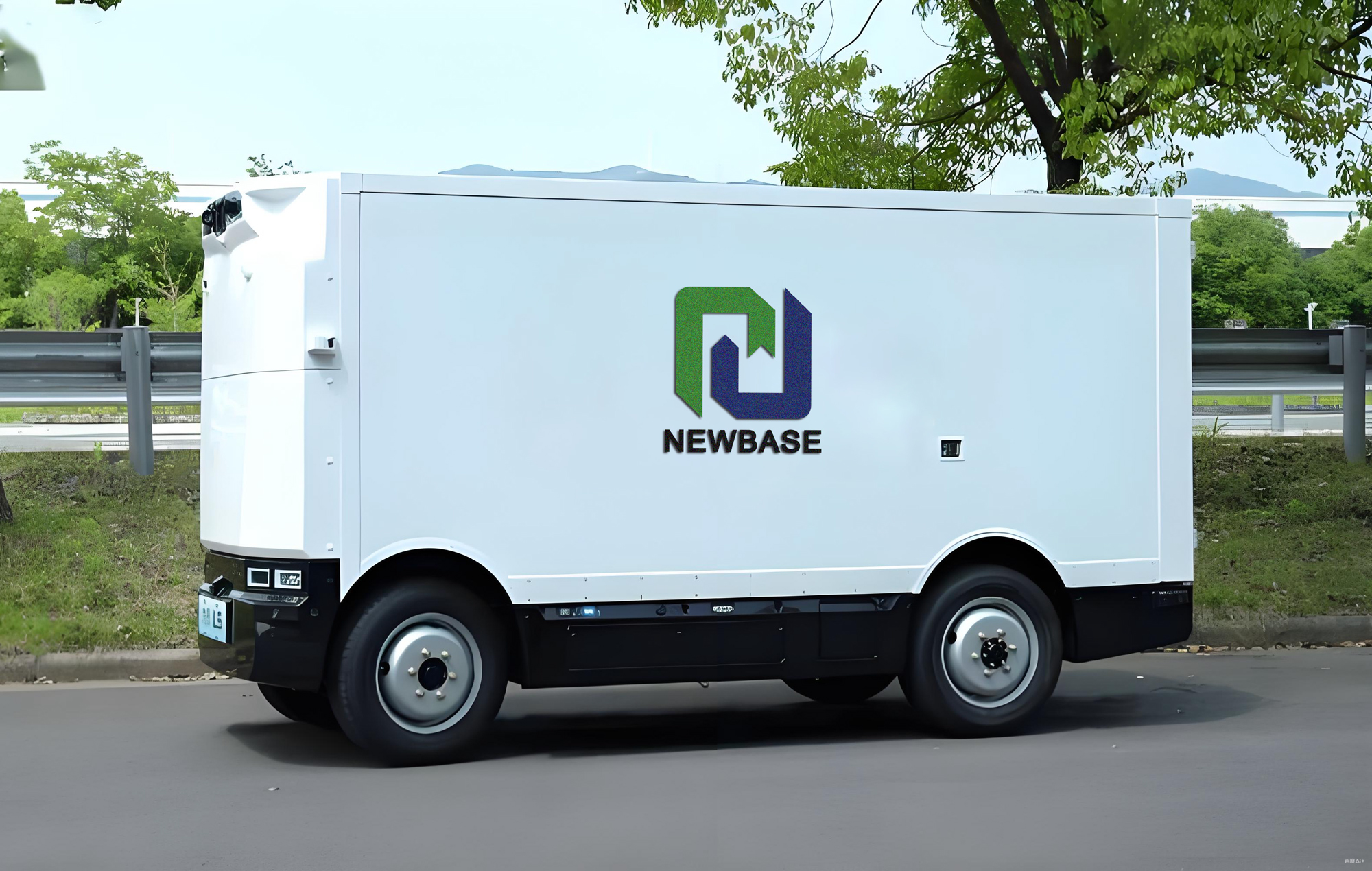
Safety is the single most critical factor determining whether L4 autonomous delivery vehicles gain public acceptance and regulatory approval. A single high-profile accident can set the entire industry back years — as several autonomous vehicle companies have learned the hard way. For logistics operators considering autonomous fleet adoption, understanding the safety architecture of L4 vehicles is not optional; it is essential due diligence that protects your investment, your cargo, and your brand reputation.
The foundation of L4 safety is sensor redundancy — the principle that no single sensor failure should compromise the vehicle's ability to perceive its environment. A production-grade L4 delivery van typically carries at least two LiDAR units, six to eight cameras covering 360 degrees, multiple radar units (front, rear, and sides), and ultrasonic sensors for close-range detection. Each sensor type has different strengths: cameras excel at object classification and reading traffic signs, LiDAR provides precise distance measurement and 3D mapping, radar works in rain and fog where cameras struggle, and ultrasonic sensors handle parking-speed proximity detection. When L4 fully autonomous logistics van all-weather operation specifications are evaluated, the critical question is whether the sensor suite maintains full perception capability even if one entire sensor type fails — this is called "degraded mode" operation, and it is a non-negotiable requirement for genuine L4 certification.
Beyond hardware, the software safety layer implements multiple independent safety checkers that continuously monitor the AI's driving decisions. If the primary planning system proposes a maneuver that any safety checker flags as risky — for example, approaching a crosswalk too quickly — the system automatically decelerates or stops. This "defense in depth" approach means that safety is not dependent on a single AI model getting everything right; it is enforced by a layered system where multiple independent components must all agree that an action is safe. Additionally, L4 vehicles maintain constant communication with cloud-based remote monitoring centers, where human supervisors can intervene if the vehicle encounters a situation beyond its operational parameters.
Regulatory compliance adds another layer of safety assurance. In the European Union, L4 vehicles must comply with UNECE WP.29 regulations, which define rigorous type-approval requirements covering functional safety (ISO 26262), cybersecurity (ISO/SAE 21434), and software update management. In China, the government has established designated autonomous vehicle test zones and requires extensive mileage accumulation before commercial operation permits are granted. The United States follows a state-by-state approach, with California and Arizona leading in permissive frameworks. For B2B buyers, the practical implication is that CE certified driverless delivery van for European urban logistics must carry documentation proving compliance with all applicable directives — and this documentation should be verified independently, not taken on faith.
For fleet operators, the safety conversation ultimately comes down to risk management. Current data from commercial deployments shows that L4 autonomous vehicles operating within their design domains have accident rates significantly lower than human-driven vehicles in equivalent conditions. The technology is not perfect — no transportation system is — but the combination of never-fatigued sensors, millisecond reaction times, multi-layered safety checkers, and remote human supervision creates a safety profile that, in most urban delivery scenarios, exceeds what human drivers achieve. When evaluating L4 autonomous driving technology for urban logistics delivery vehicle adoption, insist on seeing the manufacturer's safety case documentation, independent testing results, and real-world operational safety data from existing deployments.