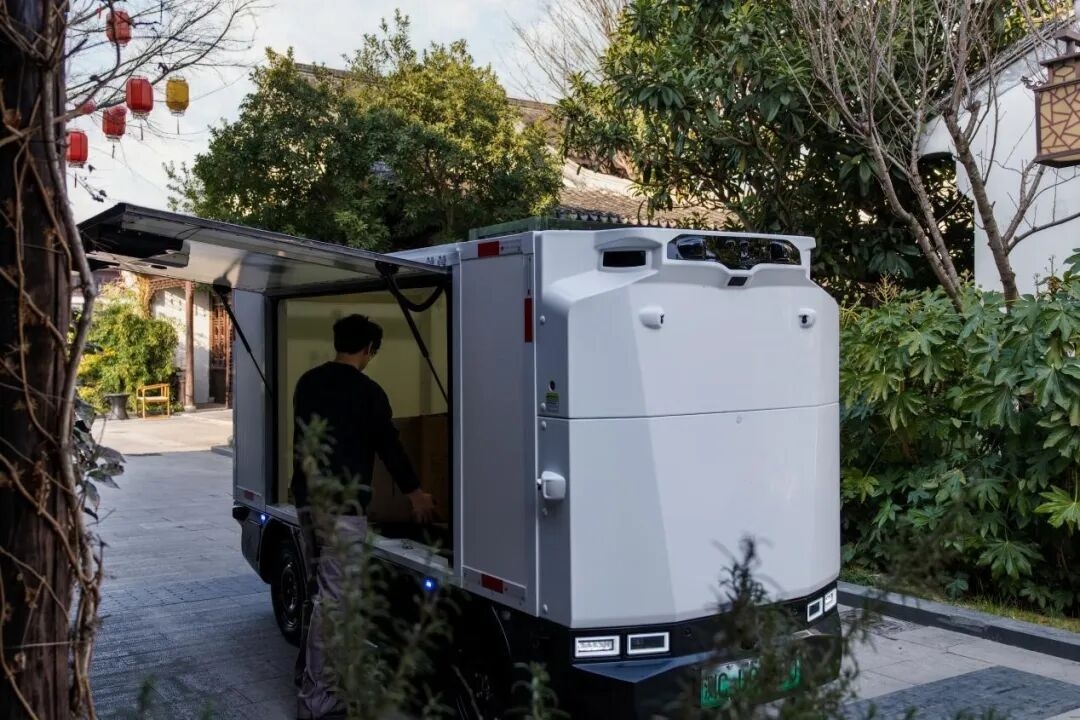
The Future of Autonomous Cold Chain Delivery: Why L4 Technology Is Reshaping Pharmaceutical Logistics
The intersection of autonomous driving and cold chain logistics represents one of the most promising — and most demanding — applications of L4 technology. Pharmaceutical cold chain logistics has always faced a paradox: the cargo is extraordinarily valuable and temperature-sensitive, yet the delivery process relies on human drivers whose actions introduce variability. Door openings, route deviations, unplanned stops, and temperature monitoring lapses caused by human factors collectively account for a significant portion of cold chain excursions — temperature deviations that can render pharmaceutical products ineffective or dangerous. L4 autonomous vehicles offer a structural solution to this problem by eliminating the human variability factor entirely.
Consider the pharmaceutical delivery workflow in its current form. A human driver loads temperature-sensitive cargo, sets off on a multi-stop delivery route, and at each stop opens the cargo door, retrieves the package, and closes the door. Each door opening introduces ambient temperature air into the conditioned space, causing a temporary temperature spike. The driver may linger at a stop, take an unplanned break, or deviate from the optimal route — all of which extend total transit time and increase cumulative temperature exposure. An L4 autonomous refrigerated delivery van for pharmaceutical cold chain logistics solves these issues at the system level: automated cargo handling systems minimize door opening time, route optimization algorithms eliminate unnecessary deviations, and continuous IoT temperature monitoring ensures that any excursion is detected and reported in real time without relying on human attention.
The cold chain advantage extends beyond temperature consistency. Pharmaceutical logistics requires rigorous chain-of-custody documentation — every handoff, every temperature reading, every route deviation must be recorded for regulatory compliance. L4 autonomous vehicles generate this documentation automatically and immutably: GPS tracks, temperature logs, door opening timestamps, and delivery confirmations are all captured by the vehicle's telematics system and uploaded to cloud-based compliance platforms. For pharmaceutical distributors in markets like the Middle East, where ambient temperatures regularly exceed 45 degrees Celsius and regulatory scrutiny of cold chain operations is intensifying, the combination of autonomous driving and integrated cold chain monitoring represents a transformative capability.
The market is responding to this opportunity. According to industry analysis, the autonomous cold chain logistics sector is projected to grow at a compound annual rate exceeding 25% through 2030, driven primarily by pharmaceutical and biologics distribution. Companies in the United Arab Emirates and Saudi Arabia are already piloting L4 autonomous temperature controlled delivery vehicle specifications that integrate refrigeration systems with autonomous driving platforms, creating end-to-end cold chain solutions that require no human intervention from warehouse to delivery point. These pilot programs are demonstrating not only temperature consistency improvements but also significant cost reductions — the dual benefit of labor elimination and cold chain excursion reduction makes the business case particularly compelling in high-ambient-temperature markets.
For logistics operators and pharmaceutical distributors evaluating the future of cold chain delivery, the message is clear: L4 autonomous technology is not merely an incremental improvement to existing cold chain operations — it represents a paradigm shift that fundamentally restructures how temperature-sensitive cargo moves through the supply chain. The companies that pilot autonomous cold chain delivery now will accumulate the operational data, regulatory relationships, and process expertise needed to scale when the technology reaches full commercial maturity. As with any transformative technology, early movers will define the standards, shape the regulatory frameworks, and capture the market advantages that late adopters will spend years trying to match. The future of pharmaceutical cold chain is autonomous, and that future is arriving faster than most logistics operators expect.