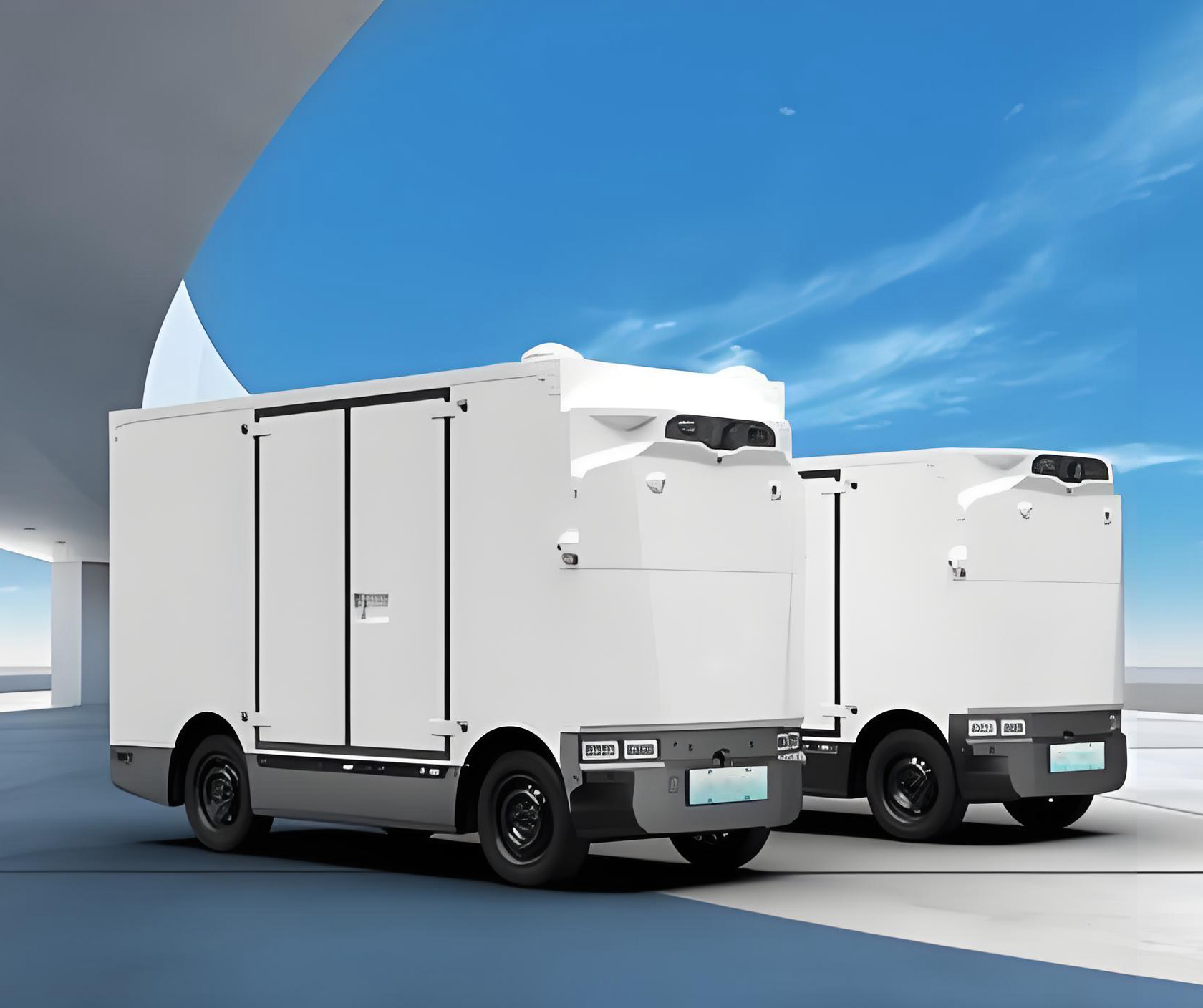
Last-mile delivery costs are eating your margins alive. Drivers quit. Vehicles sit idle. And customers still want it faster and cheaper.
An L4
Autonomous Driving Vehicle for last mile delivery eliminates driver dependency, cuts per-delivery costs by 40–60%, and runs 20+ hours per day without breaks — turning your biggest cost center into your most predictable operation.
I managed a cold chain fleet of 45 vehicles in Singapore for six years. Every quarter, I lost 12–18% of my drivers to competitors offering higher pay. Training replacements took three weeks. My vehicles sat parked 14 hours a day. The math never worked. Then we tested L4 autonomous delivery vehicles on two urban routes, and everything changed.
This article covers what I learned, the numbers behind the cost savings, and what fleet operators need to know before making the switch.
How Does an L4 Autonomous Driving Vehicle Actually Work in Urban Delivery?
You hear "autonomous vehicle" and picture a robotaxi navigating Times Square. That is not what we are talking about here.
An autonomous delivery vehicle for urban distribution operates on pre-mapped routes at speeds under 50 km/h. It uses LiDAR, cameras, and GPS to navigate fixed urban corridors without a human driver. You load it at the hub, and it drives itself to each delivery stop.
The "L4" part matters. It means the vehicle handles all driving tasks within its defined operational domain — specific streets, speed zones, and weather conditions — without any human intervention. You do not need a safety driver sitting behind the wheel. You do not need remote teleoperation for normal runs.
Here is what that looks like in practice. We mapped two routes in Singapore's eastern district. One served pharmacy cold chain drops across eight stops. The other served fresh food deliveries to twelve hotel loading docks. Both routes were under 20 km total distance.
The vehicle left the hub at 4 AM. It completed all stops by 7:30 AM. It returned to the hub, reloaded, and ran a second loop by noon. Then a third loop in the afternoon. Three full runs per day on one vehicle. A human driver could manage one, maybe one and a half.
The technology stack includes sensor fusion with 360-degree LiDAR coverage, real-time obstacle detection, automatic rerouting for road closures, and continuous telemetry back to the operations center. I could watch every vehicle's position, speed, and cargo temperature on my phone in real time.
One thing that surprised me: the vehicle handled rain better than my drivers. LiDAR does not care about visibility the way human eyes do. Our on-time delivery rate during monsoon season went from 78% to 96%.
What About Edge Cases?
Every fleet operator asks this. What happens when a delivery truck double-parks in the drop zone? What about construction barriers?
The vehicle stops, reports the obstruction to the operations center, and waits for a remote decision. In six months of operation, this happened roughly twice a week. Each resolution took under three minutes. Compare that to a human driver who might spend fifteen minutes finding an alternative parking spot and then argue with the receiving dock staff.
What Are the Real Cost Savings of a Driverless Delivery Vehicle?
This is the part that matters to anyone signing purchase orders.
Driverless delivery vehicle cost savings come from three areas: eliminated driver wages, higher vehicle utilization, and reduced delivery failures. Combined, these cut per-delivery costs by 40–60% compared to traditional human-driven fleets.
Let me break down the numbers from our Singapore deployment.
| Cost Factor | Human Driver Fleet | L4 Autonomous Fleet |
| Driver wages + benefits | $4,200/month per driver | $0 |
| Vehicle utilization | 35–40% (8–10 hrs/day) | 80–85% (20+ hrs/day) |
| Deliveries per vehicle per day | 12–18 | 35–50 |
| Cost per delivery | $6.80 | $2.90 |
| On-time delivery rate | 82% | 96% |
| Failed delivery rate | 8% | 2% |
The wage line is obvious. No driver means no salary, no insurance, no overtime, no sick leave coverage. In Singapore, a refrigerated van driver costs $4,200–5,500 per month with benefits. In the Middle East, it is higher. In Western Europe, significantly higher.
The utilization line is where the real money hides. A human driver works eight to ten hours. Your $45,000 vehicle sits parked for the other fourteen. That is a 35–40% utilization rate on a depreciating asset. An autonomous vehicle runs three shifts. Your asset is working 80% of the day.
The failed delivery rate matters because every failed cold chain delivery means a replacement shipment, a client complaint, and potentially a lost contract. When we paired the autonomous vehicle with a
Mini Refrigerated Van configuration for temperature-sensitive pharmaceutical drops, our failed delivery rate dropped from 8% to under 2%. The vehicle does not forget to check the temperature log. It does not leave the cooler door open while chatting with the receiving clerk.
When Does the Vehicle Pay for Itself?
Based on our numbers, the break-even point hit at month fourteen. We ran the vehicle 312 days in the first year, averaging 42 deliveries per day. The total savings versus a human-driven equivalent was approximately $47,000 in the first twelve months. The vehicle cost $68,000. By month fourteen, we were net positive, and every month after that was pure margin improvement.
The L4 autonomous vehicle vs human driver comparison is not even close on a three-year timeline. Over 36 months, one autonomous vehicle saves roughly $140,000 compared to the human-driven alternative, accounting for all costs including maintenance, charging, and remote operations staff.
What Do Fleet Operators Need to Know Before Deploying L4 Autonomous Vehicles?
I will not pretend the switch was seamless. Here are the three things I wish someone had told me before we started.
Start with fixed routes, not dynamic dispatch. L4 autonomy works best on pre-mapped, repetitive routes with predictable conditions. Do not try to throw an autonomous vehicle into on-demand, dynamically routed deliveries on day one. Build confidence on fixed routes first. Then expand.
Regulatory approval takes longer than you think. In Singapore, we needed permits from the Land Transport Authority for each test route. The process took twelve weeks. In Dubai, it was ten weeks. In European cities, expect four to six months. Map your routes early. Submit applications before you need the vehicles on the road.
Your team will resist the change. Drivers worry about losing jobs. Operations staff worry about reliability. I addressed this by reassigning drivers to fleet supervisor roles — monitoring autonomous vehicle telemetry, handling exception cases, and managing client relationships. Nobody lost their job. Their roles evolved from driving to overseeing.
The Deployment Checklist I Wish I Had
Here is what I would do if I were starting over today:
- Audit your routes. Identify the top five most repetitive, highest-frequency routes under 30 km.
- Calculate your true per-delivery cost. Include driver wages, insurance, vehicle depreciation, fuel, and failed delivery costs.
- Submit regulatory applications for your top two routes immediately.
- Order vehicles twelve weeks before you need them.
- Plan charging infrastructure at your hub. Most L4 delivery vehicles need 2–3 hours of charging between shifts.
- Train two operations staff on the remote monitoring platform before vehicles arrive.
- Run a 90-day pilot on one route before scaling.
The companies that deploy first will have a structural cost advantage in last-mile delivery. Every month you delay, your competitors who already have autonomous vehicles on the road are running deliveries at half your cost.
NEWBASE has been manufacturing L4 autonomous vehicles since 2007, with models like the Z5, Z8, and Z8Max purpose-built for urban cargo delivery. Over 1 million kilometers of real-world L4 operation. ISO 9001 and IATF 16949 certified. Exported to 30+ countries.
Explore NEWBASE L4 Autonomous Driving Vehicles →
Conclusion
L4 autonomous delivery vehicles are not a future promise. They cut costs by 40–60% today, run 20+ hours daily, and pay for themselves in under 18 months. The question is not whether to deploy — it is how fast you can start.