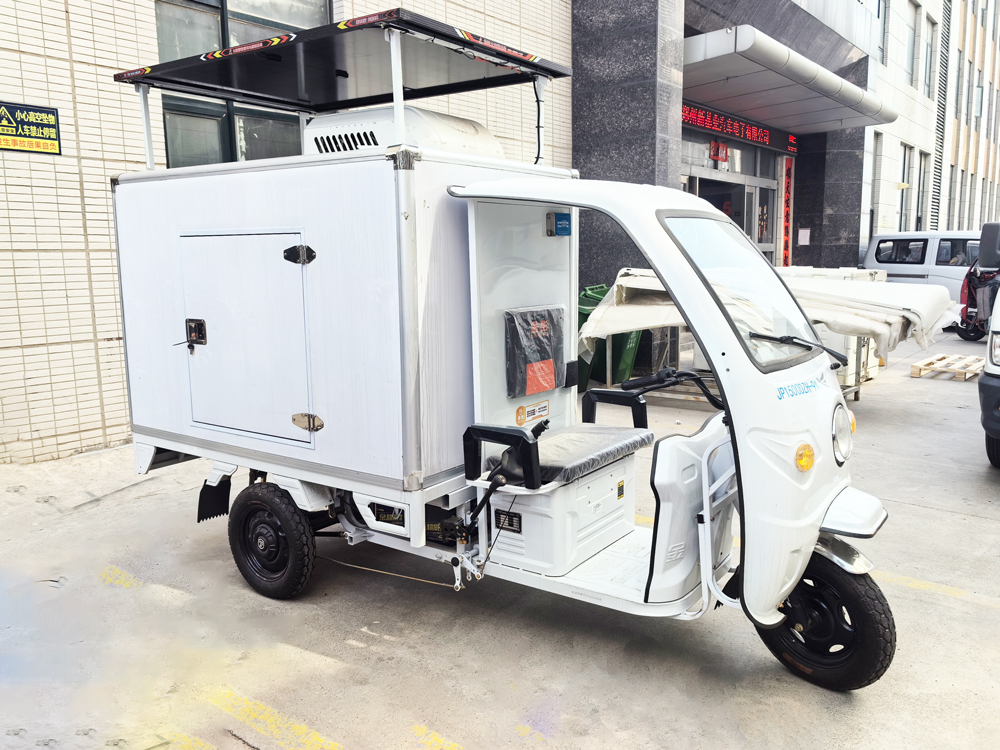
In the rapidly evolving Indian logistics landscape, the "Power Source" is the most critical factor for any cold chain business. With petrol prices fluctuating and the government pushing for 100% electric mobility, businesses in cities like Chennai, Ahmedabad, and Delhi are looking for energy-efficient ways to keep their products cool.
However, India’s unique challenges—such as long-distance rural routes, urban grid instability, and intense solar radiation—require more than a "one-size-fits-all" approach. Here is a look at the three power technologies leading the way.
1. Harnessing the Indian Sun: The Solar Advantage
India enjoys over 300 sunny days a year, making it the perfect environment for solar-integrated logistics. For businesses operating in remote areas or those looking to achieve "Net Zero" emissions, the solar-powered refrigerated cargo tricycle is a game-changer.
These vehicles feature high-efficiency photovoltaic panels integrated into the roof of the cooling box. The solar energy is used to power the refrigeration unit directly or top up the battery during the day. This technology is particularly effective for daytime street vending and agricultural transport, as it provides "passive cooling" even when the vehicle is parked under the scorching sun, significantly reducing the strain on the main battery.
2. High Performance for the Urban "Long Haul"
In India’s sprawling Tier 1 metros, a single delivery route can span over 80 kilometers in heavy, stop-and-go traffic. In these scenarios, lead-acid batteries often fall short due to their weight and limited cycle life.
The transition to a lithium battery electric cooling trike for long range is the preferred choice for modern e-commerce fleets. Lithium-ion technology offers a much higher energy density, allowing the vehicle to carry more payload while maintaining a consistent temperature for over 100km on a single charge. Furthermore, their fast-charging capability—compatible with India’s growing network of DC fast chargers—ensures that the trike spends more time on the road and less time at the charging station.
3. Reliability Without Borders: The Hybrid Bridge
For logistics companies that need to bridge the gap between rural farms and urban distribution centers, charging infrastructure can sometimes be unpredictable.
The plug-in hybrid refrigerated 3-wheeler offers the ultimate peace of mind. By combining an electric motor with a small, fuel-efficient range extender, these vehicles ensure that the refrigeration system never shuts down, even if the battery runs low. In the Indian context, this "fail-safe" mechanism is vital for high-value cargo like pharmaceuticals or frozen meats, where a power failure could result in thousands of dollars in losses.
| Feature | Solar-Powered Trike | Lithium Electric Trike | Plug-in Hybrid Trike |
| Best For | Street Vending / Rural Agri | Urban Last-Mile / O2O | Inter-City / Rural Routes |
| Operational Cost | Lowest (Free Energy) | Low (Charging Costs) | Moderate (Electricity + Fuel) |
| Infrastructure | None Required | Needs Charging Point | Flexible |
| Maintenance | Minimal | Low | Moderate |
Conclusion
As India moves toward a greener future, the choice of power source will determine the profitability of your cold chain operations. Whether you are looking for the extreme endurance of a lithium battery electric cooling trike for long range, the eco-innovation of a solar-powered refrigerated cargo tricycle, or the versatility of a plug-in hybrid refrigerated 3-wheeler, we have the technical expertise to keep your business moving.