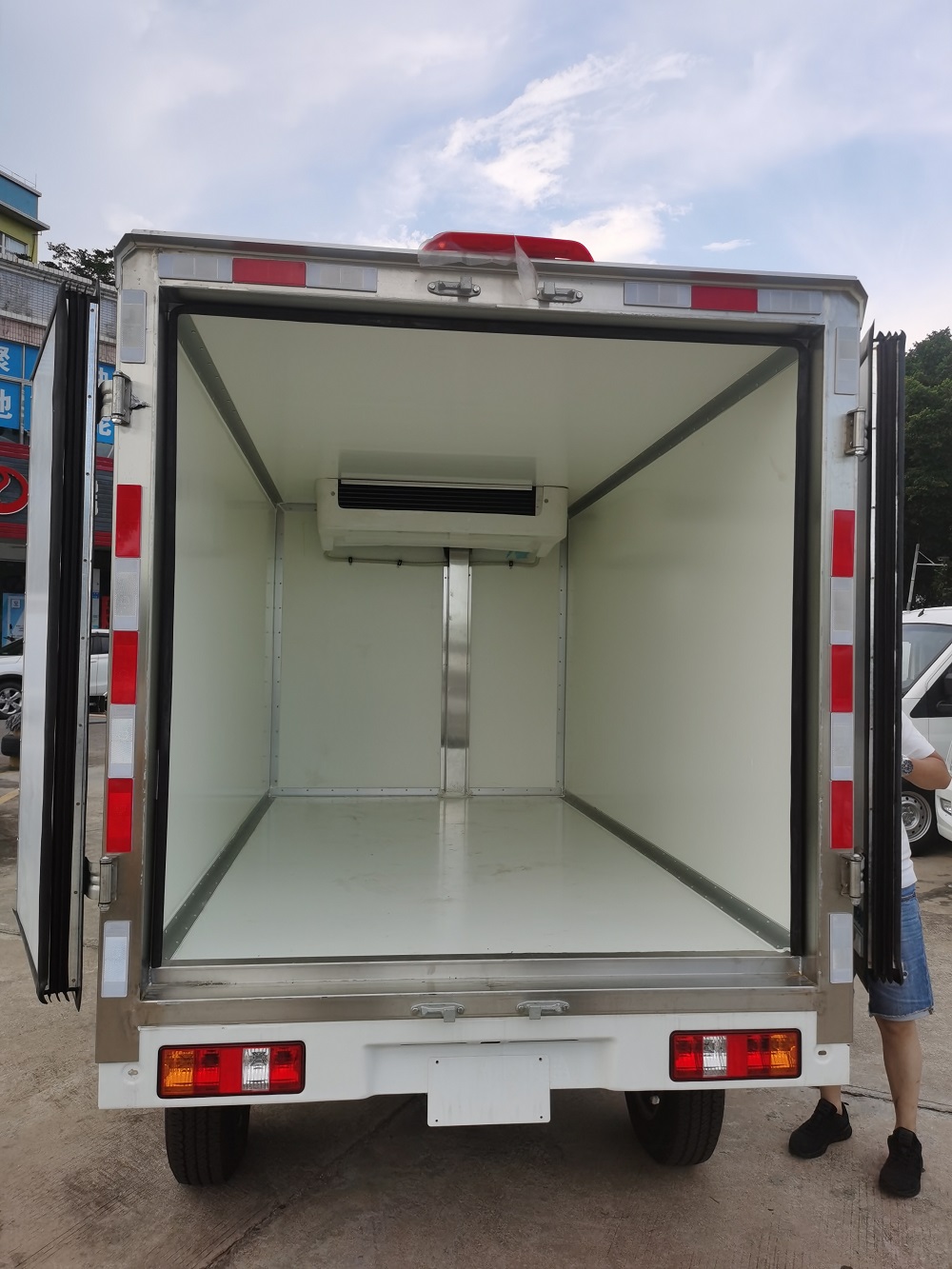
A refrigerated van for southeast asia tropical humidity urban delivery faces a one-two punch: 32–35°C heat with 70–90% humidity that strains every refrigeration system, plus densely packed cities where narrow streets and constant stop-and-go kill efficiency. Standard reefers designed for temperate markets struggle badly in Jakarta, Bangkok, Kuala Lumpur, and Ho Chi Minh City — high ambient humidity causes excessive condensation, and small urban layouts demand maneuverability most cold chain trucks can't deliver.
For distributors across Indonesia, Thailand, Malaysia, Vietnam, and the Philippines, choosing the right small refrigerated truck directly affects daily delivery capacity, cargo spoilage rates, and driver productivity. This guide covers the specific challenges of Southeast Asian tropical urban delivery and what to look for in a van built for it.
1. Why Is High Humidity Worse Than Dry Heat for Refrigerated Vans?
Humidity makes refrigeration systems work 20–30% harder because moisture in the air transfers more heat and forms insulating condensation on evaporator coils.
Many operators assume temperature alone determines performance — but in Bangkok or Jakarta, it's the combination of heat and humidity that breaks vans. A 33°C day at 85% relative humidity actually puts more thermal load on a refrigeration unit than a 38°C dry day in Riyadh.
The Three Humidity Problems Specific to SEA
Condensation buildup on evaporator coils. When humid air hits a cold coil, water condenses instantly. Thick frost acts as insulation, reducing heat transfer by 25–40% until the unit runs a defrost cycle. In SEA conditions, standard units need 2–3x more frequent defrosts — and each defrost temporarily raises cargo box temperature.
Mold and bacterial growth in insulation. If moisture seeps into insulation panels through poor seals, it creates permanent mold growth inside the walls. This causes bad odors (a serious problem for food and pharma cargo) and degrades insulation R-value over time.
Excessive interior moisture damage. High humidity inside the cargo box causes dripping from the ceiling onto products — especially problematic for bakery items, pharmaceuticals, and anything sensitive to water damage.
Thailand refrigerated van high humidity performance depends on three engineering choices:
| Feature | Standard Van | Humidity-Optimized Van | Impact on SEA Operations |
| Evaporator design | Basic finned coil | Grooved coil + enhanced drainage | Reduces frost buildup by 35–45% |
| Defrost control | Timer-based | Demand-based (frost thickness sensor) | 50% less time in defrost |
| Insulation sealing | Standard gaskets | Compression seals + vapor barrier | Prevents wall moisture intrusion |
| Interior lining | Basic aluminum | Food-grade smooth FRP + slope ceiling | No dripping on cargo |
✅ Bottom line: If your routes run in 70%+ humidity year-round, demand-based defrost and vapor-barrier insulation are non-negotiable.
2. How Do You Balance Cargo Capacity with Narrow Urban Street Access?
Southeast Asia's cities were not built for large delivery trucks — narrow soi (Bangkok), gangsters (Jakarta), and shophouse rows mean bigger isn't better when you literally can't reach the customer.
This is the core trade-off SEA fleet managers face: larger vans carry more but can't access 30–40% of delivery addresses, forcing time-wasting reloading to smaller vehicles or hand-carrying goods long distances. Indonesia Malaysia small refrigerated truck narrow street access is one of the most searched technical queries among local operators — and for good reason.
The Size Decision Framework for SEA Cities
Before buying, map your delivery routes and answer these questions:
What percentage of stops are on roads under 3 meters wide? If it's more than 20%, a full-size 4m box truck won't work. Consider a 2.5–3m compact van or even a
Refrigerated Tricycle for last-feeder operations.
How many kilograms do you deliver per route? Under 500 kg/day → compact van works. 500–1,000 kg → medium 3–3.5m van. Over 1,000 kg → you probably need a hub-and-spoke model with a larger truck plus small feeder vehicles.
Do you have underground parking access? Many modern retail centers and condo towers have 2.2–2.4m height limits. High-roof vans won't fit.
Why Modular Design Solves the SEA Dilemma
Modular refrigerated vans — where the refrigerated cargo box swaps between different chassis sizes — are growing fast in SEA because they let you:
- Use a small compact chassis for tight urban routes on weekdays
- Switch to a larger box on a bigger chassis for bulk weekend restocking
- Add or remove capacity seasonally (before Ramadan, Songkran, or Christmas peaks)
- Without modular design, operators either overbuy (wasting money on oversized trucks that sit idle) or underbuy (losing orders because they can't fit enough cargo in peak season).
✅ Bottom line: For most SEA urban distributors, 3–3.5m compact vans with modular options beat larger trucks on actual delivery efficiency.
FAQ
Q: Do electric refrigerated vans work well in tropical climates, or does the heat kill the range?
A: Electric vans do lose range in tropical heat — typically 15–25% compared to rated range — because the refrigeration unit runs constantly and battery thermal management uses extra power. However, for urban routes under 120 km per day (which covers most SEA last-mile delivery), the range is still sufficient, and energy costs are 60–70% lower than diesel. Operators comparing Thailand refrigerated van high humidity performance between diesel and electric models report that electric vans win on cost per kilometer in urban use, as long as daily routes stay within the practical 80–100 km working range.
Q: How often should I deep-clean a refrigerated van operating in humid tropical conditions?
A: In SEA humidity, we recommend full interior deep-cleaning and sanitization every 2 weeks, plus a quick wipe-down after each shift for high-risk cargo like seafood or dairy. Condensation creates a perfect breeding ground for bacteria and mold — skimping on cleaning causes odor problems that are very hard to eliminate once they set into the insulation. This is one of the most underrated aspects of refrigerated van for southeast asia tropical humidity urban delivery — a clean van holds its value and cargo quality much longer.
Q: What's the smallest refrigerated van that still makes economic sense for SEA markets?
A: For urban multi-stop delivery, the sweet spot is a 2.5–3m cargo box with 500–800 kg payload — small enough for narrow streets and alleyways, large enough to handle 15–25 daily stops. This is why Indonesia Malaysia small refrigerated truck narrow street access shows up in so many procurement searches: buyers know their route determines the size, not the other way around. Below 2m cargo length, you lose too much capacity per trip and end up needing too many vehicles to serve the same route.
Delivering in Jakarta, Bangkok, Kuala Lumpur, or Ho Chi Minh City? Send us your route map, cargo type, and daily delivery volume, and we'll recommend the right size and configuration for refrigerated van for southeast asia tropical humidity urban delivery — including whether a modular setup or hub-and-spoke model works best for your operation. Free route analysis, no obligation.