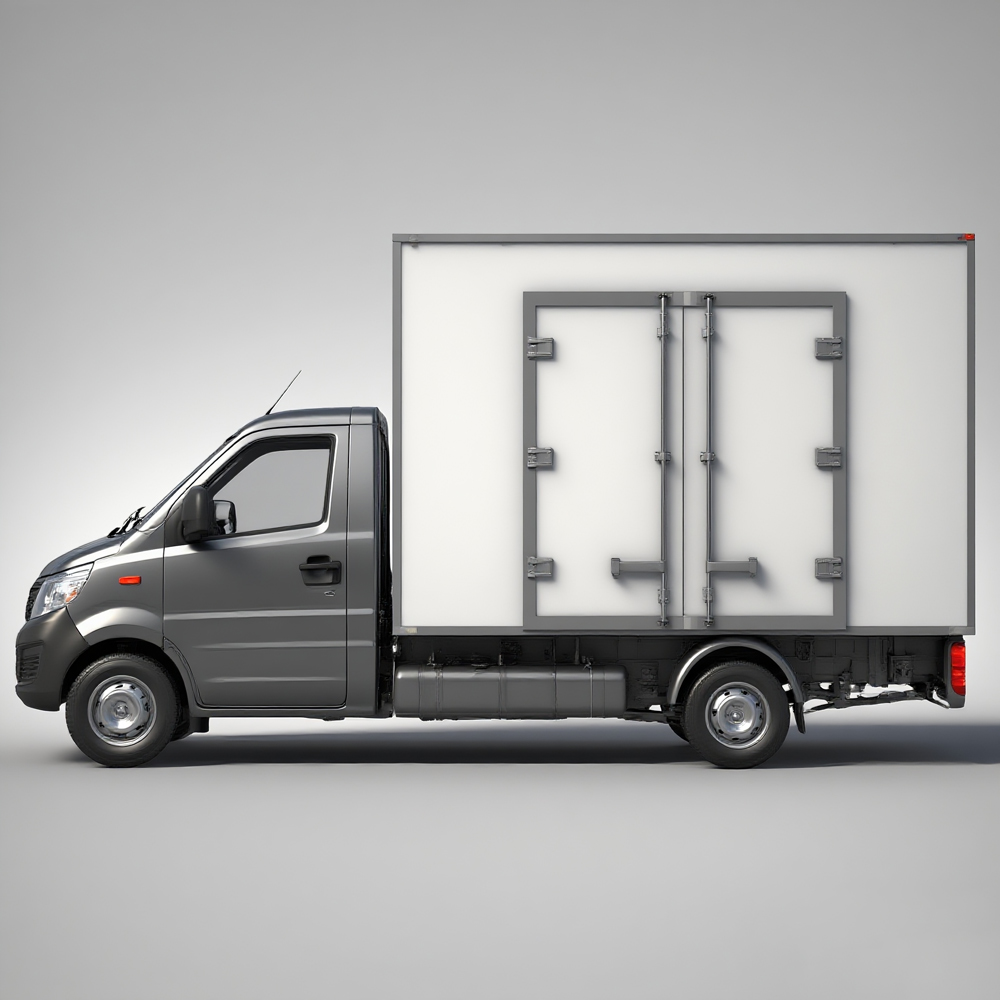
A refrigerated van for middle east desert heat resistance needs purpose-built engineering — standard reefers lose 30–40% of cooling capacity in 50°C Gulf summers, and sand causes twice as many compressor failures. For fleet operators in Saudi Arabia, the UAE, Qatar, and Oman, the wrong van means rejected cargo and spiraling maintenance costs.
This guide breaks down what makes a van survive the desert — from insulation and cooling capacity to air filtration and battery performance — using real operational data from Gulf-region fleets.
1. How Hot Is Too Hot for a Standard Refrigerated Van in the Gulf?
Standard refrigerated vans are rated for up to 35°C ambient; above 40°C their cooling capacity drops sharply, and at 50°C many cannot hold frozen temperatures at all.
The Middle East is not a uniform climate — summer temperatures range from 40°C on coastal days to 52°C in Riyadh or Kuwait City peak heat. Most factory spec sheets quote cooling performance at 30°C ambient, which tells you almost nothing about real Gulf operation.
When reefer van cooling performance in 50 degree celsius weather is measured on real routes, three issues dominate:
Data is based on 6-month field trials in Riyadh and Dubai with 3.5t class vehicles carrying mixed frozen/chilled cargo. It confirms that reefer van cooling performance in 50 degree celsius weather directly correlates with total operational cost — the bigger the de-rating, the more you spend on spoilage and repairs.
✅ Bottom line: If your routes see 45°C+ for 4+ months a year, you need a van rated at least 10°C colder than your target cargo temperature.
2. What Desert-Specific Features Actually Protect Against Sand and Heat?
Not every "high-temperature" option package is built the same — look for four specific engineering choices that separate desert-ready vans from marketing claims.
The biggest mistake operators make is buying a standard van and hoping it works. Sand and heat attack every system: the refrigeration unit, insulation seals, electrical connections, and even the cargo box structure.
Feature 1: Oversized Refrigeration Unit (30–50% Extra Capacity)
A 20% oversized compressor is the minimum for Gulf operation. Top-tier desert vans use 30–50% extra capacity, so the compressor runs at 60–70% duty cycle instead of 100%. This single upgrade cuts compressor failures by roughly 60% and holds target temperature even on the hottest days.
Feature 2: Sealed and Reinforced Insulation Panels
Sand gets in through panel gaps and door seals, degrading insulation performance by 15–25% within 12–18 months. Saudi Arabia refrigerated truck insulation sand protection requires:
Full-bonded sandwich panels (no rivet holes that let sand in)
Compression-type door seals with double lips (not single-lip rubber)
Sand baffles on all ventilation intakes
Aluminum or FRP exterior skins (steel panels rust through faster in salty coastal sand)
Fleets that skip these details see insulation degradation accelerate quickly — Saudi Arabia refrigerated truck insulation sand protection is not a cosmetic upgrade, it directly determines how long the van holds its cooling efficiency.
Feature 3: Pre-Filtration for the Refrigeration Unit Condenser
Sand clogs condenser fins in weeks, reducing heat rejection by 30–40%. Desert-rated units include:
Dual-stage air filtration on the condenser intake
Easy-access filter panels that drivers can clean in 5 minutes
Finned-tube condenser design with wider fin spacing (resists clogging better than tight-spaced microchannel coils)
Feature 4: Heat-Resistant Electrical and Battery Systems
For electric vans, high temperature is the #1 range killer. Desert-spec electric reefers should include:
Battery thermal management with liquid cooling (maintains 25–35°C battery temp even in 50°C ambient)
High-temperature cable insulation (125°C rated minimum)
Separate battery for refrigeration (so cooling doesn't drain drive range)
✅ Bottom line: Don't pay extra for a "desert package" unless it lists oversized cooling, panel sealing, condenser filtration, and thermal battery management by name.
FAQ
Q: Do I really need a desert-specific van, or can I just run maintenance more often?
A: You can extend a standard van's life with more frequent cleaning and servicing, but it won't fix the core problem of insufficient cooling capacity at 50°C. You'll still see higher cargo rejection rates and 2–3x more compressor replacements over a 5-year period. For fleets running year-round in the Gulf, a refrigerated van for middle east desert heat resistance with proper insulation and oversized cooling is not a luxury — it usually pays back in 18–24 months from reduced spoilage and maintenance.
Q: How does solar assistance help with desert refrigerated van operations?
A: Solar roof panels help in two ways: they offset some of the refrigeration unit's power draw (reducing fuel or battery consumption by 10–15%), and they power a ventilation fan that pre-cools the cargo box during loading. The real value isn't massive energy savings — it's keeping the box from soaking up heat while parked during midday loading, which reduces pull-down time significantly.
Q: What maintenance frequency do desert refrigerated vans actually need?
A: Plan on roughly double the service intervals of a temperate-climate van. Condenser filter cleaning every 2 weeks (not every 3 months), condenser coil deep-cleaning every 3 months, door seal inspection every month, and full refrigeration system service every 6 months. Skipping any of these accelerates wear dramatically in dusty conditions.
Running a cold chain fleet in Riyadh, Dubai, Doha, or Kuwait? Send us your route details (cargo type, daily distance, number of stops, typical ambient temperature) and we'll recommend a refrigerated van for middle east desert heat resistance configuration with real cooling performance numbers — not just spec-sheet ratings. We also provide free 5-year TCO comparison so you can see exactly when the desert-rated option pays for itself.