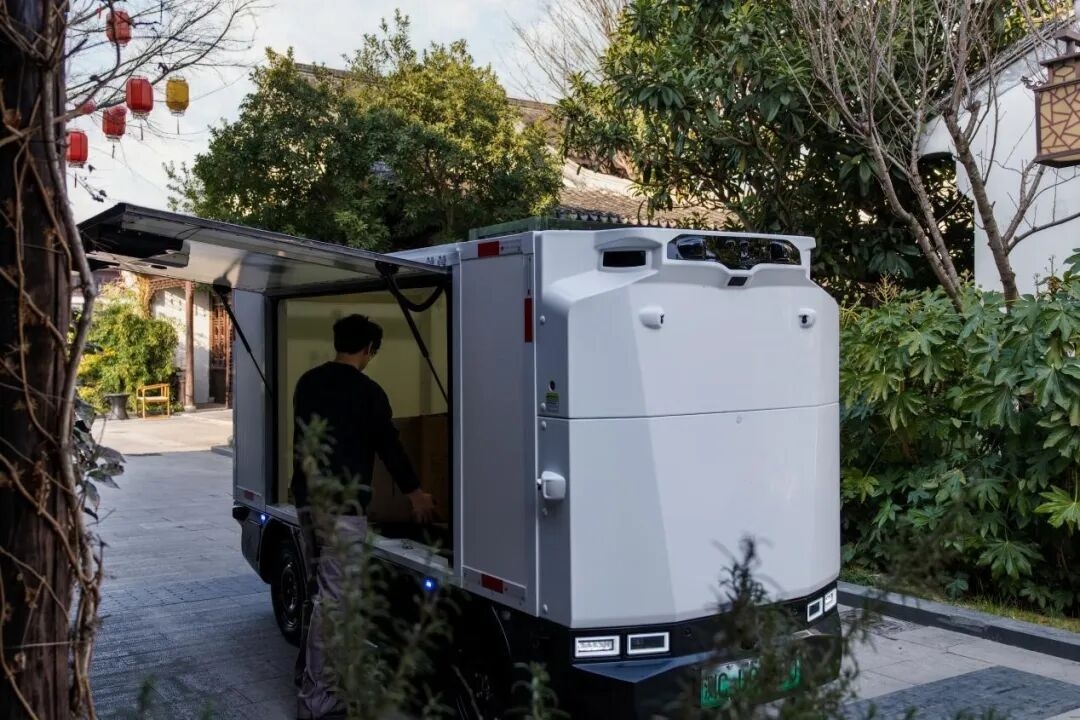
E-commerce last-mile delivery is the single biggest cost in online retail fulfillment — and autonomous delivery vans can cut those costs by 40–58% while improving reliability and speed. If you're an e-commerce operator, 3PL, or fulfillment center manager, last-mile delivery is probably your fastest-growing expense. Labor shortages, rising wages, and increasing delivery volumes are squeezing margins. An autonomous delivery van for e-commerce fulfillment last mile solution isn't a futuristic concept — it's already being deployed at scale by major logistics companies in China and Southeast Asia.
Here's what you'll learn: why e-commerce is the perfect use case, how much you can actually save, deployment models, and how to get started.
1. Why E-Commerce Last-Mile Is Ripe for Autonomous Delivery
E-commerce last-mile delivery has the perfect combination of high volume, predictable routes, and high labor cost — making it ideal for autonomous vehicles. The economics of self-driving delivery vehicle for online retail distribution are already working today, not 5 years from now.
The Last-Mile Cost Problem
Last-mile delivery typically accounts for 40–55% of total e-commerce fulfillment costs. Here's why it's so expensive:
- Labor is 50–60% of the cost: Drivers are the single biggest expense, and they're getting harder to hire
- Low utilization: Drivers spend 20–30% of their time waiting, searching for parking, or making returns
- Rising customer expectations: Free shipping, same-day delivery, and precise time windows all add cost
- Volume growth: E-commerce volume grows 10–15% annually, but driver supply isn't keeping up
Why Autonomous Vehicles Fix This
| E-Commerce Challenge | How Autonomous Delivery Solves It |
| High driver cost | Eliminates the driver — the #1 expense |
| Driver shortage | Vehicles can operate 16+ hours/day without hiring |
| Same-day delivery pressure | Can run multiple shifts without overtime cost |
| Peak season capacity | Add vehicles fast — no hiring or training needed |
| Delivery accuracy | Algorithm-driven routing with 95%+ on-time performance |
| Rising labor costs | Predictable per-vehicle cost, no wage inflation |
The Volume Requirement: When Does It Make Financial Sense?
Autonomous delivery works best when you have enough volume to keep the vehicles well-utilized. As a rough guide:
- Pilot (2–5 vehicles): 500–1,500 deliveries/week in a defined service area
- Full deployment (10+ vehicles): 3,000+ deliveries/week in dense urban or suburban zones
- Best fit: Dense urban or suburban areas with 100–300+ parcels per route per day
NewBase Z5 series vehicles, with 5.3m³ cargo space and 800kg payload, can typically carry 200–400 parcels per route — ideal for urban and suburban e-commerce last-mile delivery.
Real-World E-Commerce Deployment Examples
Major Chinese e-commerce and logistics companies are already running autonomous delivery at scale:
- 1,000+ vehicles deployed across multiple cities for parcel delivery
- Routes covering residential communities, university campuses, and business districts
- 40–58% reduction in per-delivery cost vs. driver-operated vans
- 99%+ on-time delivery rate
Zhengzhou Newbase Auto Electronics Co., Ltd. has deployed autonomous delivery vehicles for major e-commerce logistics partners, with thousands of vehicles in commercial operation across China.
✅ Bottom line: E-commerce last-mile is where autonomous delivery delivers the clearest ROI — high volume, predictable routes, and labor cost as the biggest expense all line up perfectly.
2. How Much Can E-Commerce Operators Actually Save?
For a typical urban e-commerce delivery route, autonomous vans reduce per-delivery cost by 40–58% and cut total annual fleet cost by 35–50%. The business case for an autonomous delivery van for e-commerce fulfillment last mile solution only gets stronger as your volume grows. If you're working with a bulk e-commerce autonomous delivery van wholesale supplier China partner for a large fleet, the savings are even more dramatic.
Cost Comparison: Driver-Operated vs. Autonomous
Let's compare a 10-vehicle e-commerce delivery fleet operating in a mid-density urban area:
| Cost Item | Driver-Operated Vans | Autonomous Vans | Annual Savings |
| Drivers (10 × 2 shifts) | 900k–1.3M/yr | 90k–150k/yr (remote operators) | 760k–1.15M/yr |
| Vehicle purchase | 400k–600k (one-time) | 700k–1.2M (one-time) | -300k–-600k (year 1) |
| Fuel / Electricity | 70k–100k/yr | 18k–30k/yr | 52k–70k/yr |
| Maintenance | 50k–80k/yr | 25k–45k/yr | 25k–35k/yr |
| Software / platform | $0 | 50k–120k/yr | -50k–-120k/yr |
| Insurance | 30k–50k/yr | 40k–70k/yr | -10k–-20k/yr |
| Total annual (yr 2+) | 1.05M–1.53M | 223k–415k | 787k–1.18M/yr |
Key Takeaways from the Numbers
- Year 1 is more expensive because of the higher vehicle purchase cost
- Year 2+ savings are massive — 50–75% reduction in operating cost
- Payback period: 1.5–2.5 years for a 10-vehicle fleet
- Savings scale with fleet size: The more vehicles, the more you save
Additional Savings Beyond Direct Labor
The labor cost reduction is the biggest number, but it's not the only one:
- Reduced accidents: 60–80% fewer vehicle incidents = lower insurance and repair costs
- Optimized routing: Algorithm-driven routes = 10–15% more stops per day
- No turnover cost: No hiring, training, or overtime for driver turnover
- Better capacity planning: Scale up for peak seasons (Singles Day, Christmas) without hiring temp drivers
- Improved customer satisfaction: More consistent delivery times = fewer complaints and better reviews
NewBase e-commerce deployments typically see a 20–30% increase in deliveries per day compared to driver-operated routes, because of optimized routing and no break time.
✅ Bottom line: Expect 40–58% lower per-delivery cost and 1.5–2.5 year payback. The savings start in year 2 and compound from there.
FAQ
Q: What size parcels can autonomous delivery vans handle?
A: It depends on the vehicle model, but most e-commerce autonomous vans handle packages from small envelopes up to medium boxes — covering 80–90% of typical e-commerce parcels. For reference, the NewBase Z5 Flying Wing model has 5.3m³ of cargo space and 800kg payload, which typically holds 200–400 parcels per route depending on average package size. For bulkier items (large appliances, furniture), you'd still need human-driven vehicles. The best autonomous delivery van for e-commerce fulfillment last mile strategy usually involves a mix: autonomous vans for standard parcels, and human-driven vehicles for oversized or special-handling items.
Q: How does the parcel handoff work — do customers pick up from the van?
A: It depends on the deployment model. There are several approaches: (1) Locker pickup: The vehicle has parcel lockers, customers receive a code and pick up their package from a specific locker. (2) Concierge/property pickup: The vehicle delivers to a building's front desk or property management office. (3) Curbside + app notification: Customers are notified when the van arrives and meet it curbside. (4) Last-meter robots: The van carries smaller delivery robots that handle the final 100m to the door. Most self-driving delivery vehicle for online retail distribution deployments use a combination of locker and concierge models today, with last-meter options growing.
Q: If I need 20+ vehicles, should I buy directly from a China supplier?
A: For large fleets (20+ vehicles), working with a bulk e-commerce autonomous delivery van wholesale supplier China manufacturer can save you 30–50% compared to Western suppliers — often with comparable or better technology. The key is choosing the right supplier: look for thousands of units in commercial operation (not just prototypes), named enterprise customers, CE or relevant certification for your market, and a local service partner or strong remote support capability. NEWBASE, for example, offers bulk pricing for fleet orders, can customize vehicle configurations for your specific parcel mix, and provides deployment support for international customers. Always start with a small pilot (3–5 vehicles) before committing to a large bulk order.
Curious how much you could save with autonomous delivery? The NewBase e-commerce team will analyze your delivery volume, route density, and current costs and give you a detailed savings projection — specific to your operation.
Send us your delivery data and we'll provide:
- Current vs. autonomous cost comparison for your fleet size
- Recommended vehicle configuration based on your parcel mix
- Projected payback period and 5-year ROI
- Pilot program recommendation (size, duration, routes)
- Bulk pricing for larger fleet orders