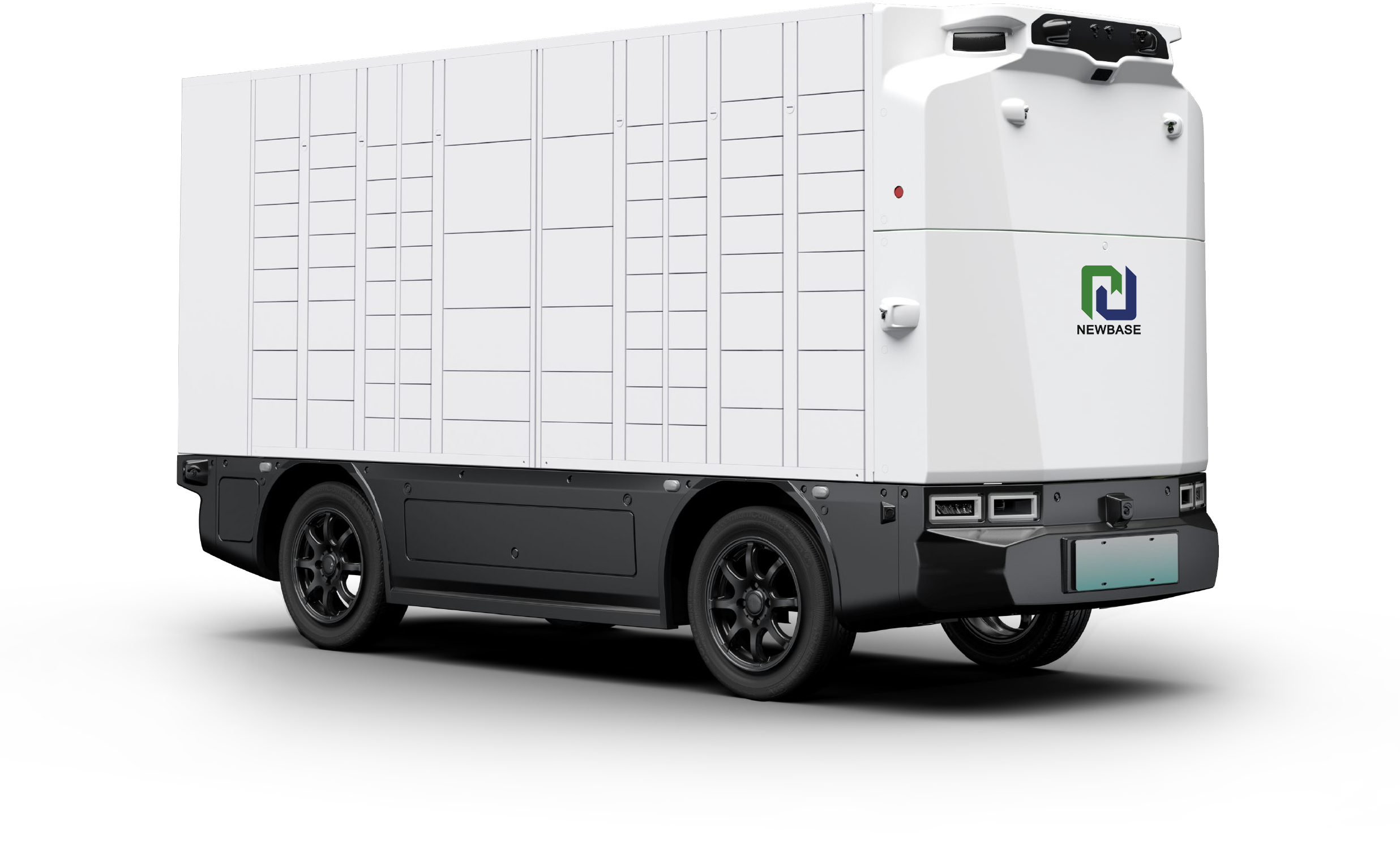
An autonomous delivery van for Middle East desert heat climate must survive 50°C+ ambient temperatures, intense sand and dust, direct solar loading, and high humidity along the Gulf coast — and still deliver 8+ hours of reliable daily operation with no driver on board. Most autonomous vehicles on the market are designed for temperate European or East Asian cities, and they fail quickly in the Gulf region: battery ranges drop by 30–50%, LiDAR lenses cake with dust, cabin electronics overheat, and tire failures spike. For logistics operators in Saudi Arabia, the UAE, Qatar, Oman, and Kuwait who are evaluating autonomous delivery fleets, the #1 selection criterion is not range or cargo volume — it is whether the vehicle can survive a summer afternoon in Riyadh or Dubai without a breakdown. A purpose-built heat resistant autonomous van for Middle East logistics uses active thermal management, sealed electronics, dust-resistant sensors, and solar-reflective bodywork to maintain full performance in conditions that would disable a standard model. NewBase has designed its Z-series platform with a wide operating temperature range and reinforced thermal systems, making it one of the few production autonomous vans ready for Gulf-region deployment out of the box.
Why Standard Autonomous Vans Fail in the Middle East
The desert climate creates five distinct stressors that most AVs are not engineered to handle. Operators who skip climate-specific testing usually discover these problems within the first 90 days of deployment.
1. Extreme Ambient Heat and Solar Loading
Summer daytime temperatures across the Gulf regularly reach 45–52°C, with surface temperatures on asphalt exceeding 70°C. A vehicle parked in direct sunlight can see internal cabin temperatures climb past 85°C within an hour — hot enough to soften plastic components, degrade adhesive bonds, and cause electronics to derate or shut down.
Standard autonomous vans are typically rated for 0–40°C operation. Above 40°C, battery charging speed slows, driving range drops, and the central compute unit throttles back to protect itself from overheating. At 50°C, many models simply stop operating.
A self-driving vehicle for Saudi Arabia hot weather logistics must be rated for at least −10°C to +55°C, with active liquid cooling for the battery pack, compute unit, and sensor suite. NewBase Z-series vehicles use a dual-loop thermal management system — one loop for the battery, one for electronics — that keeps all critical components within their optimal temperature range even in 55°C ambient heat.
2. Sand and Dust Ingress
Desert dust is everywhere, and it is abrasive. It gets into door seals, clogs air filters, coats sensor lenses, and wears out bearings and suspension components. In a standard AV designed for clean city environments, dust ingress can cause sensor failures within weeks and mechanical failures within months.
Dust-resistant design requires:
- IP67-rated sensor enclosures (dust-tight + water-jet proof)
- Sealed cabin and cargo compartments with positive-pressure filtered ventilation
- Regularly serviceable intake filters on all cooling systems
- Protective coatings on exposed connectors and wiring harnesses
- Automated sensor cleaning systems (air + liquid wash)
Without these features, a 10-vehicle fleet in Saudi Arabia might spend 20–30% of its time in maintenance instead of delivering — a utilization rate that kills the business case.
3. Battery Degradation and Range Loss
Heat is the #1 enemy of lithium-ion batteries. Every 10°C increase above 25°C roughly doubles the rate of calendar aging. In a 50°C environment, a battery pack without active thermal management can lose 20–30% of its capacity in 2–3 years instead of the expected 8–10 years.
Range also drops in extreme heat — not from battery degradation, but from the massive power draw of the cooling system. If the battery thermal management, cabin AC, and cargo refrigeration all compete for the same battery pack, effective range can fall by 30–50% compared to mild-weather ratings.
A heat-optimized autonomous van addresses this with:
- Active liquid cooling for the battery pack, keeping cells at 25–35°C even in 55°C ambient
- High-temperature battery chemistry (LFP or NMC with high-temp electrolyte)
- Separate cooling loops for battery, electronics, and cargo to avoid competing loads
- Solar-reflective paint and insulated body panels to reduce heat absorption
4. Tire and Chassis Heat Stress
Road surface temperatures of 65–75°C are normal on Gulf highways and industrial roads in summer. Standard tires are not designed for sustained operation at these temperatures — tread separation and blowout risk increase dramatically.
Heat also affects brake systems, suspension bushings, and underbody wiring. Vehicles that see continuous use in high heat need:
- High-temperature rated tires (≥70°C continuous service rating)
- Heat-resistant brake pads and rotors
- Protected and heat-shielded underbody wiring
- Reinforced suspension bushings with high-temperature lubricants
5. Humidity and Corrosion (Gulf Coast)
While interior desert areas are dry, coastal Gulf cities like Dubai, Doha, and Jeddah see humidity levels of 60–90% combined with high temperatures — a corrosive combination that accelerates rust and connector oxidation. Salt from coastal air adds another layer of corrosion risk.
Heat-resistant vans for coastal Middle East deployment need galvanized steel chassis frames, corrosion-resistant coatings on all metal components, and gold- or tin-plated electrical connectors to prevent oxidation failures.
| Failure mode | Standard AV (0–40°C rated) | Heat-resistant Gulf-spec AV |
| Max operating temperature | 40–45°C | 55°C+ (derate to 60°C) |
| Battery life in Gulf climate | 2–3 years (20–30% capacity loss) | 6–8 years (normal degradation) |
| Range loss at 50°C | 30–50% | 10–15% |
| Dust-related downtime | 20–30% of operating hours | <5% |
| Tire life in summer | 40–60% reduction | Normal (high-temp tires) |
| Coastal corrosion | Yes — frame/connector rust | No — galvanized + coated |
Zhengzhou Newbase Auto Electronics Co., Ltd. engineers its Z5 and Z8 autonomous delivery platforms with a full Gulf-spec thermal and dust package as an available option, including the dual-loop cooling system, IP67 sensor enclosures, solar-reflective paint, high-temperature battery chemistry, and corrosion-resistant chassis — all validated through 5,000+ hours of accelerated high-temperature and dust testing.
✅ Bottom line: Standard autonomous vans fail in the Middle East within months due to extreme heat, dust, battery degradation, tire stress, and coastal corrosion. A Gulf-spec heat-resistant van with active thermal management, IP67 sealing, and corrosion protection delivers 95%+ uptime in 55°C summer heat — the difference between a viable fleet and an expensive parking lot.
Spec Checklist and Deployment Best Practices for Gulf Operators
When evaluating autonomous delivery vans for Middle East operations, use this structured checklist to separate genuinely heat-hardened vehicles from marketing claims. Then follow deployment best practices to maximize uptime and ROI.
Dust and Environmental Sealing
Look for IP ratings on every critical component, not just a vague "dust-resistant" claim.
- Sensor enclosures: IP67 minimum (dust-tight, submersible to 1m)
- Cabin / cargo compartment: IP65 minimum (dust-protected, water-jet resistant)
- Electrical connectors: IP67 with gold or tin plating
- Cooling air intake: HEPA or MERV-13 filtration, easy to service
- Sensor cleaning: automated air-pulse + liquid wash system (essential for LiDAR/cameras in dust storms)
✅ Bottom line: Verify thermal performance with third-party 55°C test data, demand IP67+ sealing on all critical components, and follow deployment best practices — shaded charging, off-peak maintenance, heat-optimized routing, and seasonal shift scheduling. Operators who get these right see 90%+ fleet uptime year-round in the Gulf.
FAQ
Q: What temperature range should an autonomous delivery van for Middle East desert heat climate be rated for?
For reliable year-round operation across the Gulf region, a van should have a continuous operating temperature rating of at least −10°C to +55°C, with the ability to operate at reduced performance up to 60°C rather than shutting down completely. The battery pack needs active liquid cooling to keep cells within 25–35°C, and the sensor and compute electronics need their own dedicated thermal management. Always ask for third-party high-temperature test data — spec sheet claims alone are not enough.
Q: How does sand and dust affect a self-driving vehicle for Saudi Arabia hot weather logistics?
Dust causes three main problems: it coats LiDAR and camera lenses, reducing perception accuracy and forcing the vehicle to slow down or stop; it clogs cooling system filters, reducing thermal performance and causing overheating; and it gets into mechanical components (bearings, hinges, suspension), causing accelerated wear. A properly engineered vehicle addresses all three with automated sensor cleaning systems (air + liquid wash), sealed and filtered cooling intakes, and IP67-rated enclosures for all electronics and sensors.
Q: What is the ROI timeline for a heat resistant autonomous van for Middle East logistics compared to a human-driven van?
In Gulf countries, driver costs are high (US$1,500–3,000/month per driver depending on nationality and benefits), and summer heat reduces human productivity — drivers need frequent rest breaks, and delivery volumes drop by 20–30% in the hottest months. A heat-resistant autonomous van eliminates driver cost entirely and maintains consistent productivity year-round, delivering a payback period of 12–18 months for single-shift operation and 8–12 months for two-shift operation. RaaS leasing models can even deliver positive cash flow from day one, since the monthly lease cost is typically lower than the monthly driver salary it replaces.