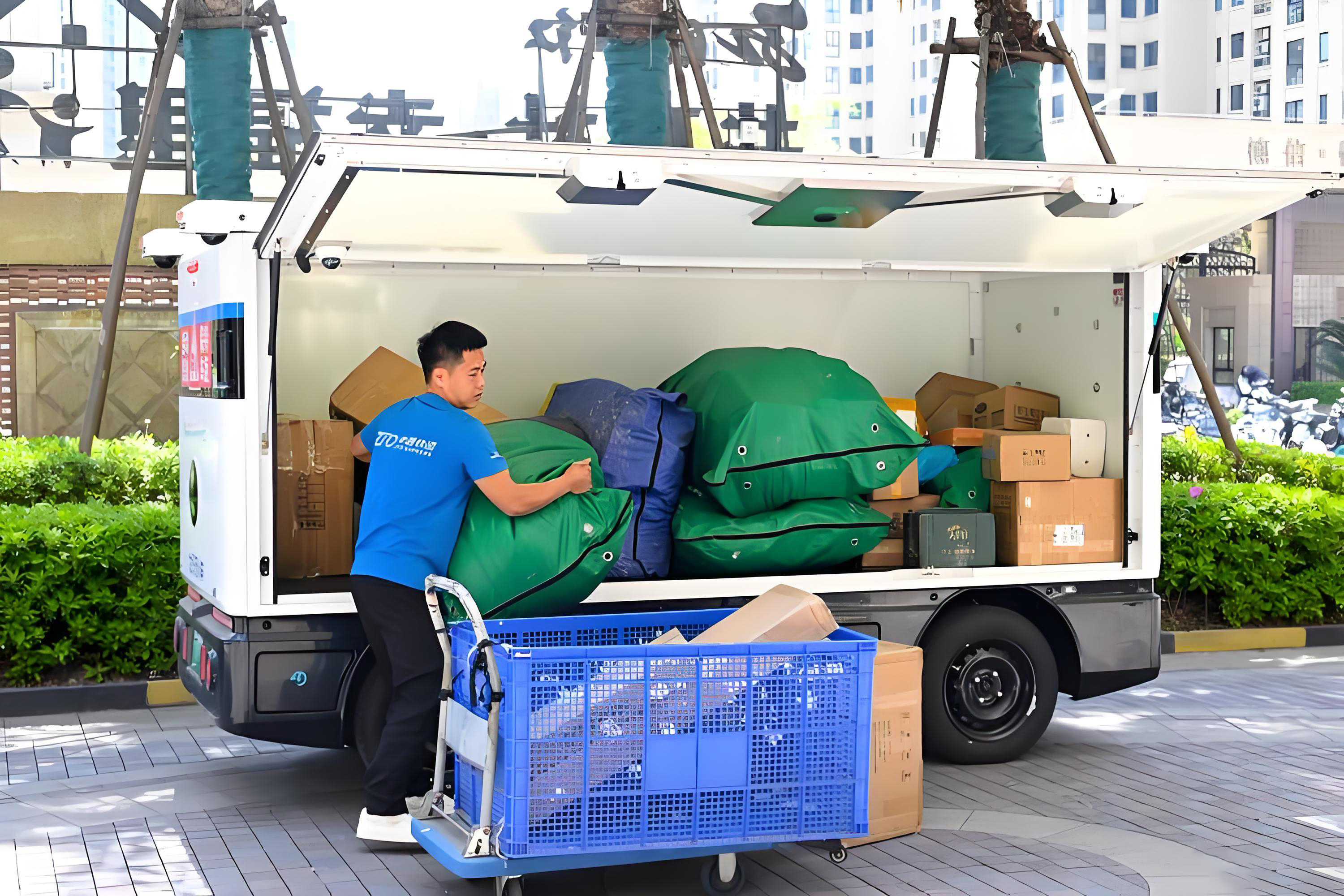
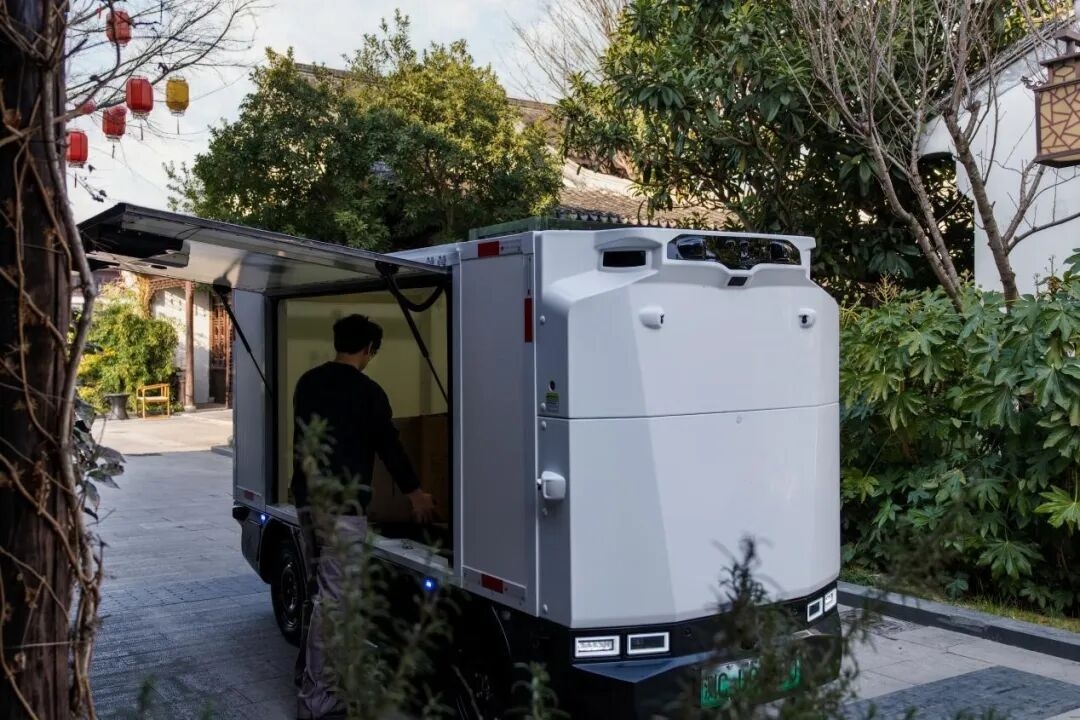
An autonomous delivery vehicle for emergency relief disaster response saves lives by reaching areas human drivers cannot — flooded roads, fire zones, chemical spills, and post-earthquake rubble — while delivering medical supplies, food, water, and shelter materials 24/7 without putting additional personnel at risk. When disaster strikes, the first 72 hours determine survival rates, yet conventional relief logistics break down precisely when they matter most: roads are damaged, fuel is scarce, drivers are exhausted, and security is uncertain. A purpose-built self-driving van for humanitarian aid logistics solves each of these problems, operating continuously on battery power, navigating damaged roadways with LiDAR and AI perception, and freeing trained responders to focus on people rather than supply runs. For governments, UN agencies, NGOs, and international relief organizations, autonomous vehicles are no longer a futuristic concept — they are a deployable tool that directly reduces mortality in the golden 72-hour window. NewBase has worked with emergency management agencies and international aid groups to deploy Z-series autonomous logistics vehicles in flood zones, earthquake recovery zones, and remote health-outreach programs, with a track record of reliable operation under extreme conditions.
Why Autonomous Vehicles Transform Disaster Response Logistics
The core challenge of disaster relief logistics is not distance — it is access, reliability, and risk. Human-driven supply convoys face four systemic barriers that autonomous vehicles eliminate or dramatically reduce.
1. Access: Where Humans Cannot Safely Go
After earthquakes, floods, hurricanes, or industrial accidents, roads are often partially blocked, structurally compromised, or contaminated. A human driver may be ordered to wait for engineering clearance — a delay that can cost lives. An autonomous vehicle with 360° LiDAR perception and structural-avoidance algorithms can assess road integrity in real time, navigate around debris, and reach communities that would otherwise be cut off for hours or days.
Similarly, in chemical spills, radiation zones, or fire-front evacuations, sending a driver into the area exposes another person to harm. A disaster relief autonomous supply delivery vehicle removes that risk entirely — it delivers respirators, decontamination kits, water, and medication into hot zones without a human on board, and can be decontaminated after each run.
2. Continuity: 24/7 Operation Without Driver Fatigue
The golden 72 hours of disaster response run nonstop, but human drivers cannot. After 10–12 hours of driving in high-stress conditions, reaction times slow and accident risk rises sharply. Relief agencies routinely struggle with driver shortages during the first week of a major event.
An autonomous van runs as long as it has battery charge — typically 12–18 hours per charge for a cargo-optimized model like the NewBase Z8Max with a 10 m³ cargo hold. Swapping or fast-charging the battery in 30–60 minutes brings it back online, effectively delivering 20+ hours of service per day with zero fatigue, zero staffing rotas, and zero overtime cost.
3. Transparency: Real-Time Tracking for Donors and Agencies
One of the persistent pain points in humanitarian logistics is the last-mile visibility gap. Donors, headquarters, and field coordinators often have only approximate ETA information, with supplies sometimes disappearing into local distribution black holes.
A properly integrated autonomous fleet solves this because every vehicle is GPS-tracked, every delivery is logged automatically, and cargo compartments can be sealed with tamper-evident electronic locks. Every kit, every crate, every dose of medicine is traceable from warehouse to handover — a level of accountability that donors and auditors increasingly demand.
4. Cost: More Supplies Delivered per Dollar
Humanitarian budgets are always tight. A 2024 study by the Humanitarian Logistics Association found that last-mile delivery accounts for 35–50% of total relief supply costs, with driver wages, per diems, and vehicle rental making up the bulk of it.
| Cost factor | Human-driven 4×4 truck | Autonomous delivery van |
| Driver cost (wages + per diem) | US$250–400/day | US$0 |
| Daily operating hours | 8–10 (fatigue-limited) | 20+ (battery swap) |
| Accident / risk premium | 15–25% of payroll | Near-zero |
| Cargo capacity (typical) | 4–6 m³ | 6–10 m³ |
| Real-time tracking | Manual logs / phone calls | Automated, meter-level |
| 30-day cost per vehicle | US$7,500–12,000 | US$2,000–3,500 |
Over a 30-day response, a single autonomous unit delivers roughly 2.5× more cargo-kilometers at one-third the cost of a human-driven equivalent. For a mid-sized relief operation running 10 vehicles, that is US$50k–85k in direct savings per month — money that can be redirected to more supplies, more medical staff, and more communities served.
Zhengzhou Newbase Auto Electronics Co., Ltd. has deployed its Z5 and Z8 platforms in multiple emergency-response scenarios across Asia, including flood-zone medical supply delivery in central China and remote rural health outreach in Southeast Asia. The vehicles' rugged suspension, IP67-rated electronics, and all-weather sensor suite make them suitable for the uneven roads and variable conditions typical of post-disaster environments.
✅ Bottom line: Autonomous relief vehicles outperform human-driven convoys on access, continuity, transparency, and cost — delivering 2.5× more cargo-kilometers at one-third the cost over a 30-day deployment, with zero additional personnel risk in contaminated or dangerous zones.
Selecting the Right Autonomous Platform for Relief Operations
Not all autonomous vehicles are built for disaster zones. A vehicle designed for clean city sidewalks or well-maintained university campuses will fail within days on washed-out rural roads or in dust-choked earthquake zones. Relief procurement teams should evaluate five critical capability areas before committing.
1. Off-Road and Rough-Terrain Capability
Most disaster zones do not have smooth paved roads. The vehicle must handle gravel, mud, standing water, potholes, and moderate inclines without getting stuck or damaging its sensor suite. Key specs to check:
- Minimum ground clearance: 150 mm+
- Approach/departure angles: 15°+ / 15°+
- Water fording depth: 300 mm+ (for flood zones)
- Suspension: independent, with long travel
- Tire type: all-terrain or mud-terrain rated
NewBase's Z8 series uses a purpose-built commercial-van chassis with reinforced suspension and 180 mm of ground clearance, giving it the ability to traverse the kind of damaged secondary roads common in rural disaster zones.
2. All-Weather and All-Climate Reliability
Disasters happen in every climate — from monsoon floods in South Asia to desert heat in the Middle East to winter storms in North America. The vehicle's sensors, battery, and electronics must function reliably across a wide temperature range and in rain, dust, and humidity.
Look for:
- Operating temperature range: −20°C to +55°C (or wider)
- IP rating: IP65+ for electronics, IP67 for underbody components
- Sensor cleaning system: automated washer/dryer for LiDAR and camera lenses
- Battery thermal management: active heating and cooling
A modular cargo-box design — where the same chassis can accept a refrigerated box, a dry-freight box, a multi-compartment box, or an open flatbed — dramatically increases a fleet's usefulness across different disaster types. NEWBASE offers this modular approach with its Z-series platform, allowing relief agencies to reconfigure vehicles between deployments.
3. Rapid Deployment and Ease of Use
When a disaster hits, there is no time for a 2-week installation and training program. The vehicle must be deployable within 48 hours and operable by field staff with minimal training.
Key deployment-readiness factors:
- Pre-loaded with global base maps and offline-capable SLAM
- Cloud-based or local mission-planning software that works without reliable internet
- Multilingual interface (English, French, Spanish, Arabic cover most relief contexts)
- Local service partners for on-site repairs and Spare Parts
- Rental / RaaS (Robotics-as-a-Service) pricing for short-term emergency deployments
✅ Bottom line: For relief procurement, prioritize rough-terrain capability, all-climate reliability, modular cargo, rapid deployability, and secure offline navigation. A modular-platform vehicle like the NewBase Z-series — reconfigurable between refrigerated, dry-freight, and forklift-compatible cargo boxes — gives the highest utility across the widest range of disaster scenarios.
FAQ
Q: How does an autonomous delivery vehicle for emergency relief disaster response navigate in areas with no roads or maps?
It uses a combination of pre-loaded satellite imagery, real-time LiDAR SLAM (Simultaneous Localization and Mapping), and GPS-RTK where available. In completely unmapped areas, the vehicle builds its own map as it drives and can follow waypoints set by field operators via a tablet interface. For severely damaged terrain, a remote operator can take over via 4G/5G or satellite link, with the autonomous system handling the fine-grained obstacle avoidance.
Q: Can a self-driving van for humanitarian aid logistics carry refrigerated medical supplies and vaccines?
Yes — when equipped with a temperature-controlled cargo box, it can maintain 2–8°C for vaccines and pharmaceuticals, or −20°C for frozen vaccines and biological samples. The battery-electric drivetrain actually makes temperature control simpler and more reliable than a diesel truck, because the compressor runs off the main battery pack rather than an idling engine. NewBase offers refrigerated cargo-box options on both the Z5 and Z8 platforms, with temperature logging and alarm systems for GSP/GDP compliance.
Q: What is the typical deployment timeline and cost structure for a disaster relief autonomous supply delivery vehicle?
For emergency rapid deployment, most vendors can have vehicles on-site within 48–72 hours via air freight or pre-positioned regional stockpiles. Pricing structures vary: outright purchase makes sense for national emergency management agencies or large NGOs with ongoing programs, while RaaS (Robotics-as-a-Service) monthly rental is better for short-term disaster response (typically US$3,000–6,000 per vehicle per month, including maintenance and software). Many relief organizations split their strategy — a small owned fleet for steady-state programs, plus on-call RaaS capacity that activates only during major events.