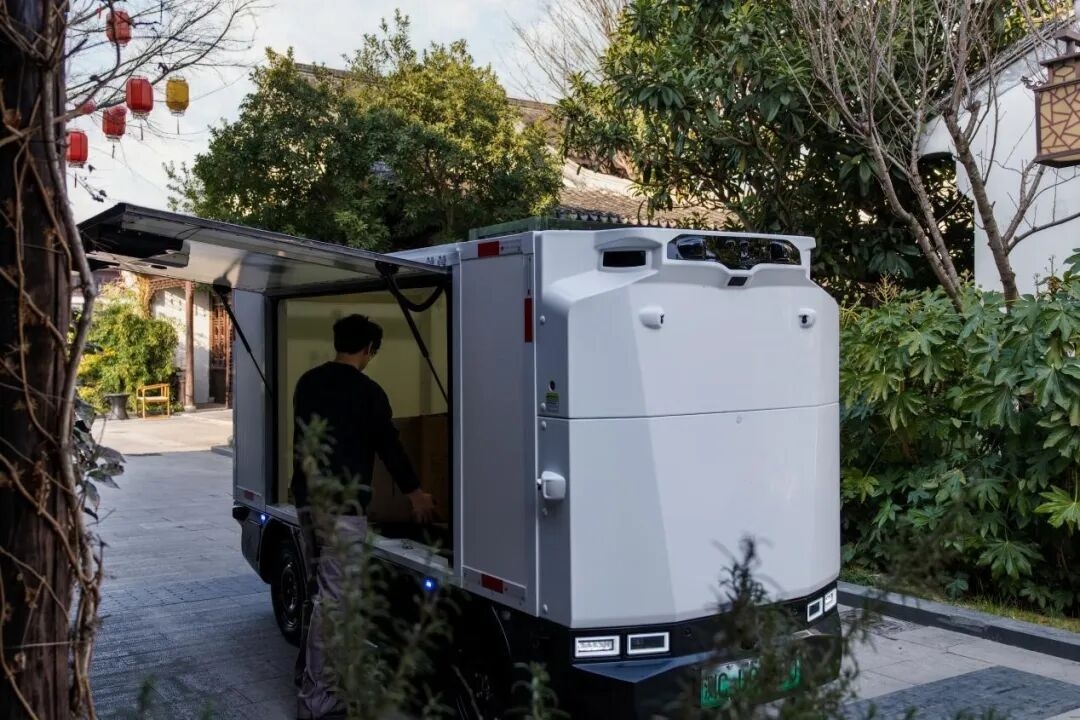
Autonomous Logistics Van for Multi-Stop Delivery: How L4 Technology Reduces Fleet Costs
The mathematics of last-mile delivery are brutal for fleet operators. Driver labor typically accounts for 60 to 70 percent of total delivery costs. Multi-stop urban routes with 30 to 50 deliveries per day generate enormous labor expense, while congestion, parking challenges, and inefficient routing further erode margins.
L4 autonomous logistics vehicles address the single largest cost component head-on by eliminating or dramatically reducing the need for human drivers. But the financial case for autonomous delivery is more nuanced than simply subtracting driver wages from the cost equation. Fleet operators need to understand the full spectrum of cost impacts - both savings and new cost categories - to make informed investment decisions.
This article provides a detailed financial analysis of how L4 autonomous logistics vans for multi-stop urban delivery routes can reduce fleet costs, with practical modeling frameworks that fleet operators can apply to their specific operations.
Understanding the True Cost of Multi-Stop Delivery
Before evaluating autonomous solutions, it is essential to quantify the actual costs of traditional multi-stop delivery operations.
Direct Driver Costs
For a typical last-mile delivery van operating in a North American urban market:
- Driver hourly wage: 18 to 25 USD per hour (varies significantly by market)
- Benefits and payroll taxes: additional 25 to 35 percent of base wage
- Training and onboarding: approximately 2,000 USD per driver, amortized over 12 to 18 months
- Supervision and management: one supervisor per 8 to 12 drivers, with supervisor cost allocated across the team
- Turnover cost: 3,000 to 5,000 USD per turnover event (recruitment, training, productivity loss during transition)
Total direct driver cost: approximately 45,000 to 65,000 USD per driver per year for a full-time delivery operation.
For a fleet of 20 vans, annual driver costs alone total 900,000 to 1,300,000 USD.
Vehicle Operating Costs (Per Van, Per Year)
- Fuel or electricity: 8,000 to 15,000 USD
- Maintenance: 4,000 to 7,000 USD
- Insurance: 4,000 to 8,000 USD
- Registration and tolls: 1,500 to 3,000 USD
- Depreciation: 8,000 to 12,000 USD
Total vehicle operating cost: approximately 25,500 to 45,000 USD per van per year.
Total Cost Per Delivery Stop
With typical multi-stop route metrics:
- 35 stops per day per van
- 260 operating days per year
- 9,100 stops per van per year
Total annual cost per van (driver + vehicle): 70,500 to 110,000 USD
Cost per stop: 7.75 to 12.09 USD
This is the baseline that autonomous delivery must beat.
How L4 Autonomous Delivery Reduces Costs
Cost Reduction 1: Driver Elimination
The most obvious and most significant cost reduction from L4 autonomous logistics vans is the elimination of driver labor for delivery operations. An L4 fully autonomous vehicle does not require a driver in the cab during delivery.
Annual savings per vehicle: 45,000 to 65,000 USD (the full direct driver cost).
However, L4 autonomous operations still require human involvement in other roles:
- Remote monitoring operators who oversee multiple autonomous vehicles simultaneously (one operator can typically monitor 5 to 15 vehicles)
- Loading and unloading personnel at distribution hubs
- Maintenance technicians for sensor systems and autonomous driving hardware
- Customer service for delivery exceptions
Net driver cost reduction: approximately 70 to 85 percent of the original driver cost, accounting for the remaining human roles required.
Realistic annual savings per vehicle: 32,000 to 55,000 USD.
Cost Reduction 2: Extended Operating Hours
Human drivers are limited to approximately 8 to 10 hours of driving per day under regulations (in the US, Hours of Service rules for commercial drivers). Autonomous vehicles have no such limitation.
In practice, the driverless delivery vehicle cost savings for fleet operators extend beyond simple driver elimination because autonomous vans can operate:
- Early morning hours (4 AM to 7 AM) when traffic is light and delivery points are accessible
- Late evening hours (7 PM to 11 PM) for time-sensitive deliveries
- Extended shifts during peak seasons (holidays, promotional events)
For a fleet operating two shifts per day instead of one, the per-stop cost decreases because:
- Fixed vehicle costs (depreciation, insurance, registration) are spread across more deliveries
- Loading and unloading infrastructure is utilized more efficiently
- The same remote monitoring team oversees double the deliveries
Extended hours can increase daily delivery capacity by 50 to 80 percent, reducing the cost per stop by approximately 25 to 35 percent.
Cost Reduction 3: Optimized Routing and Efficiency
Autonomous vehicles follow optimized routes calculated by algorithms that consider:
- Real-time traffic conditions from multiple data sources
- Predictive congestion modeling based on historical patterns
- Delivery time window compliance
- Energy efficiency optimization (reducing stops and starts)
- Route learning from repeated operations on the same corridors
These algorithms achieve 10 to 20 percent efficiency gains over human-driven routes, where individual drivers may deviate from optimal paths due to habit, preference, or imperfect real-time information.
Cost Reduction 4: Reduced Accident and Damage Costs
Autonomous vehicles have demonstrated lower accident rates than human-driven vehicles in controlled deployments:
- No distracted driving (phone use, fatigue, inattention)
- Consistent adherence to speed limits and traffic rules
- Faster reaction times than human drivers (200 milliseconds vs 1,000+ milliseconds)
- No aggressive driving behaviors
For fleet operators, this translates to:
- Lower insurance premiums (estimated 20 to 40 percent reduction once autonomous safety data is established)
- Reduced vehicle repair and downtime costs
- Lower liability exposure for property damage and personal injury claims
- Reduced cargo damage from sudden stops, sharp turns, or rough handling
Estimated annual savings per vehicle: 2,000 to 5,000 USD from reduced accident-related costs.
Cost Reduction 5: Loading Optimization with Forklift-Compatible Design
A specialized advantage of some autonomous logistics van designs is the autonomous cargo van with forklift compatible loading for warehouse logistics capability. This design feature allows:
- Automated loading at distribution centers using standard warehouse forklifts without driver assistance
- Faster turnaround time between routes (no waiting for a driver to arrive and begin loading)
- Standardized pallet loading that maximizes cargo capacity
- Reduced labor requirements at the loading dock
Estimated annual savings per vehicle: 1,500 to 3,000 USD from faster turnaround and reduced dock labor.
New Cost Categories for Autonomous Operations
While autonomous delivery eliminates many costs, it introduces new cost categories that must be factored into the analysis:
Remote Monitoring Infrastructure
- Monitoring center setup: 50,000 to 200,000 USD (one-time, shared across fleet)
- Monitoring software platform: 500 to 2,000 USD per vehicle per month
- Remote operator salaries: 40,000 to 60,000 USD per operator per year
- Each operator monitors 5 to 15 vehicles, so cost per vehicle is 3,000 to 12,000 USD per year
Connectivity Costs
- 5G or high-reliability cellular data plans: 50 to 150 USD per vehicle per month
- V2X communication infrastructure: varies by deployment location
- Cloud computing for fleet management and data processing: 100 to 300 USD per vehicle per month
Phase 1 (Months 1-6): Pilot Program
- Deploy 2 to 3 autonomous vehicles on 3 to 5 well-characterized routes
- Maintain human supervisors during initial deployment
- Measure delivery efficiency, safety performance, and customer satisfaction
- Collect data on actual vs projected cost savings
Phase 2 (Months 7-18): Controlled Expansion
- Expand to 5 to 10 vehicles covering 10 to 15 routes
- Begin reducing human supervision as confidence in system performance grows
- Implement remote monitoring center operations
- Refine route selection and optimization algorithms
Phase 3 (Month 18+): Scaled Deployment
- Expand fleet based on validated performance data
- Introduce extended operating hours (early morning and evening delivery)
- Integrate autonomous and human-driven fleet management into unified platform
- Continuously optimize based on accumulated operational data
NEWBASE Autonomous Logistics Vans
NEWBASE offers L4 autonomous logistics vans designed for multi-stop urban delivery in North American and global markets:
- Fully autonomous L4 operation with validated ODD for urban environments
- Comprehensive sensor suite (LiDAR, cameras, radar) with full redundancy
- Forklift-compatible rear loading design for efficient warehouse integration
- Electric powertrain with 150 to 200 km operating range
- IoT fleet management platform with real-time monitoring and remote intervention
- Modular cargo configurations from 5 to 10 cubic meters
- Cold chain compatible configurations for refrigerated delivery
- Safety-validated with extensive simulation and real-world testing documentation
- IATF 16949 quality certified manufacturing
With a monthly production capacity of 10,000 units, NEWBASE can support autonomous fleet deployments of any scale, from initial pilot programs to full commercial operations.
NEWBASE also provides deployment consultation services including route assessment, fleet sizing optimization, and remote monitoring center design.
Conclusion
The financial case for L4 autonomous logistics vans in multi-stop delivery operations is compelling. With cost-per-stop reductions of 34 to 58 percent depending on operating hours, fleet operators can achieve meaningful competitive advantages through autonomous delivery adoption.
The key to success is approaching autonomous delivery as a strategic transformation rather than a simple vehicle replacement. Operators who invest in understanding the technology, selecting appropriate routes, and building the supporting infrastructure for remote monitoring and fleet management will capture the greatest value from their autonomous delivery investment.
The economics of last-mile delivery will continue to favor autonomous solutions as driver labor costs increase, sensor technology costs decrease, and regulatory frameworks mature. Fleet operators who begin their autonomous delivery journey now will build operational expertise and competitive advantages that late adopters will struggle to match.
Contact NEWBASE to discuss your autonomous delivery fleet requirements and request a customized cost analysis for your specific route profiles and operating conditions.