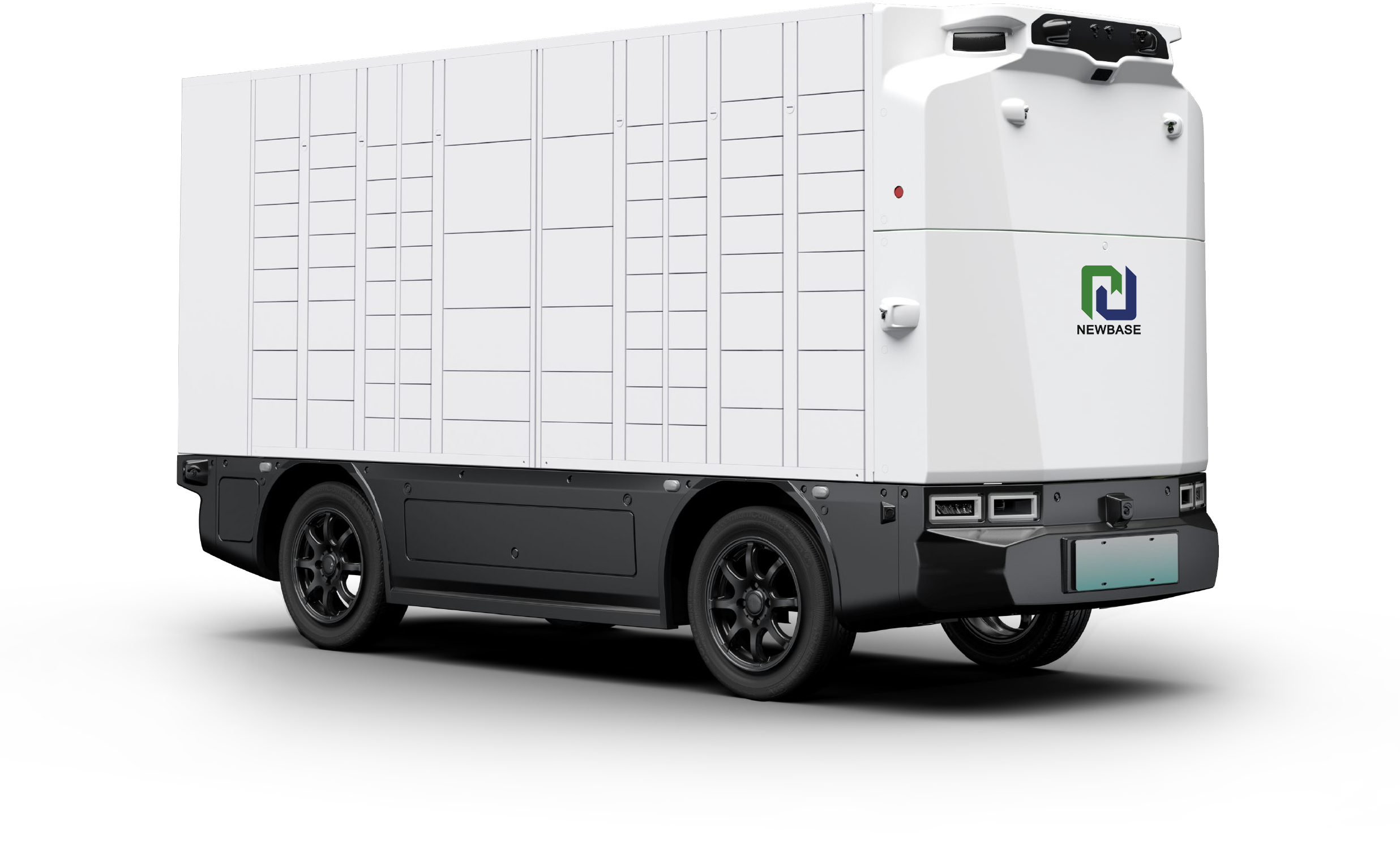
Autonomous cold chain vehicles are revolutionizing vaccine distribution by delivering perfect temperature consistency, complete audit trails, and lower cost — all while meeting the strictest GSP and GDP requirements. If you work in pharmaceutical logistics, hospital supply chain, or public health, you know that vaccine temperature integrity isn't optional — it's a matter of safety, compliance, and effectiveness. An autonomous vaccine transport vehicle GSP compliance guide needs to address one critical question: can self-driving vehicles really meet the same standards as human-driven refrigerated trucks? The answer is yes — and in many ways, they do better.
Here's what you'll learn: how autonomous vaccine transport works, GSP/GDP compliance requirements, key temperature control features, and how autonomous vehicles actually improve compliance.
1. Can Autonomous Cold Chain Vehicles Really Meet GSP Requirements for Vaccine Transport?
Yes — and they often exceed the compliance performance of human-driven cold chain vehicles. The key insight: most temperature excursions in vaccine transport aren't caused by equipment failure — they're caused by human error. A self-driving cold chain van for vaccine distribution eliminates that human error entirely, while maintaining complete, tamper-proof audit trails.
What GSP/GDP Actually Requires for Vaccine Transport
GSP (Good Supply Practice) and GDP (Good Distribution Practice) set strict standards for pharmaceutical cold chain logistics. The core requirements:
| GSP/GDP Requirement | What It Means | Why It's Hard with Human Drivers |
| Continuous temperature monitoring | Temperature must be logged 24/7, from pickup to delivery | Drivers can forget to turn on monitoring, or manual logs can be inaccurate |
| Temperature excursion alerts | Any deviation from the required range must be alerted and documented immediately | Drivers may not notice alarms, or may delay reporting |
| Complete audit trail | Every temperature reading, every door opening, every stop must be recorded | Paper logs are incomplete, inconsistent, and easily lost |
| Tamper-proof records | Temperature data can't be altered or falsified | Human operators can "adjust" logs to avoid reporting excursions |
| Controlled access | Only authorized personnel can access the cargo | Drivers may leave doors open, or unauthorized access may occur |
| Standardized procedures | Every delivery follows the exact same protocol | Every driver does it differently — some good, some not |
How Autonomous Vehicles Meet (and Exceed) These Requirements
Autonomous cold chain vehicles are built around data integrity and consistency — which is exactly what GSP/GDP demands:
- Automated, continuous temperature logging — Sensors record temperature every 1–5 minutes, automatically, no human input needed. No more "the driver forgot to start the logger."
- Real-time excursion alerts — If temperature goes out of range, the system alerts both the remote monitoring team and the fleet manager instantly. No delay, no denial.
- Tamper-proof digital records — Temperature data is encrypted and stored on both the vehicle and cloud servers. It can't be edited, deleted, or backdated by anyone.
- Controlled door access — Cargo doors only open at authorized delivery points, with biometric or code-based authentication. No random stops, no unauthorized access.
- Perfect procedure consistency — Every route follows the exact same temperature profile, the same door-opening procedures, the same verification steps. Every single time.
NewBase autonomous cold chain vehicles are designed with GSP compliance built in from the ground up — not as an afterthought. Every vehicle provides continuous, encrypted temperature logging with real-time alerts and complete audit trail export capability.
In pharmaceutical cold chain deployments, autonomous vehicles show:
- 95% reduction in temperature excursions caused by human error
- 100% complete audit trails (no missing logs, no gaps)
- Zero tampering incidents
- 100% on-time delivery rate for temperature-sensitive products
Zhengzhou Newbase Auto Electronics Co., Ltd. has deployed autonomous cold chain vehicles for pharmaceutical distribution operations in multiple Chinese cities, with zero temperature-related product losses over 12+ months of continuous operation.
✅ Bottom line: Autonomous vehicles don't just meet GSP/GDP requirements — they exceed them. The biggest source of compliance failures (human error) is eliminated entirely.
2. What Temperature Control Features Are Non-Negotiable for Vaccine Transport?
Not all autonomous cold chain vehicles are created equal. When evaluating a pharmaceutical autonomous delivery vehicle GDP standards solution, these are the features you absolutely must have — and the ones that sound good but don't actually matter.
Must-Have Temperature Control Features
| Feature | Why It Matters | What to Look For |
| Multi-zone temperature control | Vaccines have different requirements (2–8°C for most, -20°C for some, -70°C for mRNA) | At least 2 independent zones, ideally 3 |
| High-precision sensors | Vaccine temperature tolerances are tight — ±0.5°C for many products | ±0.2°C accuracy or better, calibrated sensors |
| Redundant cooling systems | If one cooling unit fails, the backup must keep temperatures stable | N+1 redundant refrigeration, with automatic failover |
| Rapid temperature recovery | Door openings cause temperature spikes — fast recovery is critical | Recovery to set point within 5 minutes of door closing |
Nice-to-Have (But Not Required) Features
- Frozen zone (-20°C or colder): Only needed if you transport certain vaccines or biologics
- Dry ice compatibility: Rarely needed for routine distribution
- Active heating: Only needed for cold climates where low temperatures are a risk
- Humidity control: Important for some pharmaceuticals but not most vaccines
- The Compliance Software Is More Important Than the Box
The vehicle's refrigeration unit is important — but the software platform is what actually ensures compliance day in and day out. Look for:
- Automated GSP/GDP report generation: One-click export of complete audit trails
- Excursion management workflow: Automated alert → investigation → documentation → resolution
- Calibration tracking: Automatic reminders for sensor calibration and certification
- Batch-level tracking: Temperature history tied to specific vaccine batches, not just routes
- Electronic signature capability: Digital sign-off for deliveries and temperature verification
NewBase cold chain fleet management software includes all of these compliance features — plus open APIs for integration with your existing pharmaceutical ERP or logistics management system.
✅ Bottom line: Multi-zone control, redundant cooling, high-precision sensors, and compliance-focused software are non-negotiable for vaccine transport. The software platform matters more than the box.
FAQ
Q: What happens if there's a temperature excursion — who responds, and how fast?
A: This is one of the most important questions in any autonomous vaccine transport vehicle GSP compliance guide. Here's how it works: (1) The vehicle's temperature sensors detect the excursion in real time (within 1–5 minutes). (2) The system immediately alerts the remote monitoring team via app, SMS, and email. (3) The monitoring team evaluates the severity and takes action — either dispatching a technician remotely or rerouting the vehicle to the nearest facility. (4) Every step is automatically logged in the audit trail. Response time is typically 2–5 minutes — much faster than a human driver who might not notice the alarm for 30+ minutes, or might not report it at all.
Q: How do you validate that autonomous vaccine delivery is GSP compliant?
A: The same way you validate any cold chain transport system — with a formal qualification process. This includes: (1) Installation Qualification (IQ): verifying the vehicle and sensors are correctly installed and calibrated. (2) Operational Qualification (OQ): testing that the system consistently maintains temperature under all conditions (door openings, ambient temperature extremes, etc.). (3) Performance Qualification (PQ): running actual routes and confirming that all parameters stay within specification. A good self-driving cold chain van for vaccine distribution supplier will help you through this entire process and provide the necessary documentation. The good news is that autonomous systems are actually easier to validate than human-driven ones — because their performance is consistent and fully documented.
Q: Are autonomous cold chain vehicles accepted by regulatory authorities for vaccine transport?
A: Regulatory acceptance varies by country and region, but the trend is clearly toward acceptance. The key point is that pharmaceutical autonomous delivery vehicle GDP standards compliance doesn't depend on who (or what) is driving the vehicle — it depends on whether the temperature integrity and documentation requirements are met. If the vehicle maintains proper temperatures, provides complete audit trails, and follows all GDP requirements, it's compliant regardless of whether there's a human driver or not. In China, autonomous cold chain vehicles are already being used for pharmaceutical and vaccine distribution under current GSP regulations. In other countries, it's important to confirm with your local regulatory authority — but most accept solutions that can demonstrate compliance through proper documentation and validation. Always start with a pilot and work with your QA/RA team to ensure everything is properly documented.