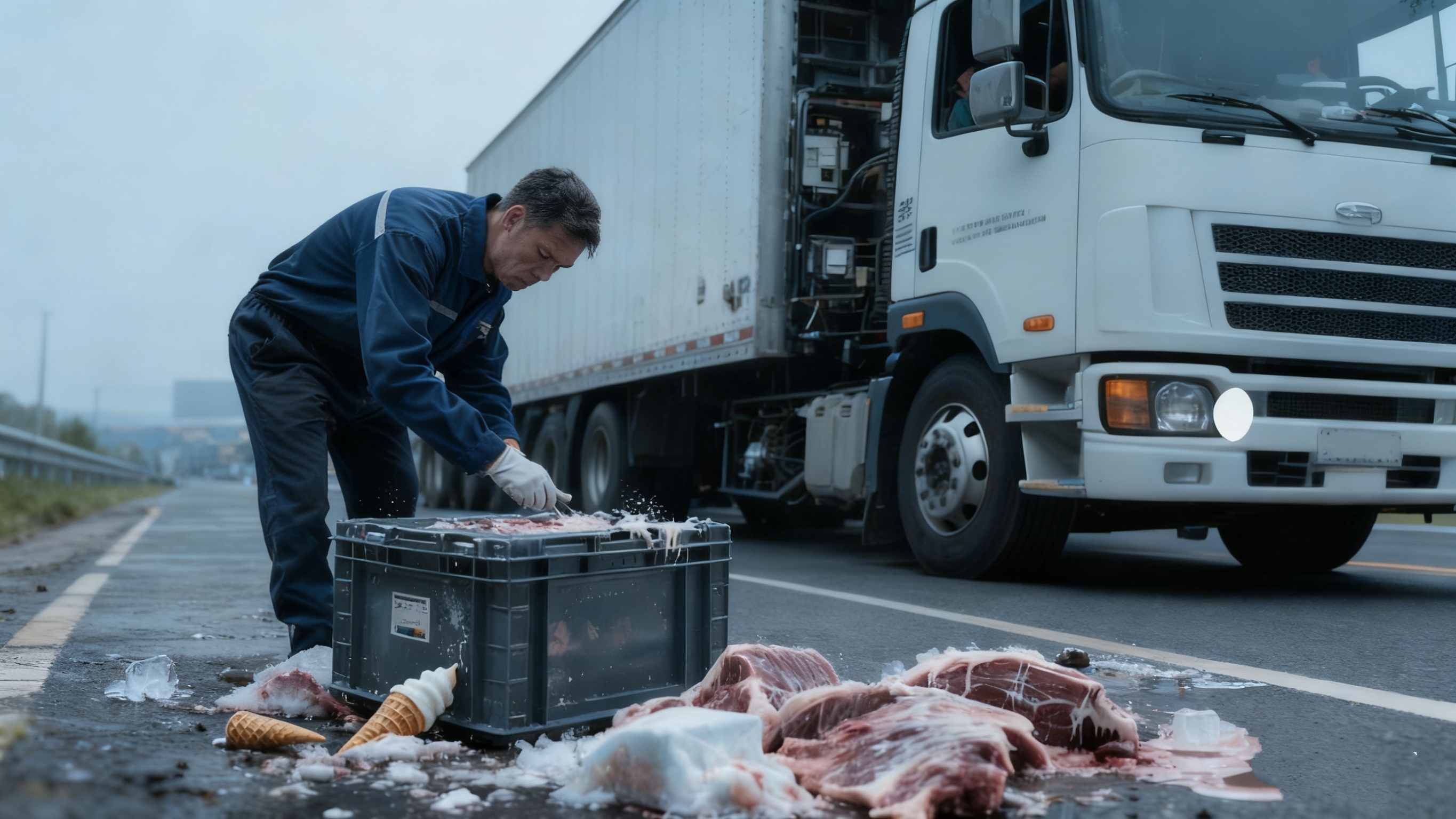
My client shipped a container of frozen shrimp to Japan last year. It arrived at the port. The customs inspector checked the temperature log. There was a 4°C spike during a 6-hour layover in transit. The entire container was rejected. That one gap cost $47,000.
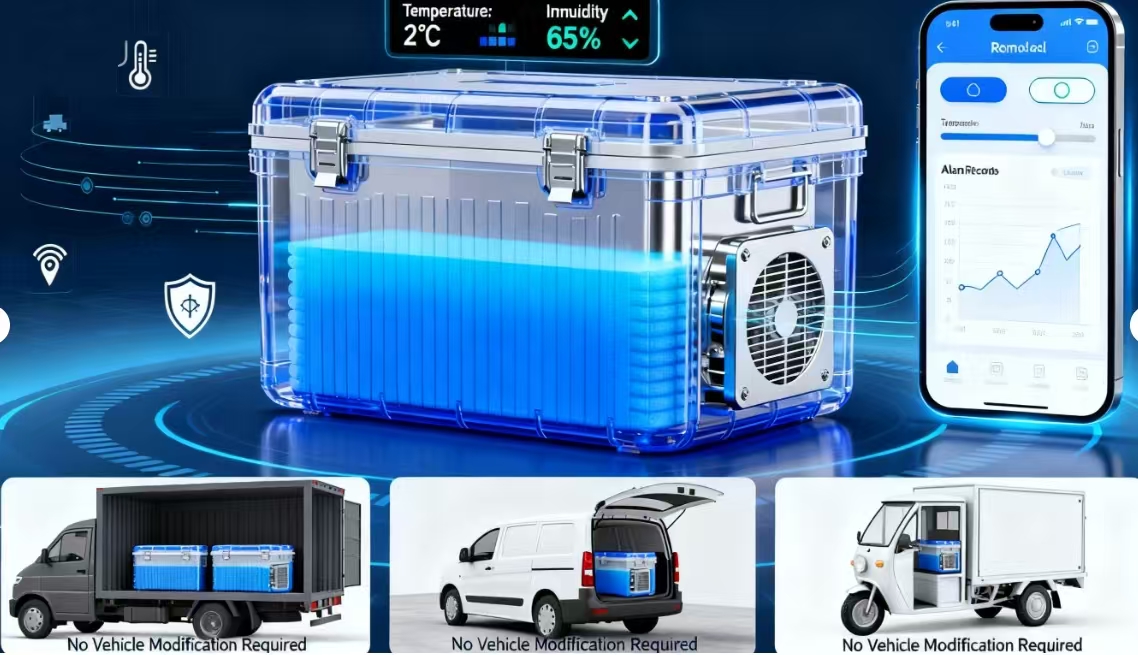
A cold chain container maintains precise temperature control from the loading dock to the destination port. It uses insulated walls, a powered refrigeration unit, and continuous data logging to prove the cargo stayed within range for the entire journey. For food exporters, it is the single most effective tool to prevent border rejection and protect export revenue.
I spent the next year figuring out exactly what went wrong and how to fix it. Here is what I learned about cold chain containers for international food export.
What Makes a Cold Chain Container Different from a Regular Shipping Container?
Before that shrimp disaster, I treated all containers the same. A box is a box. I was wrong. A standard shipping container has no insulation and no cooling. Even a refrigerated truck cannot guarantee the same level of temperature stability as a purpose-built cold chain container for food export.
A cold chain container has three layers that a standard container does not. First, 80 to 100 mm polyurethane insulation in the walls, floor, and ceiling. Second, a powered refrigeration unit that runs on ship power, truck power, or an independent generator. Third, a sealed door system with compression gaskets that prevent cold air leakage. These three features together keep the internal temperature stable within ±0.5°C for weeks at a time.
Cold Chain Container vs Regular Reefer: What Is the Difference?
I used to think a standard reefer container was enough. Then I compared the specs side by side.
| Feature | Standard Reefer | Purpose-Built Cold Chain Container |
| Insulation thickness | 60 to 75 mm | 80 to 100 mm |
| Temperature stability | ±1.5°C | ±0.5°C |
| Data logging | Basic (manual download) | Continuous with real-time alerts |
| Door seal | Standard rubber gasket | Magnetic or compression seal |
| Backup power | None | Built-in battery or generator |
| Air circulation | Single fan | Multi-zone airflow management |
Which Temperature Ranges Do Export Foods Need?
Different export markets require different temperature standards. I keep this table on my desk.
| Food Category | Required Temperature | Max Allowed Excursion |
| Frozen seafood | -18°C to -25°C | 30 min above -15°C |
| Frozen meat | -18°C or below | Zero tolerance above -12°C |
| Dairy products | +2°C to +6°C | 1 hour above +8°C |
| Chilled vegetables | 0°C to +4°C | 1 hour above +6°C |
| Frozen seafood | -18°C to -25°C | 30 min above -15°C |
Japan and the EU are the strictest. A single logged excursion above the allowed limit is grounds for rejection. A refrigerated container for international shipping must produce a complete, gapless temperature log that the importing country's inspector can review on arrival.
How Do You Choose the Right Cold Chain Container for Your Export Business?
My first mistake was buying the cheapest container I could find. The insulation was thin. The cooling unit was undersized for tropical transit routes. The temperature log showed a 3°C drift every time the container sat on a dock in Singapore waiting for the connecting vessel.
When you choose a cold chain container temperature control system, match three things to your product. First, the target temperature range. Second, the maximum ambient temperature along the route. Third, the total transit time including layovers. If your frozen shrimp needs -18°C and the container will sit on a 35°C dock for 12 hours, your unit must hold -18°C at 35°C ambient for at least 24 hours to give you a safety margin.
A Selection Checklist for Food Exporters
| Factor | What to Look For | Why It Matters |
| Insulation thickness | 80 mm minimum | Holds temperature during dock layovers |
| Cooling capacity at 40°C ambient | Rated for your target temp | Prevents failure in hot transit zones |
| Data logger type | Continuous, cloud-connected | Border inspectors need gapless records |
| Power options | Ship + truck + generator backup | No single point of failure |
| Door seal type | Compression or magnetic | Prevents cold air loss during handling |
| Container size | Match to your typical load | Over-sized containers waste energy |
What About HACCP and ISO 22000 Compliance?
If you export food to the EU, you must comply with HACCP principles. HACCP requires documented temperature control at every critical point in the supply chain. A modular cold chain container for logistics that logs temperature continuously and stores the data for audit review satisfies this requirement. Without proper logging, your HACCP plan has a gap, and that gap can shut down your export license.
I added a connected monitoring system to every container in my fleet. The system sends an SMS alert when the temperature moves outside range. It also generates HACCP-compliant reports automatically. My last three EU audits passed with zero findings on the transport section.
What Does a Cold Chain Container Cost and How Do You Calculate ROI?
A new cold chain container costs between $15,000 and $40,000 depending on size and specifications. A used one costs $8,000 to $20,000. The monthly operating cost including power, maintenance, and data service is about $200 to $400.
I calculated my ROI based on one metric: rejected shipments. Before I upgraded my containers, I had an average of 2 rejected containers per year. Each rejection cost $30,000 to $50,000 in lost product, re-shipping fees, and penalties. That was $60,000 to $100,000 per year in losses. After upgrading, I had zero rejections in 18 months. The containers paid for themselves in under a year.
The next step in cold chain evolution is automation. Companies like NEWBASE are already developing
L4 Level Autonomous Driving Vehicle platforms that can transport cold chain containers from warehouse to port without a human driver. This will reduce labor costs and eliminate driver-related temperature errors in the first and last mile.
Conclusion
Border rejection costs food exporters $30,000 to $50,000 per container. A purpose-built cold chain container with proper insulation, connected monitoring, and backup power prevents temperature excursions and protects your export revenue. Match the container specs to your product and route, and the ROI pays for itself within 12 months.
My Role
About me
I am the operations director at NEWBASE, a company based in Zhengzhou, China. We design and build L4 autonomous vehicles and smart cold chain solutions. Over the past 18 years, we have shipped more than 20,000 cold chain units to over 30 countries. Our products include cold chain containers, refrigerated vehicles, and autonomous delivery systems. We hold more than 200 patents and are certified under ISO 9001 and IATF 16949.
About the author
Carlos Mendez is an international food trade consultant based in Rotterdam, Netherlands. He has spent 12 years advising food exporters across Asia and Europe on cold chain compliance, HACCP documentation, and container selection for cross-border shipments.