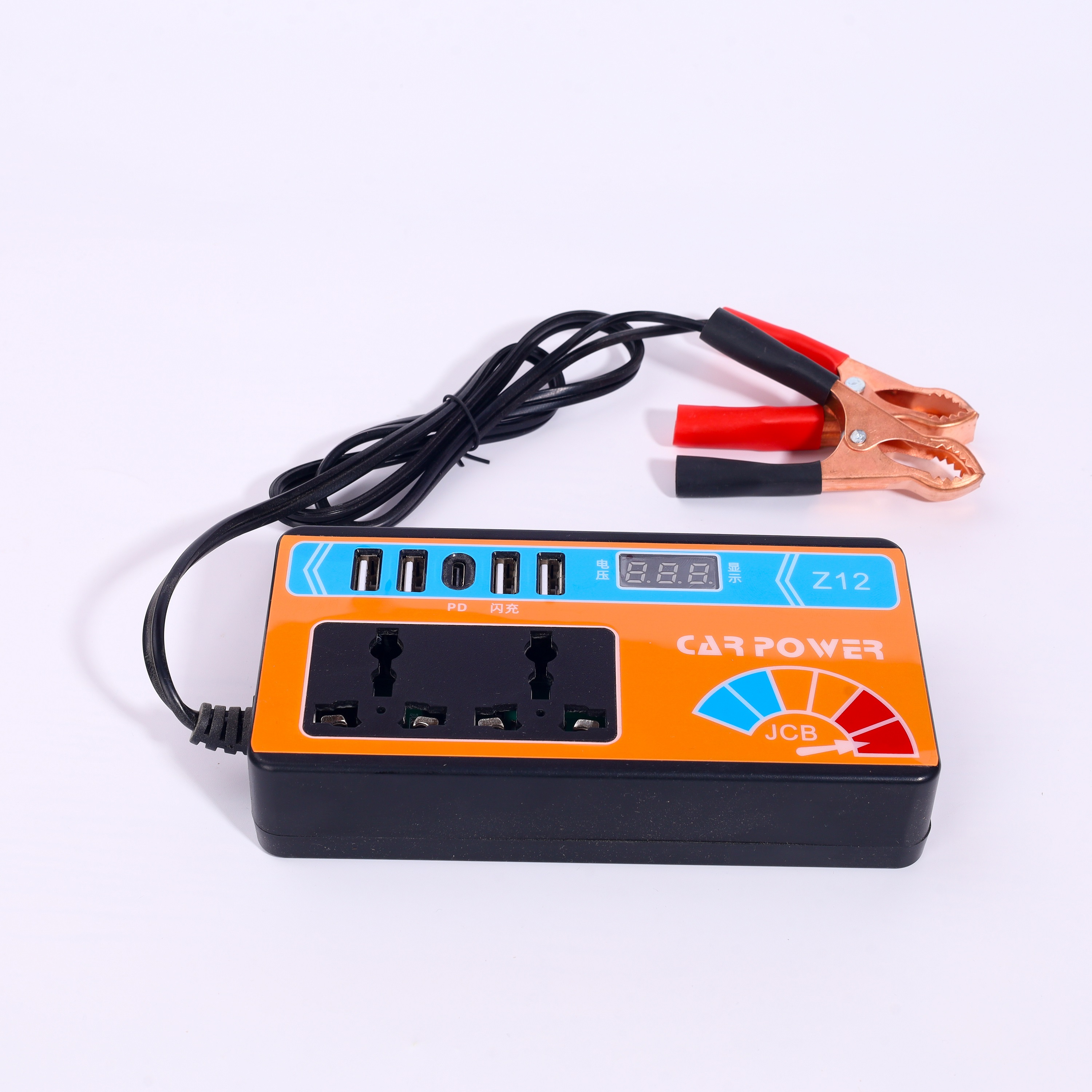
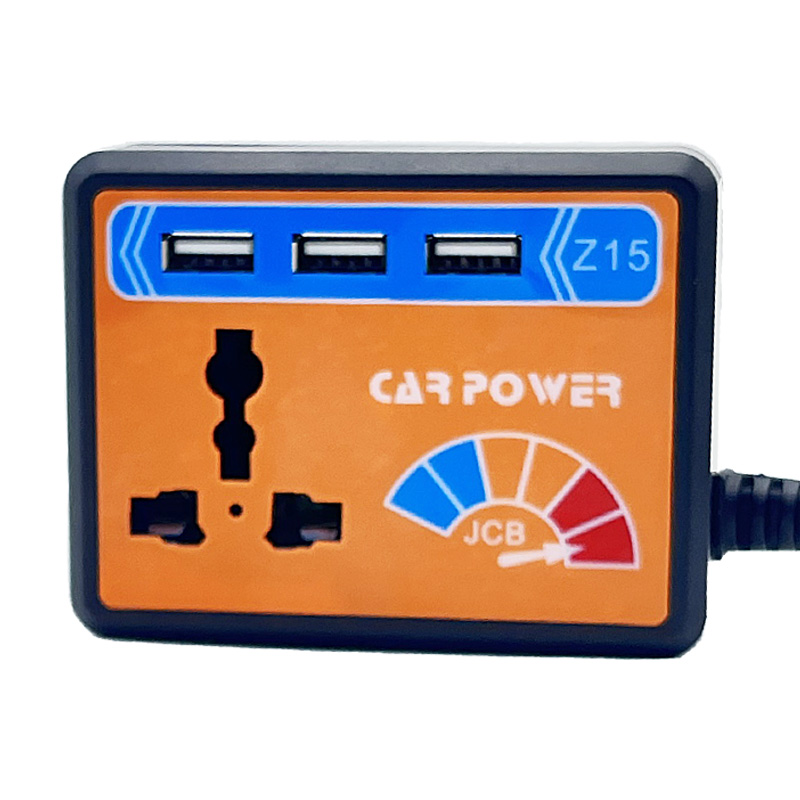
90% of truck inverter shutdowns are caused by low battery voltage, overload, or bad wiring — not a defective unit, and you can usually diagnose the cause in under 5 minutes.
If why does my truck inverter keep shutting off is a question your fleet drivers keep asking, you are not alone. A shutdown is almost always a power supply problem, a wiring issue, or a load mismatch that the inverter's safety system is correctly detecting and protecting against. If your truck inverter low voltage shutdown troubleshooting points to battery or alternator issues, the fix is usually simple and cheap — and ignoring it will just kill your battery and strand your driver. In this guide, we walk through the 7 most common causes of inverter shutdown, how to diagnose each one in under 5 minutes, and exactly what to fix. Whether you run a 100W cigarette-lighter model for cab appliances or a 3000W hard-wired unit for power tools, this diagnostic framework works for every type. NewBase manufactures a full line of truck inverters from 100W plug-in models to 4000W pure sine wave hardwire units, and their field service team has compiled these troubleshooting patterns from tens of thousands of installations across China and Southeast Asia.
The 7 Most Common Causes (And How to Diagnose Each One)
Before you assume the inverter is defective, work through these causes in order. In fleet service data from NewBase, over 90% of "inverter keeps shutting off" service calls end up being one of these first three issues — not a faulty unit.
1. Low Battery Voltage (The #1 Cause)
This is by far the most common reason inverters shut off. Every inverter has a low-voltage cutoff (usually around 10.5–11.5V for 12V systems) that protects the battery from being drained so far it cannot start the truck.
How to diagnose:
Check the inverter's display or fault light — it will usually show "low voltage" or a corresponding beep code
Measure battery voltage with a multimeter while the inverter is under load, not at rest
If voltage drops below 11V when you turn on a load like a microwave or heater, low voltage is the culprit
Why it happens:
Truck battery is old or weak (3+ years old, or not fully charged)
Alternator cannot keep up with the inverter's power draw at idle
Undersized cables cause voltage drop at the inverter end even if battery voltage looks fine
Running high-wattage loads while the engine is off drains the battery fast
Fixes:
Start the engine / run at higher idle to charge the battery
Upgrade to a dual-battery system with an isolator
Check cable gauge and upgrade if undersized (see #4 below)
For 24V truck systems, ensure the inverter is wired to both batteries in series
On NewBase 200W+ models, use the low-voltage alarm feature to get a warning before shutdown happens
2. Overload / Exceeding Continuous Wattage Rating
Inverters have two ratings: continuous (what they can sustain) and peak/surge (what they handle for 1–2 seconds at startup). If you draw more than the continuous rating for more than a few seconds, the inverter shuts off to protect itself.
How to diagnose:
Add up the wattage of everything you are running — nameplate watts, not amps or volts
Pay special attention to motor-driven devices (compressors, motors, pumps) — they draw 2–3x their rated wattage at startup
If the inverter only shuts off when you turn on a specific device, that device is likely exceeding capacity
Common gotchas:
A 700W microwave may draw 1,000–1,400W at startup — enough to trip a 1,000W inverter
Power tools with universal motors (drills, saws) often spike to 2x rated wattage
Space heaters and coffee makers are resistive loads — they draw exactly their rated wattage, no surge
Fixes:
Upgrade to a higher-wattage inverter (e.g., from 1500W to 3000W)
Don't run multiple high-wattage devices at the same time
For NewBase high-power models (2000W+), use the soft-start feature to reduce startup surge
Run motorized tools one at a time rather than simultaneously
3. Overheating
Inverters generate heat, and if they get too hot, thermal protection kicks in and shuts them down.
How to diagnose:
Feel the inverter's casing right after it shuts off — if it is too hot to touch, overheating is the problem
Check if the internal cooling fan is running (you should hear it spin up under load)
Overheating often happens after 10–30 minutes of heavy use, not immediately
Common causes:
Inverter mounted in a tight space with no airflow (under a seat, inside a closed cabinet)
Ambient temperature over 35°C / 95°F (common in summer truck cabs)
Dust or debris blocking ventilation vents
Running the inverter at 90%+ of rated capacity for extended periods
Fixes:
Relocate the inverter to a well-ventilated area
Ensure at least 10 cm (4 inches) of clearance on all vented sides
Clean dust from vents and fan regularly — especially in construction and mining environments
For 24/7 operation at high load, derate the inverter (run it at 70–80% of rating)
NewBase 3000W+ pure sine wave models use dual cooling fans and thermal management that maintains full output up to 40°C ambient
4. Undersized or Poor Wiring
Bad wiring causes voltage drop, which makes the inverter think the battery is low — even when the battery itself is fine. This is the most underdiagnosed problem in fleet installations.
How to diagnose:
Measure voltage at the battery terminals and at the inverter terminals simultaneously, while under load
If there is more than a 0.5V difference on a 12V system (or 1V on 24V), the wiring is undersized or loose
Check for warm or discolored cables near the terminals — heat = resistance = voltage drop
Wiring gauge quick reference (12V systems, 3% max voltage drop):
| Inverter size | 2m (6ft) run | 5m (16ft) run | 10m (33ft) run |
| 300W | 14 AWG | 10 AWG | 8 AWG |
| 600W | 10 AWG | 8 AWG | 6 AWG |
| 1000W | 8 AWG | 6 AWG | 4 AWG |
| 2000W | 4 AWG | 2 AWG | 1/0 AWG |
| 3000W | 2 AWG | 1/0 AWG | 2/0 AWG |
Fixes:
Upgrade to the correct wire gauge for your distance and wattage
Ensure all connections are tight — loose terminals cause resistance and heat
Use properly sized ring terminals, not alligator clips or spade connectors
Keep cable runs as short as possible
Zhengzhou Newbase Auto Electronics Co., Ltd. provides pre-assembled wiring kits with correctly sized cables, terminals, and fuses for every inverter model
5. Ground Fault or Short Circuit
If there is a short in the wiring or in the device you are plugging in, the inverter's short-circuit protection will shut it down immediately — usually within a fraction of a second.
How to diagnose:
Disconnect everything from the AC outlets and turn the inverter on
If it stays on, the problem is in one of your devices or cords — plug them in one at a time to find the culprit
If it still shuts off with nothing plugged in, there may be a DC-side wiring short or internal fault
Check for pinched or frayed wires, especially where cables pass through metal bulkheads or firewall holes
Fixes:
Test each AC device individually to find the faulty one
Inspect all DC wiring for damage and replace as needed
Make sure the inverter itself is properly grounded to the vehicle chassis
If the issue persists after checking wiring, contact the vendor for warranty service
6. Faulty Remote Control or Ignition Interlock
Some commercial inverters have remote on/off controls or ignition interlock features that turn the inverter off when the ignition is off. If these are wired incorrectly, they can cause random shutdowns.
How to diagnose:
If shutdowns correlate with the ignition being turned off, it is likely the interlock
If you have a remote switch or control panel, test by operating from the unit directly
Check remote wiring for loose connections
Fixes:
Adjust interlock settings if you need the inverter to run with the engine off (with a dual-battery system)
Replace faulty remote control modules
Ensure remote cables are routed away from high-current DC cables to avoid interference
FAQ
Q: Why does my truck inverter keep shutting off even when the battery seems fine?
The most likely culprit is voltage drop in the wiring, not the battery itself. When the inverter draws heavy current, undersized or loose cables cause voltage to drop at the inverter end — often by 1–2 volts — even if the battery reads 12.6V at rest. Measure voltage at both the battery terminals and the inverter terminals while under load. If there is more than a 0.5V difference on a 12V system, upgrade your wiring gauge and ensure all connections are tight.
Q: How do I perform truck inverter low voltage shutdown troubleshooting step by step?
Start the engine and let it run at fast idle for 5 minutes to charge the battery. Turn on the inverter with no load — if it stays on, progressively add loads one at a time. If it shuts off at low load, check the battery's state of charge and age (replace if 3+ years old). If it only shuts off at high load, measure voltage at the inverter under load to check for wiring voltage drop. If everything checks out but it still shuts off at low voltage, the low-voltage cutoff setting may be set too high — check if your model has an adjustable threshold.
Q: What are the most common
Power Inverter problems and solutions for trucks and commercial fleets?
The top 5 common power inverter problems and solutions for trucks are: (1) Low voltage shutdown — fix with dual batteries, better wiring, or running the engine; (2) Overload trips — upgrade inverter size or run fewer devices simultaneously; (3) Overheating — improve ventilation and clean dust from fans; (4) Wiring issues — use correct gauge, tight connections, proper fusing; (5) Ground faults — inspect wiring and test devices individually. For fleet operators, preventive maintenance (monthly inspection of connections, cleaning, battery testing) reduces unexpected shutdowns by 60–70%.
If you are tired of inverters that keep shutting off and want a solution built for commercial fleet use, NewBase can help. The full lineup of truck inverters — from 100W plug-in models to 4000W pure sine wave hardwire units — is engineered for real-world conditions, with robust thermal management, accurate voltage sensing, and heavy-duty construction. The engineering team at Zhengzhou Newbase Auto Electronics Co., Ltd. provides free technical support for installation planning, wiring sizing, and troubleshooting for all fleet customers. Whether you need a simple 200W cab power solution or a full 3000W work-truck power system, NEWBASE has the right model and the technical expertise to make it work reliably.
Reach out today for a free fleet power assessment and product recommendation.